


The National Eucharistic Revival — a three-year initiative to renew belief in the real presence of Jesus Christ in the Eucharist, following a marked decline in belief among U.S. Catholics — has rekindled both faith and outreach, according to a new study, although several challenges remain in extending those results to those not already in the pews.
The findings were released Jan. 15 in “Share Your Perspective” (“Comparte tu perspectiva”), a national survey of the impact of the National Eucharistic Revival conducted by the Catholic market research firm Vinea Research, which had been engaged by revival organizers and the U.S. Conference of Catholic Bishops.
“The bishops decided to take time to hear from Catholics in the United States about their experiences of the fruits of the Eucharistic Revival, to recognize ongoing needs within the Church, and to identify areas for potential growth in the future,” wrote Archbishop Charles C. Thompson of Indianapolis, chair of the USCCB’s Committee on Evangelization and Catechesis, in a Jan. 15 letter announcing the data’s release.


He explained the survey had been developed in two phases, with one-on-one interviews shaping the questions ultimately provided to just under 2,500 respondents.
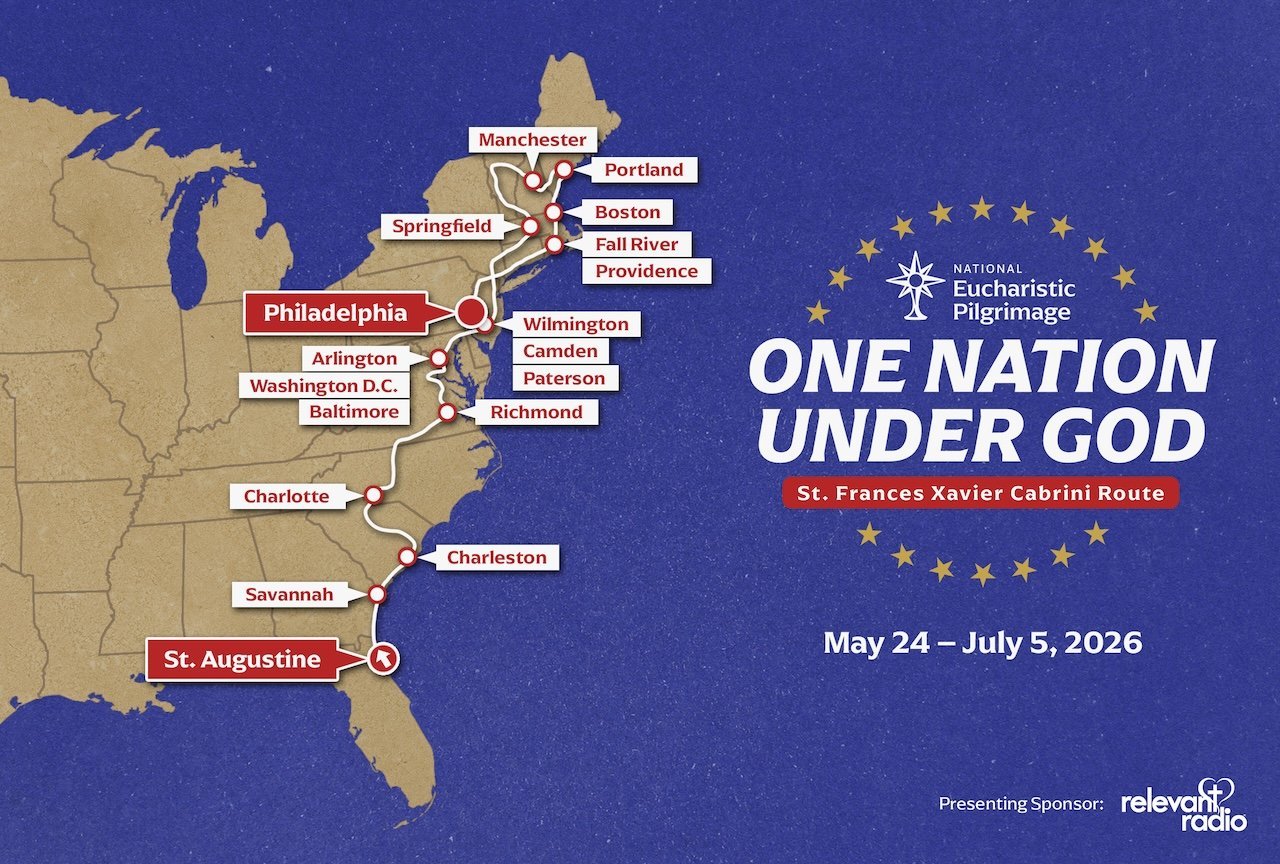
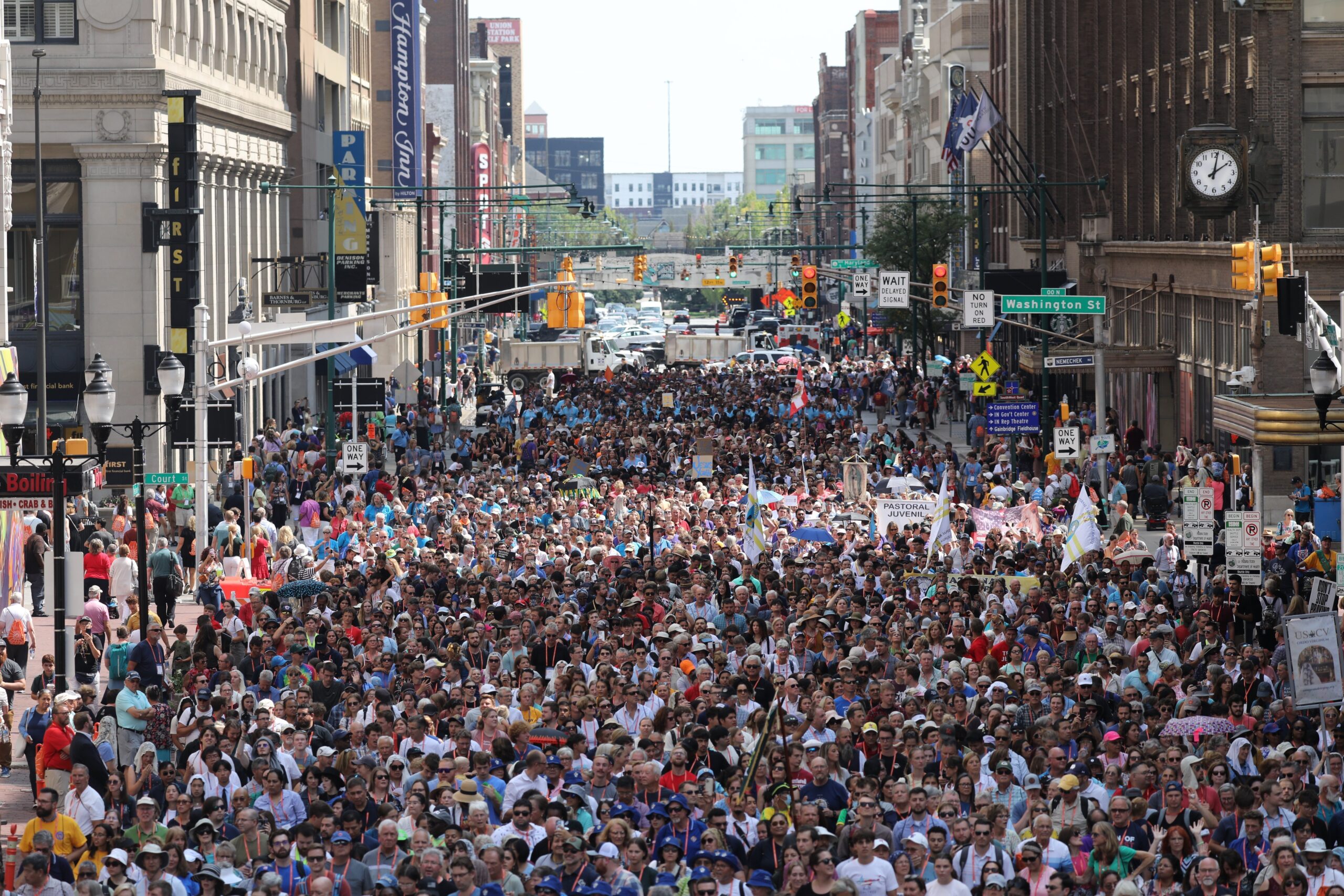
The second phase’s online data collection took place during the summer and fall of 2025 — one year after the 10th National Eucharistic Congress, held in July 2024 in Indianapolis and preceded by the first National Eucharistic Pilgrimage, the four routes of which converged at the congress.
Of the online sample, 2,058 were lay Catholics who had not been involved in the revival’s organization, with 1,758 coming from lists provided by the USCCB. The other 300 — lay Catholics who attended Mass at least monthly — were drawn from Vinea’s general population panel. The firm noted in its report that “lay Catholic respondents were not made aware of the purpose of the survey.”
Lay Catholics were classified in the survey as national participants (50%), meaning they participated in either the National Eucharistic Congress or National Eucharistic Pilgrimage; as local participants (24%), meaning they joined in a local Eucharistic Revival activity but not in a national event; or were non-participants (26%) in revival activities.

The remaining sample, which the report described as “ecclesial,” represented 414 respondents who were priests, deacons or revival point persons, drawn from USCCB (294) and Vinea (120) lists. Of those, 60% were ordained clergy, 41% of whom were pastors; 20% were a combination of diocesan (15%) or parish (5%) staff; and 20% were non-staff and non-ordained “point person” parishioners.
The USCCB confirmed to OSV News that the data was not further broken down according to demographic parameters such as age, gender and ethnicity. It was also not clear if the sample had been weighted, or statistically adjusted, to be representative of the broader U.S. Catholic population.
On balance, the survey data showed both the “lay” and “ecclesial” groups benefited from the National Eucharistic Revival, reporting enhanced faith and spirituality as well as community outreach.
However, the report also discovered several challenges to be addressed, including reaching beyond already engaged Catholics, while providing more parish-level support for such initiatives.
In his letter, Archbishop Thompson noted that “much of the data in the survey pertains to observations from the general laity segment or about them by the ecclesial segment,” since “the bishops hoped to inspire a grassroots initiative among Catholics” with the revival.
Specifically, the survey measured the frequency of participation in various faith activities, the personal importance of such activities, the level of conviction in Catholic beliefs as well as comfort in evangelizing, and the extent of respondents’ understanding of beliefs.
Participants in the lay segment compared their present experiences with those in post-COVID 2021, ranking them along five-point scales from “never” to “very often.”
And, according to Vinea, “the greatest growth in importance” for the lay segment “was observed in volunteering and spending time in Eucharistic adoration,” with faith-related activities — especially volunteering — all showing “significant increases since 2021.”
Notably, belief in the Real Presence among all three segments edged to 90% and above, with the greatest increase detected among national participants (92%, up from 73% in 2021). Local participants saw an 11-point jump (93%, up from 82%), while belief among the general Catholic segment rose by 12 points (90%, up from 78%).
National participants (60%) reported a 17-point increase in Eucharistic adoration since 2021 (up from 43%), with local participants (64%, up from 49%) and Vinea’s general Catholic population segment (43%, up from 37%) also spending more time before the Blessed Sacrament over the same four-year timeframe.
Community volunteer work rose among the three measured Catholic segments, with national participants (52%), local participants (64%), and the general Catholic population (40%) up 16, 17 and 13 points respectively since 2021.
Other increases among the survey’s national, local and general segments over this timeframe included:
-Scripture or spiritual reading, with national at 83% (up from 66%), local at 88% (up from 78%) and general at 80% (up from 71%).
-Attending Mass beyond the Sunday obligation, with national and local both at 74% (up from 55% and 64% respectively) and the general segment at 50% (up from 46%).
-Going to confession, with national at 61% (up from 43%), local at 58% (up from 41%) and the general group at 43% (up from 30%).
Among the ecclesial segment, the survey found that “leadership enthusiasm for the Revival was strong at every level, with 92% of bishops and 92% of pastors described as supportive.”
Just under half (49%) of 249 clergy polled perceived clergy morale in themselves or peers to be somewhat (38%) or significantly (11%) more encouraged by the revival. Another 40% reported their morale remained about the same. But 7% said their morale had been somewhat more discouraged and an estimated 4% described it as significantly more discouraged.
Vinea found the revival overall “refocused clergy on the Eucharist, with a majority reporting substantive changes to their pastoral approach since 2021.”
Topping the list of those changes was a “somewhat” (44%) or “significantly stronger” (28%) level of encouraging parishioners in Eucharistic devotion, with an enhanced attention to the Eucharist in teaching and ministry (70%), as well as a greater emphasis on evangelization and outreach (69%).
Clergy also reported their time spent in personal Eucharistic adoration was “somewhat” (36%) or “significantly stronger” (15%). Both collaboration with, and training or support for, other leaders also improved by 45% and 43% respectively, said clergy respondents.
The revival also “had some direct influence on preaching about the Eucharist, with nearly one-third reporting an influence on the frequency with which they did so,” said Vinea.
At the parish level, clergy reported that the “most fruitful” revival activities were Holy Hours and Eucharistic adoration events (53%), Eucharistic catechesis and teaching (41%), and local Eucharistic processions (39%).
Roughly one-quarter of clergy described the National Eucharistic Congress (26%) and the National Eucharistic Pilgrimage (23%) as fruitful, although the numbers were significantly higher for clergy who had attended the congress (64%) or pilgrimage (63%).
Less likely to be reported by clergy as fruitful were parish missions or speakers (20%), or small group studies (20%), with much lower numbers for youth-focused (8%) and family-focused (7%) revival activities.
Ordained point persons for the revival found the initiative most successful — inclusive of “slightly successful,” “moderately successful” and “very/extremely successful” — at engaging regular Mass-attending Catholics (98%), followed by parish volunteers and ministry leaders (88%), senior parishioners (88%), families with children (85%) and youth and young adults (74%).
A total of 70% of ordained revival point persons said the initiative had been able to reach less engaged or lapsed Catholics. But most of that success was categorized as “slightly successful.”
Challenges for revival activities reported by point persons, along with priests and deacons, centered around “two key obstacles: external barriers and internal constraints,” said the report.
“Staff cited resource limitations and time constraints at higher rates (63% and 58%), while parishioners more often mentioned lack of awareness among target audiences (51%),” the report said.
In addition, “the burden of local implementation fell heavily on volunteers and part-time staff, who often felt they lacked institutional support for sustainable programming,” the report noted.
Reaching beyond engaged Catholics, lack of awareness and “apathy among some target audiences,” as well as the risk of leadership burnout without more organizational support, were also cited in the report.
The top three desired needs for support by point persons were “coordination with neighboring parishes” (50%); “access to speakers or resource people” (49%); and “integration with other diocesan initiatives” (42%). The report noted the findings were similarly observed in clergy respondents.
Still, the report concluded, the revival fostered both personal and parish renewal — and “the evidence suggests that a future Revival could bear similar fruit and, with clear support and capacity, potentially expand its reach further.”