
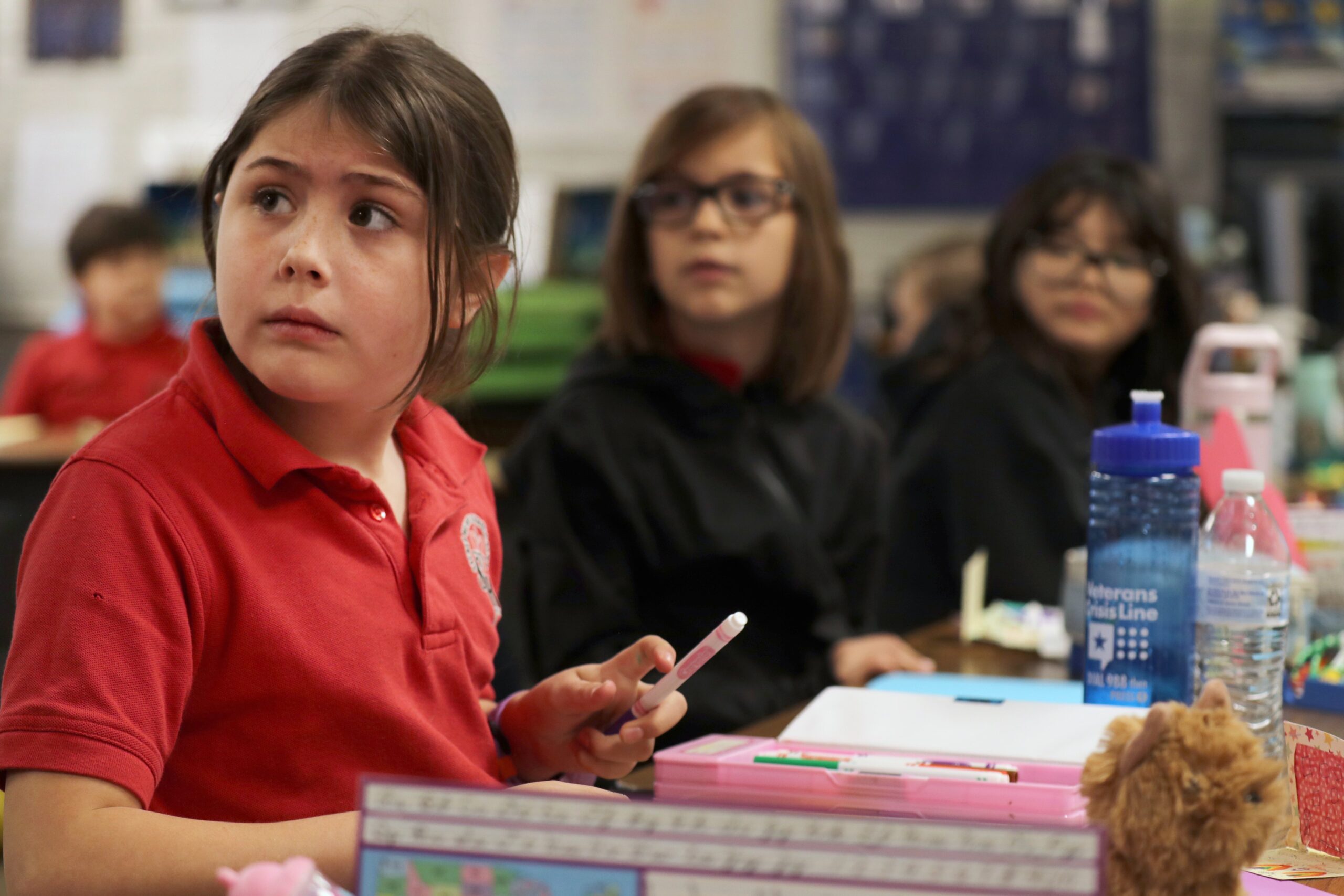

In a nation fixated on affordability, a Catholic school K-12 education can easily become a contested line in the family budget.
But as the experts who spoke with OSV News underscored, there are financial possibilities worth examining before making a final decision — and it is in part a matter of just getting the word out.
“I’m not sure that we’ve completely cracked that code — how we get the message out that our schools are not just for the elite who can afford it,” admitted Steven Cheeseman, president and CEO of the National Catholic Educational Association in Arlington, Virginia.
“We want them to be accessible to as many students as possible who want to be there,” he emphasized. “Most schools have some sort of tuition program — but the key is how we communicate it in the places that people will see it, and that we say it enough times so they remember it.”
That said, Catholic school enrollment “is stable across the country,” Cheeseman reported.
According to the NCEA, nationwide in 2024-2025 there were about 1.68 million Catholic elementary, middle and secondary school students, studying at 5,852 schools with 154,258 professional staff. Sixty-three schools closed, while 24 opened.
Cheeseman told OSV News that school choice programs — programs and policies that allow families to use public funds to access schools beyond their local public options, including private schools — are now a major component of Catholic school affordability.
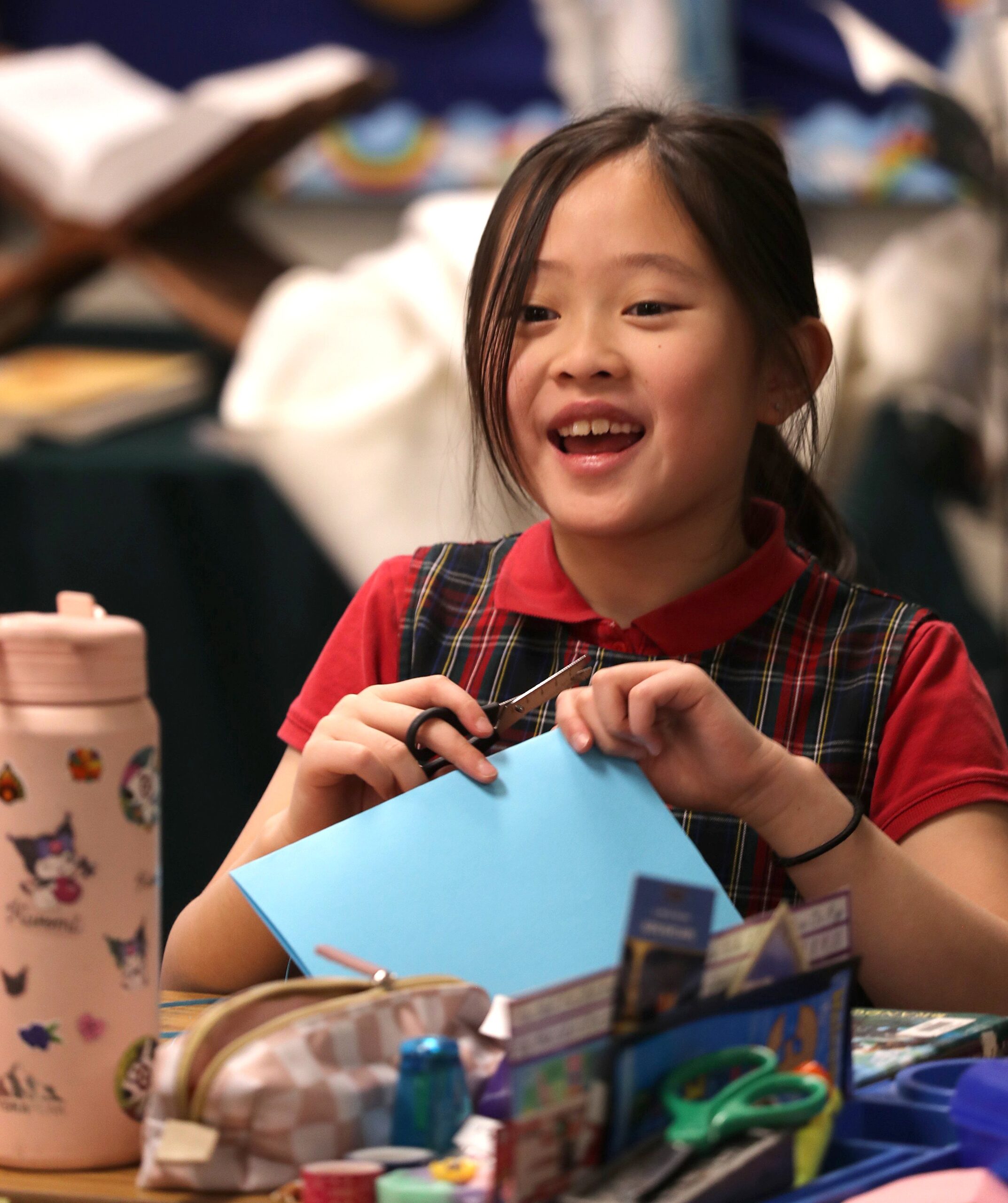
“One of the best forms of capitalism is educational choice — because it gives you a choice, and I would argue competition is good for everyone,” he said. “I think the more educational choice opportunities we have, that will not only strengthen our Catholic schools, but it will strengthen all schools.”
Across the country, some 31% of Catholic schools use parental choice programs, while 18% of students do.
As of January 2026, 18 U.S. states have made virtually all students eligible for state funding to use on nonpublic school tuition. EdChoice — a pro-school choice advocacy group — estimates 1.5 million students are using private school choice programs in the 30 states that have them — an increase over about 1 million in 2024, and fewer than 500,000 in 2018-2019.
With the passage of President Donald Trump‘s “One Big Beautiful Bill” — signed into law July 4, 2025 — many Catholic educators and parents are hopeful, since it created a federal tax credit for individuals who make donations to 501(c)(3) public charities providing scholarships to elementary or secondary school pupils.
The creation of the provision could lead to increased contributions to Catholic nonprofits that grant scholarships for K-12 students. Such contributions should in turn increase the number of scholarships that can be offered — and thereby, hopefully expand access to Catholic schools.
“I think focusing on those — advocating for school choice programs — is the key differentiator for Catholic schools right now, and what the future could look like,” Cheeseman said.
Shawn Peterson — president of Stillwater, Minnesota-based Catholic Education Partners, a national apostolate advancing policy to enable families to pursue a Catholic education — agreed with Cheeseman.
“I would just say nothing has been as effective as school choice right now in answering the challenge to affordable tuition,” he confirmed.
Just how effective?
“We’ve run the numbers: (In) some of our major archdioceses — with the new federal scholarship tax program — if 1% of Catholics in a diocese participated, it’s in the tens of millions of dollars in a diocese,” Peterson said. “And that’s on top of a lot of state programs — so we could have billions of dollars if this federal scholarship tax program is implemented properly, and if the Church really leans into it. That could be huge in helping overcome tuition challenges.”
In 2021, the most recent year the NCEA included tuition in its annual data report, the average Catholic school elementary tuition was about $5,178; high school tuition, about $10,575.
“But I still believe they’re an incredible value for the money,” Peterson said. “Not only do they (Catholic schools) provide a great academic offering — they nurture the soul, which is obviously the main point of Catholic education.”
Making the kitchen table math add up is a specialty of Kathryn Whitaker, a Texan mom of six and author of the 2019 book “Live Big, Love Bigger: Getting Real with BBQ, Sweet Tea, and a Whole Lotta Jesus” from Ave Maria Press.
“I think the biggest mistake people make is that they make up their mind before they ever have a meeting or contact the school,” Whitaker told OSV News. “So they either see something on the school’s website or they talk to a friend and then they think, ‘Oh, we can’t make that work. That’s not in our budget.'”
Whitaker recommends parents don’t stop there.
“I wish more people would call the principal or call the admissions officer and sit down and say to them, ‘What options are available? Are there scholarships? Can we defer payments? What are some options that we have?’ As opposed to seeing the final process and saying, ‘We can’t make it work.’ So I always tell people: Call the principal; call the admissions officer — sit down and have a conversation.”
She also suggests buying uniforms used or on sale, as well as lifestyle changes that might include fewer streaming services, extra income opportunities or frugal vacations.
“I think parents have a lot of options,” said Whitaker, “but they just see the tuition, and then they forget about all the other options that are available.”?
In the Florida Diocese of Pensacola-Tallahassee, superintendent of Catholic schools Michael Juhas — like Cheeseman and Peterson — is a strong proponent of school choice.
“We’re blessed in Florida with universal school choice — so that makes Catholic schools more affordable for everyone,” Juhas said. “On top of that, each individual school has financial aid available. And at the diocesan level, we created a mustard seed scholarship that allows a family whose children have never attended Catholic school before to have an amount for one year.”
Still, getting the word out about school choice remains a necessity.
“In a lot of ways, getting people into school choice is a lot like a voter registration drive — and that is available to everyone,” explained Juhas, whose diocese encompasses 11 schools and five early learning centers.
“We just have to raise awareness. And we have to be consistent and persistent in messaging so that people know what is available to them — and so the parents, as the primary educators, can make the best choice for their individual family.”