

The celebration of the semi-sesquicentennial of the United States on July 4, 2026, marked not only a significant political event in our history, but also our identity as a country.
Charles Darwin, naturalist and geologist, wrote, “It is not the strongest of the species that survives, nor the most intelligent; it is the one most responsive to change.” The nation’s 250th celebration recognized that as a nation, we have been open to new ideas which have allowed us to thrive.
We stand now at a juncture to thrive where we can make a tremendous investment in the future of our country through education — public, charter, Catholic/independent. All our students can reap the dividends of an investment in education through the Federal Scholarship Tax Credit (FSTC), legislation passed by Congress last summer.

The FSTC is a federal tax-credit program designed to encourage individuals and businesses to donate up to $1,700 annually to scholarship-granting organizations (SGOs), which would then provide scholarships to students attending eligible schools, including private and religious schools. In simple terms: Donors receive a federal tax credit for qualifying contributions to scholarship organizations.
Scholarship organizations use the funds to provide scholarships to eligible students.
Families receive financial assistance that can help make education more affordable.
The program expands educational opportunities, particularly for families who might otherwise have limited options.
This investment in education, providing financial support to public, charter, and Catholic/independent schools, reaps dividends not only for families and schools, but also for Delaware and Maryland. Here is a compelling story resulting from participation in the Federal Scholarship Tax Credit.
We retain available federal money in Delaware and Maryland. Taxpayers invest in Delaware and Maryland; they do not designate their federal tax credit to other states.
We strengthen schools, create jobs, and grow our tax base. Investment in schools creates better schools which attract more people to the state, leading to more jobs resulting in increased tax revenue for the state.
We expand an educational ecosystem that attracts companies, executives, and families. A state with strong public schools and thriving Catholic/independent schools is more attractive to high-skilled workers and executives.
We adapt to meet the needs of all families – educationally and economically – with additional funding available.
We make all teachers’ futures more secure — public, charter, Catholic/independent — by making Delaware and Maryland places where more children live and learn.
What is required to realize the benefits described here? A state does not need to pass a new state scholarship program to participate in FSTC. Under the federal law, the state must formally elect to participate and then identify the Scholarship Granting Organizations (SGOs) that meet the federal requirements. The Governor — or another person, agency, or entity authorized under state law to make elections concerning federal tax benefits — submits the state’s election to participate. As of June 2026, the IRS reported that 27 states had elected to participate in the FSTC program. Now is the time to encourage our leadership in Delaware and Maryland to sign on to the FSTC for the future of our children, for the benefits of our states, and for all of us to thrive.
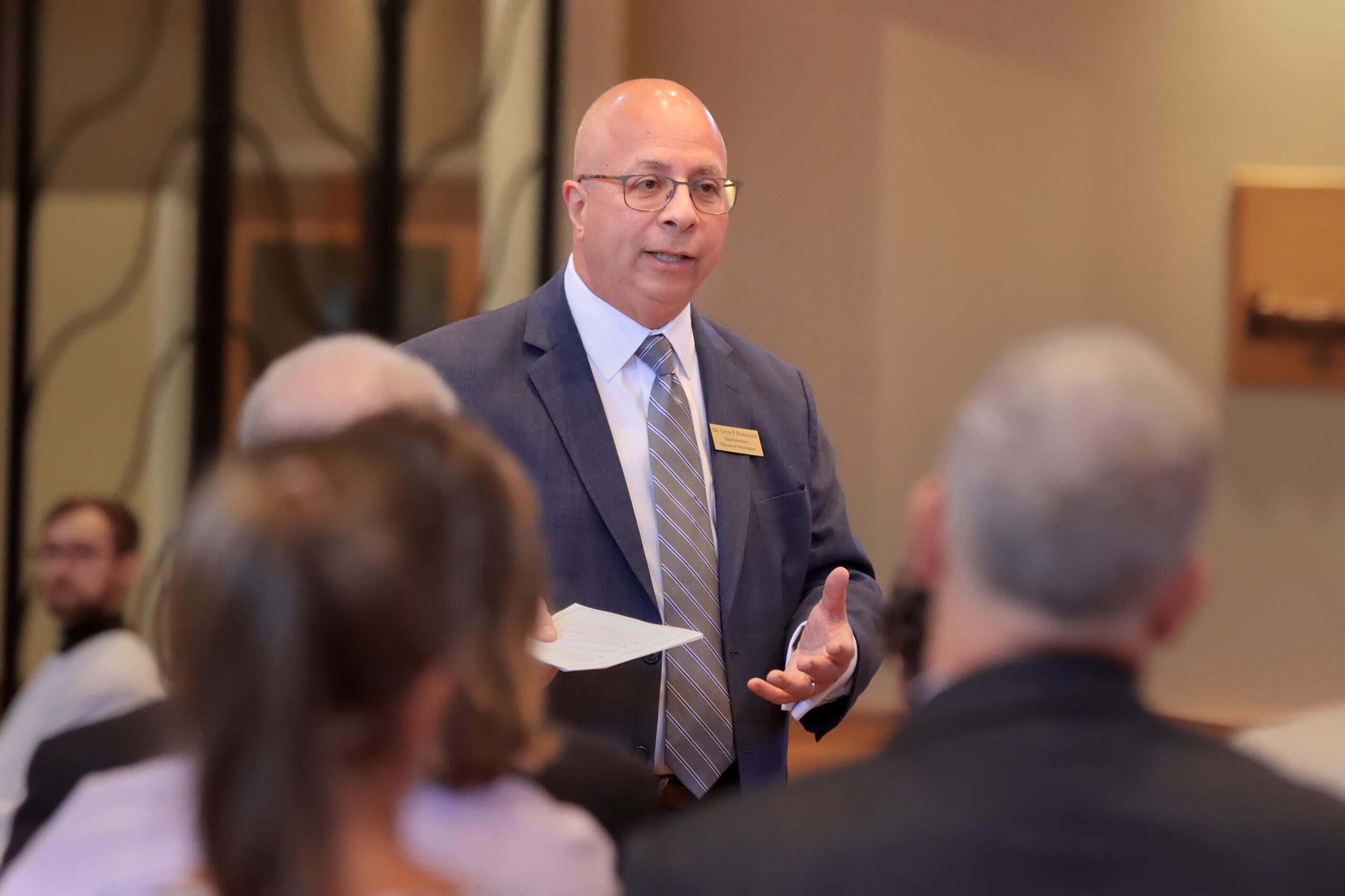
Louis De Angelo is superintendent of schools and secretary of the education department for the Diocese of Wilmington.
Call or email your governor and ask him to help every child in our state
Call Matt Meyer, Delaware: 302-577-3210, email link at governor.delaware.gov
Wes Moore, Maryland: 410-974-3901, email link at md.accessgov.com
“Organizations can use these (tax credits) to provide scholarships for eligible elementary and secondary students at Catholic and other nonpublic schools, as well as assistance to public school students who need supplemental tutoring or other educational services.” — America Magazine
STATES MUST OPT-IN BY DEC. 31 FOR ALL STUDENTS TO GET ACCESS TO THIS FUNDING