
France’s bishops condemned “unacceptable violence” that “gripped” the country over the Oct. 17-18 weekend, saying the scenes of rioting “plunged the country into shock, fear, and despair, raising numerous questions about the root causes of this crisis,” the bishops wrote in their Oct. 19 statement.
“We urge everyone not to be drawn into the spiral of this deadly violence: our country deserves better,” the bishops wrote, expressing their outrage at law enforcement officers being attacked and injured, shops looted, public property damaged, and buildings representing state institutions vandalized.
“We wish to express our support and solidarity with all those who have suffered injuries, as well as with the many shopkeepers who have been victims of this vandalism,” the bishops said.

Other Church leaders and commentators joined the bishops in their appeals for peaceful solution to the crisis, urging that it’s time for citizens to become peacemakers and reject growing division, with Pope Leo XIV’s recent apostolic visit to the country remembered as a signpost to follow.
— Tragic violence that destroyed historic buildings —
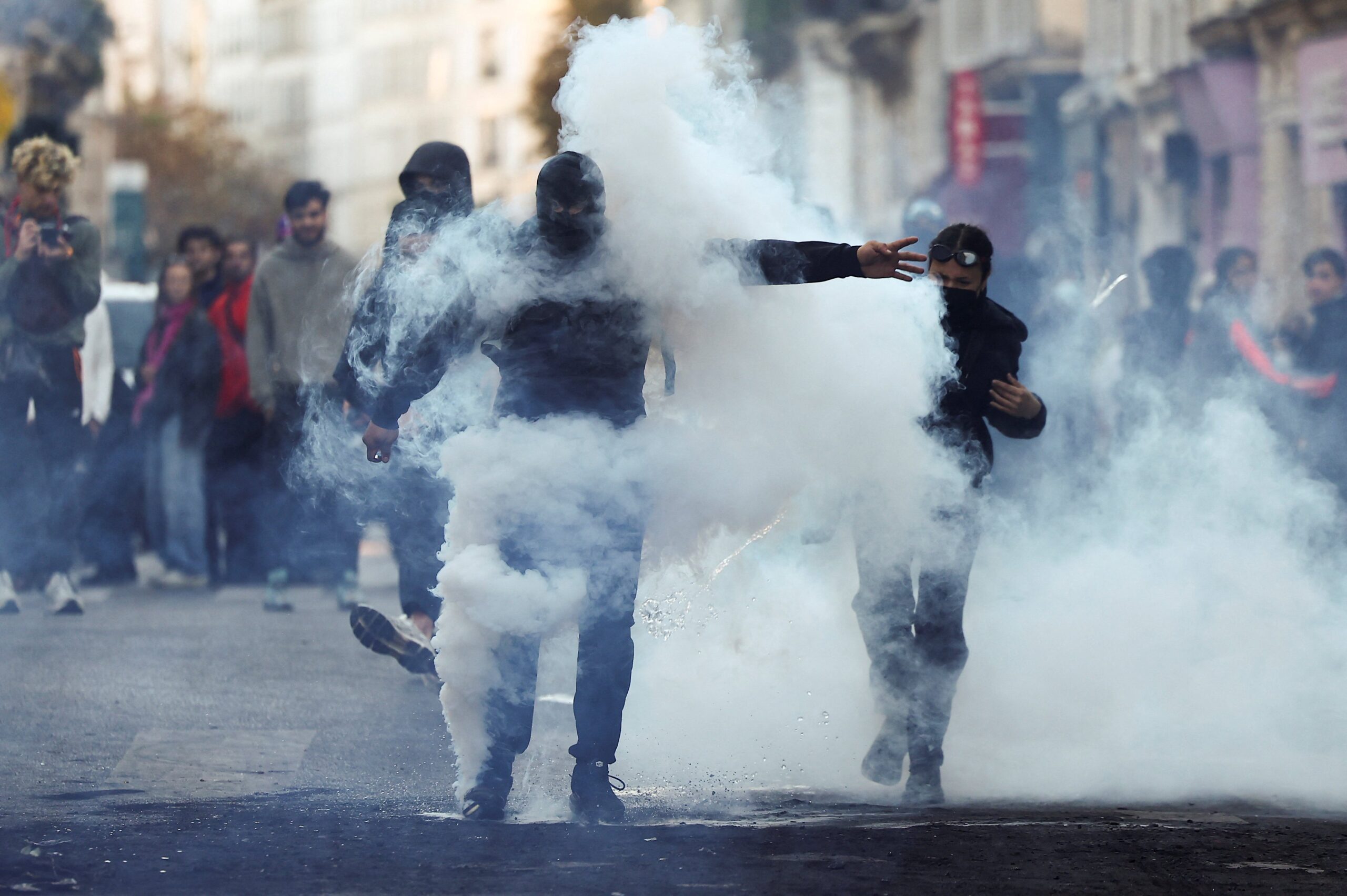
Initially called to protest the rising cost of living, the Oct. 17 demonstrations came amid a high school student protest movement that had evolved into a wider urban uprising since late September. Joined by far-left activists and masked rioters, some demonstrators clashed with police, leaving hundreds of officers injured, and carried out attacks on schools and other public property.
Rioters smashed storefronts to loot shops, with desperate owners trying to protect their property, and set cars on fire in numerous cities across France.
City halls and public buildings were attacked, severely damaged or completely destroyed. Limoges City Hall, a historic 19th-century building in central France, was almost entirely ravaged by a spectacular fire.
— Cardinal Aveline: France deserves better —
The president of the bishops’ conference, Cardinal Jean-Marc Aveline of Marseille, also condemned “unacceptable violence” in his Oct. 18 statement.
“Let us not get caught up in the spiral of this violence,” Cardinal Aveline said. “Our city and our country deserve better than this. Together with all believers, let us pray for an end to these disturbances and for peace to return.”
Cardinal Aveline, who witnessed the violence in Marseille, France’s second-largest city, wrote that “our city, like many others in France, has been the victim of unacceptable violence.”
“On the sidelines of planned demonstrations, shops were looted, churches were broken into, the town hall was invaded and vandalized, a police station was ransacked, and members of the security forces were attacked,” he said.
“Along with the entire Church of Marseille, I wish to express my support and solidarity with those who were injured and with the shopkeepers who were victims of this vandalism,” Cardinal Aveline said.
— Archbishop of Lyon points to a ‘society in crisis’ —
Archbishop Olivier de Germay deplored the destruction that took place in Lyon, another major city, of which he is the archbishop.
“The violence that occurred in Lyon on Oct. 17 goes far beyond the scope of a protest in which legitimate grievances can be expressed,” he wrote on X on Oct. 18. “The city was the scene of clashes, hatred, destruction, and looting — all of which are unacceptable. Our thoughts and prayers go out to the shop owners, law enforcement, and all those who were victims of these excesses, including those who wanted to demonstrate peacefully.”
For Archbishop de Germay, the urgent need now is to act as “peacemakers.”
“I am well aware that this violence is a sign of a society in crisis,” he stated. “But I want to reiterate emphatically that it is a dead end and can only lead to further injustices and divisions. It is not by pitting one group against another, but by working together, that we will be able to meet the challenges facing our society.”
Reactions of deep dismay were evident throughout France on Oct. 18, with commentators expressing the “shame” of seeing the country so disfigured by looters and rioters bent on compulsive destruction. “What is happening to us?” wrote Jérôme Chapuis, editor-in-chief of the Catholic daily La Croix. “The outburst of violence on that fateful October 17 is disheartening, disturbing, and a source of shame for us.”
Chapuis pointed out to “the architects of chaos, influencers, or political parties engaged in the race toward extremes,” as those responsible for the damages as much as violent rioters themselves. He also called for accountability as Paris and other major cities witnessed post-warzone scenes on the morning of Oct. 19.
— Voices of those tired of unrest highlight pope’s message to lawmakers —
From the arrogance of protesters, Chapuis wrote, rose another form of anger in France, not even a month after a much successful papal visit in the country.
“It is the peaceful anger of men and women of good will who, in the diversity of their opinions and the ways they engage in political action, contemplate the ruins.”
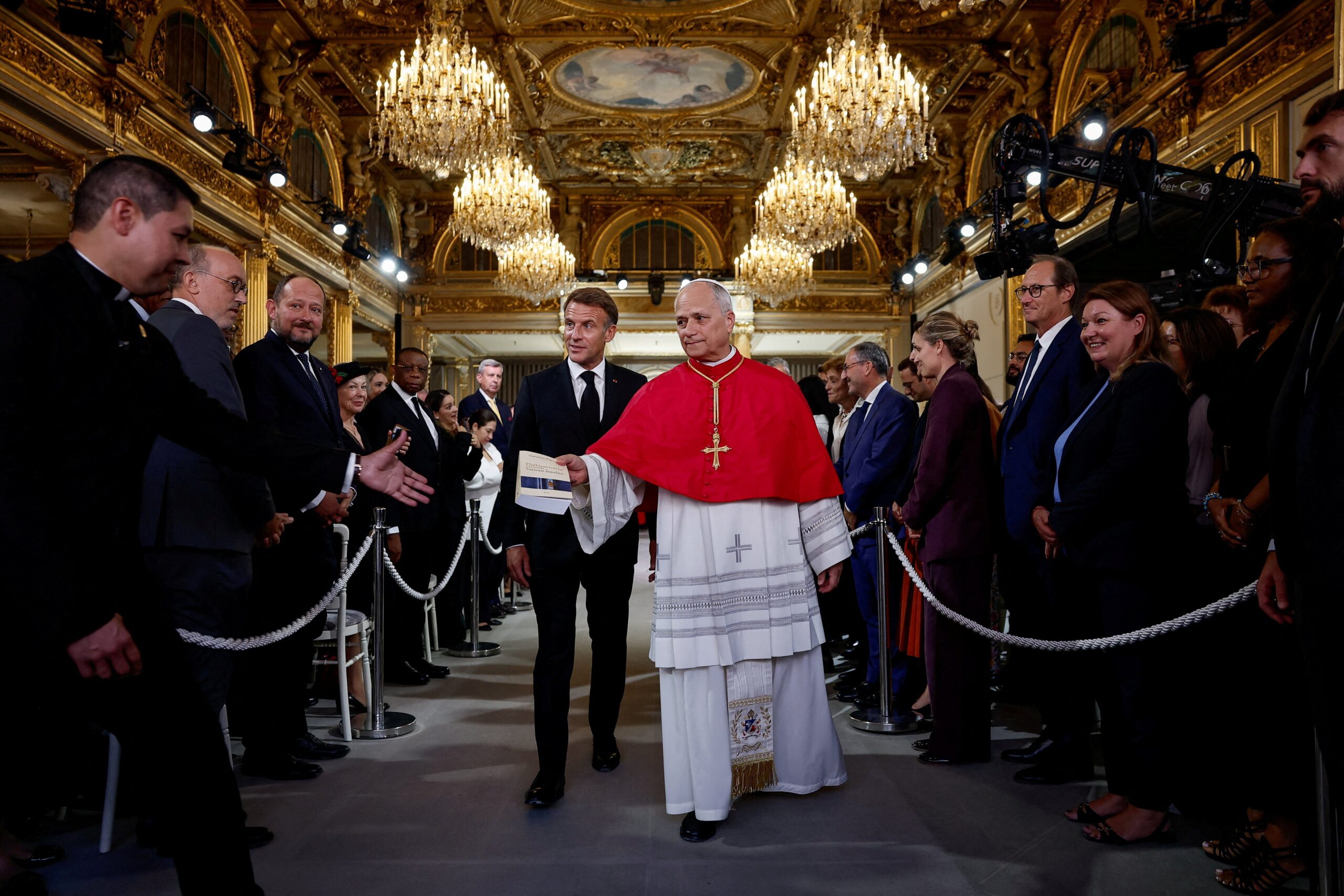
“Faced with the image of the burned-out Limoges City Hall, the recent echo of a speech comes to mind,” Chapuis said, referring to the words of Pope Leo XIV at the Élysée Palace, the seat of the French presidency, on the day of his arrival in France on Sept. 25.
“Liberty, equality and fraternity are not simply words emblazoned on the front of your public buildings; they refer to universal ethical imperatives that also find in the Gospel message an inexhaustible source of inspiration and fulfillment,” the pope said that day, addressing President Emmanuel Macron and the officials present.
For Chapuis, the papal words “would do well to be heard again by all those who cherish civil peace — those who know its value and its fragility.”
— President Macron: how the French could do this to France —
In Paris, where entire streets had been ravaged, the violence was still ongoing on the evening of Oct. 18 as President Macron addressed the nation on television.
“Watching these images, we all asked ourselves how the French could do this to France,” Président Macron said. “How could they have come to this? Nothing justifies it; nothing explains it.” He referred to the many shop owners who had to “defend their stores themselves against criminals,” attributing responsibility for this “unbridled violence” to “troublemakers from far-left fringe groups joined by numerous criminals.”
Macron concluded his address by referring to the upcoming presidential elections, which will take place in April and May 2027.
“All those who are telling you today that the urgent need is to take to the streets, to protest, to create disorder have only one goal: to undermine the Republic and hijack the debate,” he lamented.
“Debates must take place in public meetings. They must take place with the political parties, not in the streets through violence,” Macron continued. “They must take place in newspapers, on television programs, and at peaceful gatherings, where people speak and explain themselves with respect — never amid chaos and destruction. Our country deserves a great presidential election in six months.”
“With all believers,” he said, “we pray that these disturbances will cease, that legitimate demands will be heard and addressed, and that, through dialogue and respect for justice, peace may return.”