

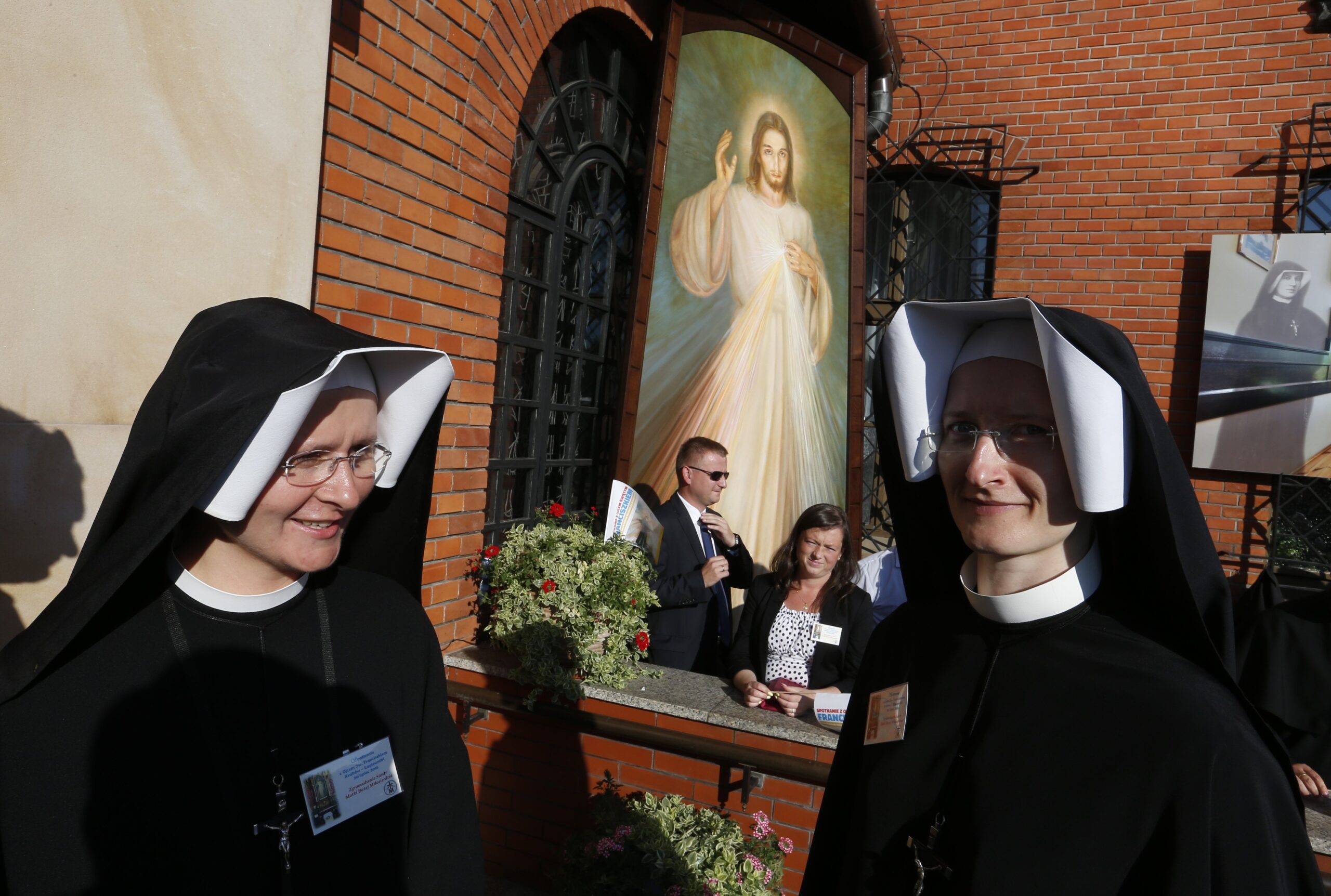



By Ely Segura, OSV News
I had wanted to visit Poland for a long time, not least to see the Shrine of the Divine Mercy in Kraków.
In my 20s, I had come across a Catholic website featuring numerous films about saints. Many of those lives had had a positive impact on me, leaving me eager to learn more about Christian spirituality. The life of Sister Faustina Kowalska, to whom God had chosen to reveal himself in a special way, and through whom he wished to reaffirm his mercy and our fervent longing for it, was one of them.


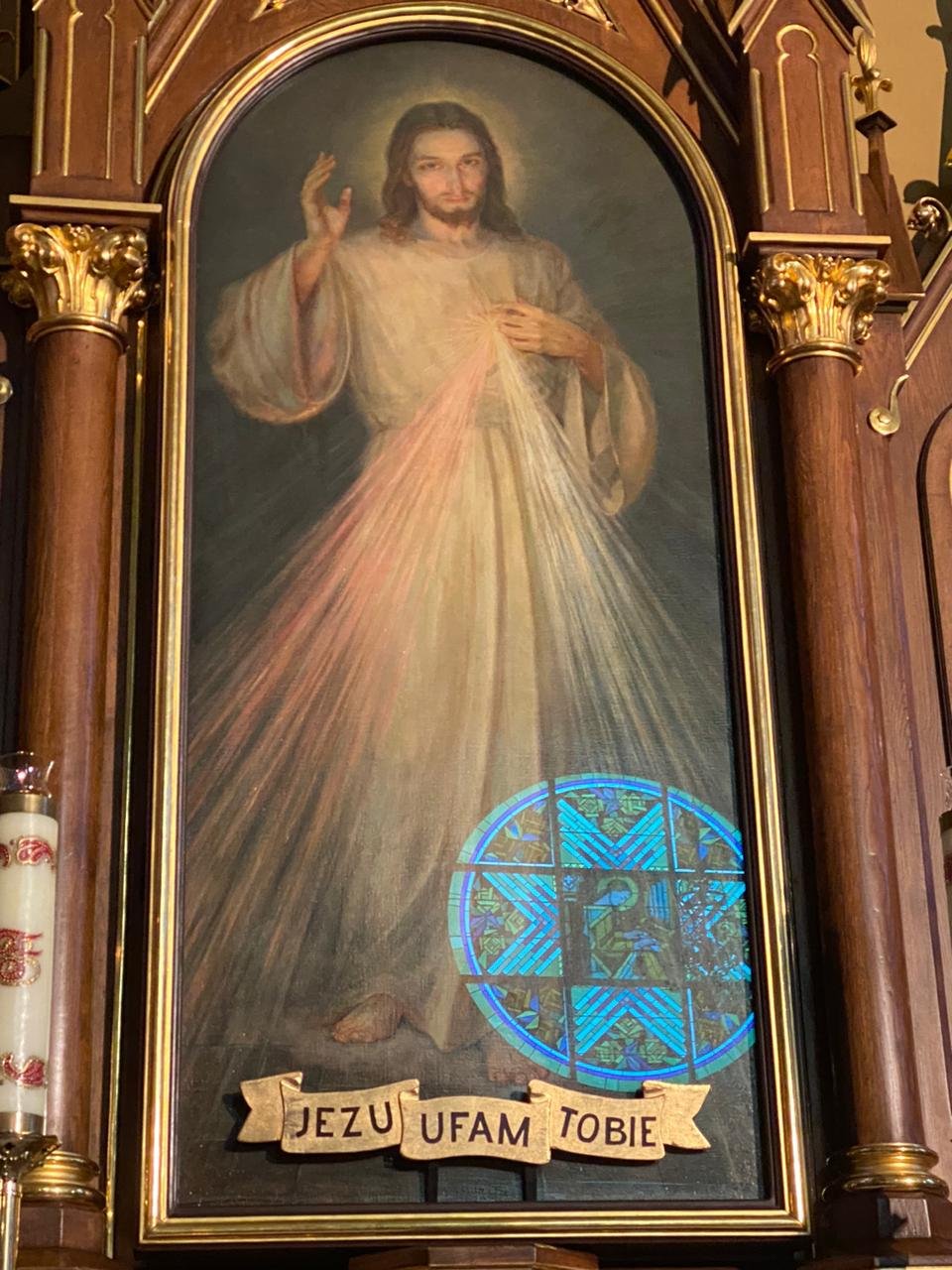
In those years, I began to say that my favorite image of Christ was that of the devotion to Divine Mercy, revealed to Sister Faustina. Its iconographic message, though simple, was quite complete and profound for me. It encompassed what I had already received from him. The rays emanating from his side, a glorious way of seeing the water and blood flowing from the pierced side of Jesus on the Cross, already interpreted as the sacraments of baptism and the Eucharist by the Church Fathers, especially St. John Chrysostom.
And it is those very glorious rays to which I have access and through which I am pierced by his divine mercy every time I take part in Eucharistic adoration. The Venerable Fulton Sheen was very fond of saying that being in this presence is like exposing one’s body to the sun in order to absorb its rays.
My choice of this image of Jesus over others was also influenced by the inscription on it. The phrase that Jesus himself had asked Sister Faustina to write, as recorded in her diary (entry 47): Jezu ufam Tobie, Jesus, I trust in You. A constant invitation to reaffirm my reliance on his infinite faithfulness, especially during times of tribulation, when faith falters.
And, finally, I found the devotion of praying the Chaplet of Divine Mercy, also communicated by Jesus to the Polish saint, to be beautiful. Through this prayer, we can mystically unite our sufferings — of every kind, but especially the pain caused by our sins — with the suffering of Christ during his passion, so that we may accept and share in the redemption obtained by him. And, moreover, receive the many graces that he himself promised to those who pray it.
Almost two decades later, I was invited on a Marian pilgrimage that would include a stop in Poland. Voilà! This was my chance. And Poland was what interested me most about that pilgrimage.
We arrived in Kraków on the fourth day after crossing the Atlantic. And on the fifth day, finally, we went to Lagiewniki, the district of Kraków where the Shrine of Divine Mercy is located.
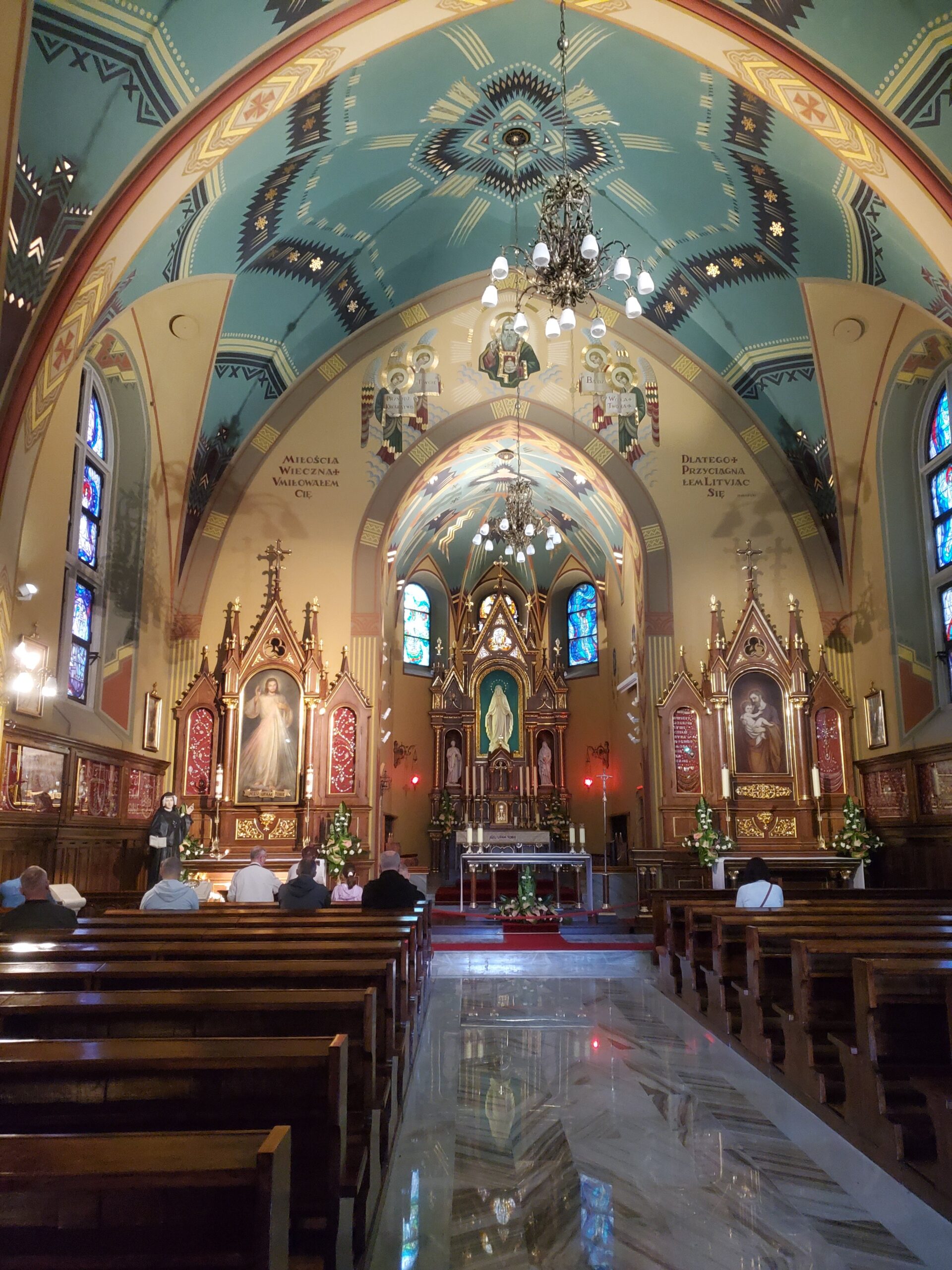
The most important part of this sanctuary is the convent chapel, where the venerated image of the Merciful Jesus, which I discussed above, is located, along with an urn containing the mortal remains of St. Faustina beneath the altar and some of her first-class relics.
This young Polish woman was canonized by her compatriot St. John Paul II on April 30, 2000, on the second Sunday of Easter, when we celebrate the feast of Divine Mercy throughout the Church. On that day, the Holy Father conferred upon Sister Faustina the title of “Apostle of Divine Mercy.”
The chapel is beautiful and very simple. There is a profound sense of contemplation there, stemming from the genuine devotion of its visitors. On the high altar stands a statue of Mary under the title of Mother of God of Mercy, who is the patron saint of the congregation revealed to Sister Faustina.
Sadly, our visit there was rather brief. I would be exaggerating if I said we spent two hours there (between the chapel and the souvenir shop). We did not visit the convent, as had also been planned, and we did not go to the basilica or the observation tower. We did not enter Sister Faustina’s House, which is a pastoral and accommodation center as well as a museum.
The day had dawned rainy, not very conducive to doing much, but I was thirsty for more while being there. I had saved up and waited a long time especially for this pilgrimage, and the shrine was one of my greatest motivations. I felt truly miserable.
I had been taught that the term “mercy” meant that God took our miseries into his heart and thus had compassion on us. But I also interpret it as the opportunity granted to us by the Father, through the Son, to place our miseries (and in this case, this and all my/our disappointments and contradictions) into his heart.
We know of the devotion to Divine Mercy through the mission entrusted to St. Faustina’s confessor, the now Blessed Michael Sopocko, who, following the saint’s death, took on the task of spreading it and establishing the feast of Divine Mercy. He endured persecution, ridicule and constant rejection, even from within the Church. He died in despair, crushed by his apparent failure.
However, God had other plans. And the rest is history. His mercy extends even to what we had already given up for lost. It transcends space, life and death. It is eternal (Ps 136:1) and truly encompasses all things (Ps 33:5).
Ely Segura is a laywoman and creator of the Teófilo project, an initiative for the faith formation of Hispanic adults in the United States (www.proyectoteofilo.com).