


The 2025-2026 school year marks the beginning of the second quarter of the 21st Century. As we celebrate this year’s Catholic Schools Week (January 25-31), it is interesting to see how Catholic education has developed over a generation.
What Is the same?
Proclaiming Jesus Christ each day remains the mission of Catholic education. Catholic schools continue to foster faith formation through prayer, worship, knowledge, and service. Students educated in Catholic schools in the Diocese of Wilmington pray at significant times each day in school – welcoming the day, seeking inspiration in class, expressing gratitude for meals and closing the day. They are provided opportunities for Mass during the school week, the Sacrament of Penance and Reconciliation, devotions such as the rosary, the Stations of the Cross, and the May Procession, and most recently in some schools, time for adoration of the Blessed Sacrament each month. Religion is a daily academic study in schools in line with the curriculum sequence specified by the United States Conference of Catholic Bishops. Service abounds in Catholic schools in local, regional, national, and international settings where students live the Gospel message of Matthew 25:13-46 (The Judgment of the Nations) in supporting their brothers and sisters directly and indirectly.
Academically, Catholic schools remain in the forefront of accomplished success. In standardized assessment (Renaissance Star), the composite of Catholic school students in grades 2-12 is above the national averages in reading (17 percentage points) and math (15 percentage points). Even more importantly, students are educated to think critically, vision creatively, work collaboratively, and communicate effectively. They are provided the skills which help them achieve in school and in the workplace.
What is different?
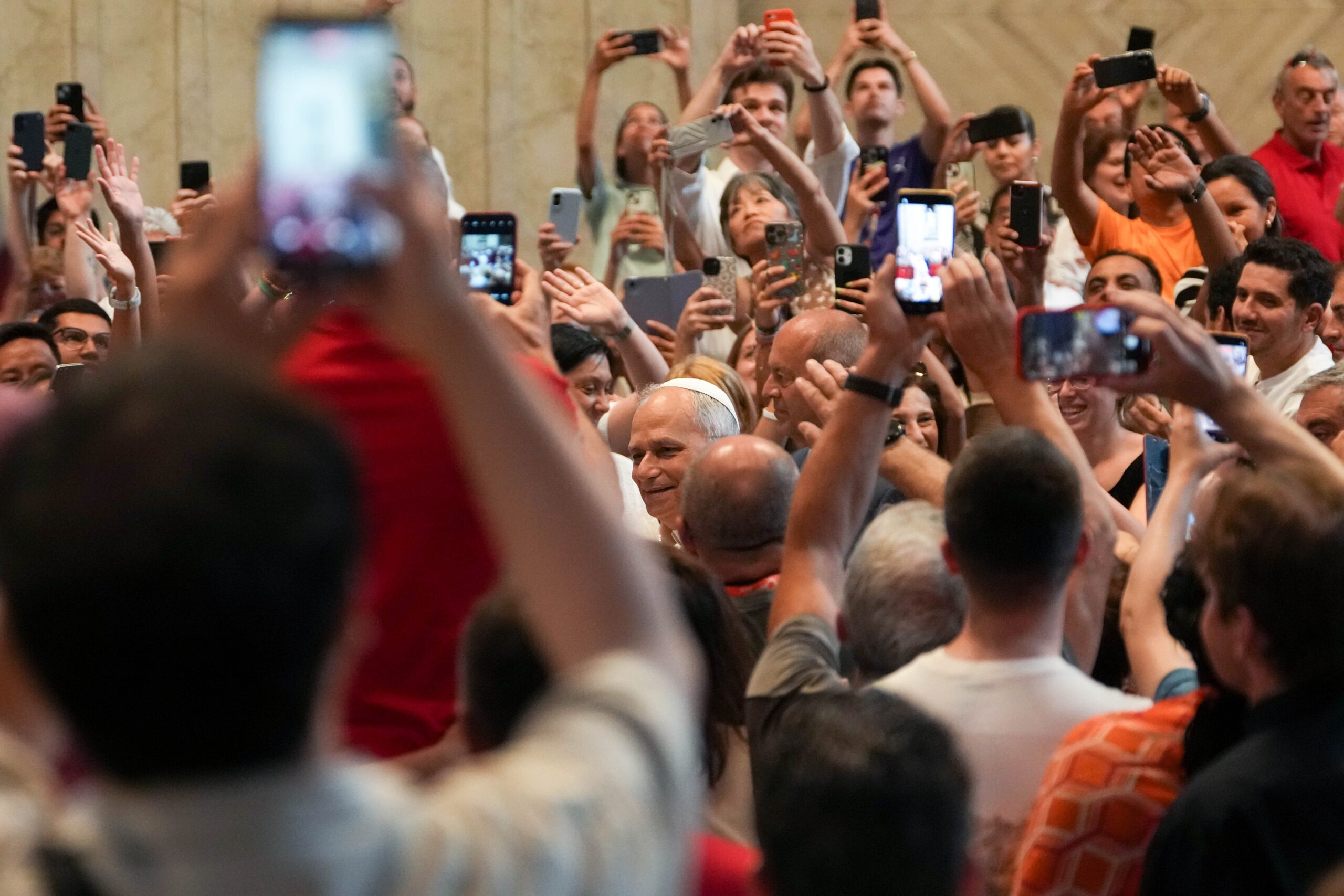
In addition to the anchors of Catholic education – faith, knowledge, and service, there have been new developments in Catholic education over the past 25 years requiring an expanded vision for Catholic schools. We are living under the leadership of our fourth Pope since the 21st Century began. Pope Leo XIV has given us, as one of his first exhortations this past year, “Drawing New Maps of Hope,” in which he outlined several key ideas for the path of Catholic education moving forward.
“Educating is an act of hope and a passion…because it manifests the promise we see in the future of humanity.”
“Christian formation embraces the entire person.” A human being (student) “is not a ‘skills profile’ but is a face, a story, a vocation.”
“The Catholic school is an environment in which faith, culture, and life intertwine.”
“The family remains the first place of education.”
“The world of Catholic education is a living and pluralistic network.”
Building on these (and other) key ideas from Pope Leo, our Catholic schools are not only effective but essential to the Church and our world.
Regarding faith formation, the number of students who are of faiths other than the Catholic faith has increased; they have been welcomed into our schools. Their families value a faith-based education, and schools celebrate when some of these students request to become Catholic. At the present time about 25% of students who attend Catholic schools are of faiths other than our own.
Academically, the single greatest change in Catholic school education has been the explosion of technology. After the fears of Y2K in 2000 around the world were dispelled, schools settled into an ever-expanding pattern of tools and resources to support teaching and learning. In the early 2000s (2000-2005), schools moved from chalk to computers as desktop computers, PCs, and interactive whiteboards appeared in classrooms. In the mid-late 2000s (2006-2010), teachers began designing lessons around technology with the use of laptops, projectors, and Smartboards. In the second decade of the 21st Century (2011-2019), one-to-one devices (Chromebooks, iPads) and cloud-based tools (Google Classroom) made learning portable, collaborative, and personalized. Since the pandemic (2020+), technology has become a partner through AI (artificial intelligence) tools and blended learning. Catholic schools have grown and expanded in the pursuit of learning, always recognizing the important and indispensable role of the teacher.
The opportunities brought forward by technology have also increased challenges for Catholic schools. Cell phones among students have increased dramatically and schools have had to create workable solutions to their presence. While there is no diocesan ban on cell phones in schools currently, it has become necessary to moderate their availability during the school day. Schools address this challenge individually and appropriately.
Ethical behavior has been challenged by the availability of technology. The immediacy of technology has resulted in information-sharing that is sometimes hurtful, inappropriate, untimely, and false. Students are educated about communication using today’s technology. The introduction of AI adds another dimension to the world of technology communication so that ethics must be an important consideration in the world of Catholic digital citizenship. Currently, the Catholic Schools Office with the support of school administrators and teachers is developing guidelines for AI in schools.

Student and staff safety has received increased attention over the last 25 years. With the horrific events of 9-11, we became more aware of evil in the world. When school communities became victims of evil, such as in Sandy Hook, Conn., (2012); Uvalde, Texas, (2022); and Minneapolis, Minn., (first Catholic school; 2025), school safety, always a priority, became an even more pre-eminent concern. In the Diocese of Wilmington, every school has a safety plan that is rehearsed regularly. In addition, some schools have a law enforcement officer present on site, others have the presence of law enforcement at schoolwide events (Mass, assemblies, etc.) and many schools increased the presence of cameras available to see a wider range of school activity. Some school buildings have re-fashioned entrances that add another layer of security. While no single solution solves all situations, student and staff safety is a daily priority addressed at all schools.
Much has occurred in Catholic school education which has enriched its value and quality over the first quarter of the 21st Century. The years leading to the half-century mark stretch before us as pathways to continued growth. Catholic schools are grateful for all members of the school communities – pastors, parishioners, families, educators, and benefactors – willing to walk with them into this promising future of hope.
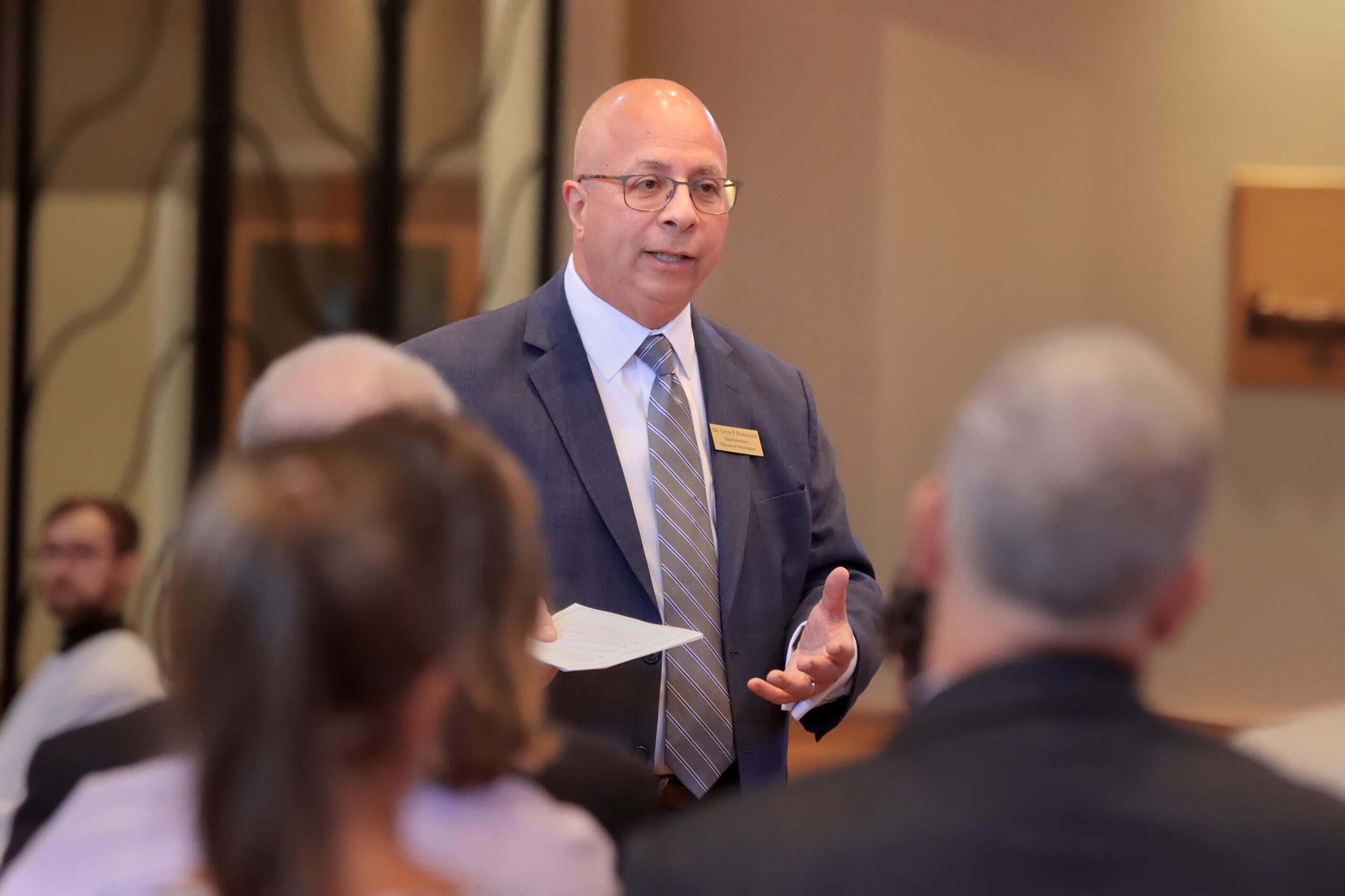
Lou De Angelo is superintendent of schools for the Diocese of Wilmington.


