

In February 1905, nine years after the first modern Olympic games were held in Athens, their founder Pierre de Coubertin met at the Vatican with a big sports fan: St. Pius X.
Coubertin was seeking moral and institutional support for the games, which were scheduled to be held next in Rome in 1908 (but ultimately diverted to London following Mount Vesuvius’ devastating 1906 eruption). Pope Pius had already revealed himself as a fan of sports and competition, having as a parish priest organized games of bocce — Italian lawn bowling — for the men of his parish to divert their attention from drinking and gambling. As pope, he would also open two Vatican courtyards for use for weekend gymnastic competitions from 1905 to 1908.
In his meeting with Coubertin, Pope Pius reportedly expressed his private support for the Olympics and athleticism in general. While the contents of Coubertin’s papal audience are known to historians chiefly through his letters, Pope Pius seized an opportunity to publicly share his vision of sport just months after their meeting. In October 1905, he addressed a gathering of youth gymnasts at the Vatican.
“The material exercises of the body will admirably influence the exercises of the spirit,” he told them.
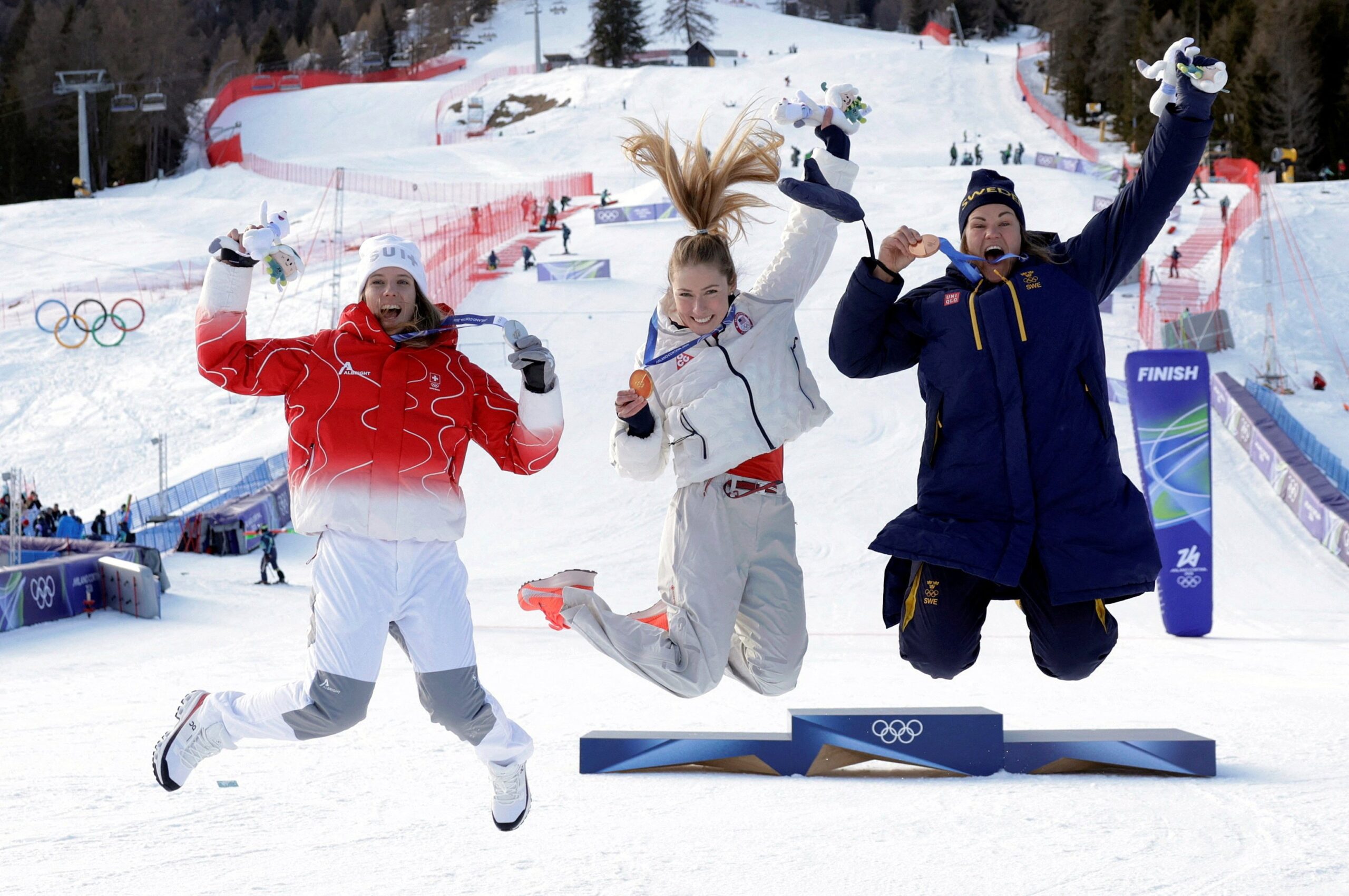
Pope Pius’ recognition of the good of physical play foreshadowed formal efforts now established in the Vatican to support athletics as a means of virtue and human excellence, on all levels — from neighborhood kickball to the Olympics, including this year’s Milan-Cortina Winter Games, whose closing ceremony will be held Feb. 22.
Over the 20th century, the Catholic Church continued to develop what some call a “theology of sport,” laying the foundation for St. John Paul II’s creation of the “Church and Sport” section within what is now the Dicastery for Laity, Family and Life. He also praised the good of sports in meetings with sports organizations, and was known as an athlete in his own right.
As pope, Benedict XVI gave less attention to sports than his predecessor, but in 1978, as archbishop of Munich-Freising, Germany, he described sport as an activity that links humanity, and even more profoundly, something expressive of humankind’s desire to prelapsarian freedom and bliss.
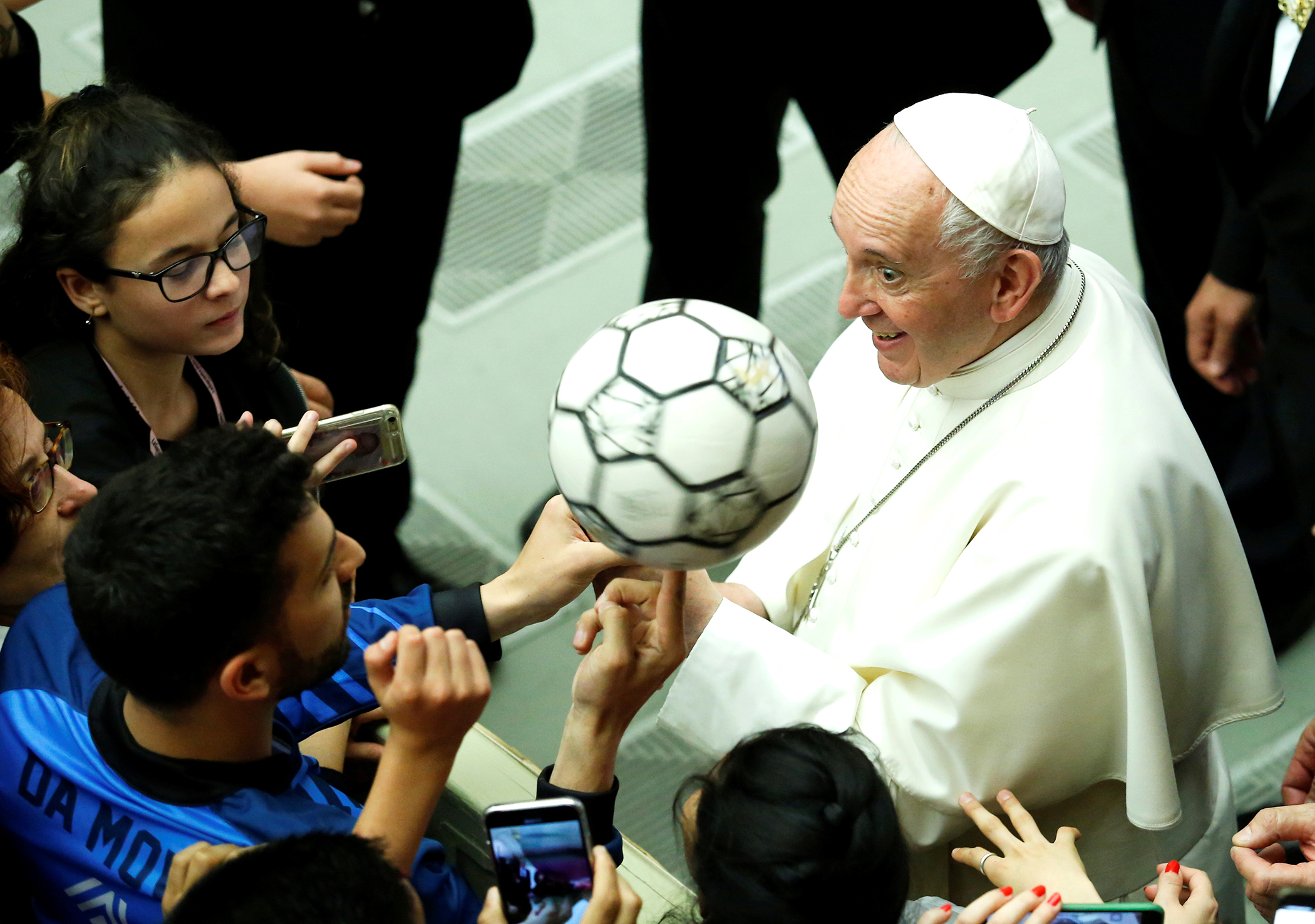
Under Pope Francis, several new Vatican-driven sports initiatives took shape. Among them are the “Sport at the Service of Humanity,” which launched — with the help of Thomas Bach, then-president of the International Olympic Committee, and Ban Ki-Moon, then secretary-general of the United Nations — after the Vatican hosted the inaugural global conference on faith and sport in 2016.
Since its founding, other regional Sport at the Service of Humanity conferences have been held at U.S. universities.
In June 2018, the Dicastery for Laity, Family and Life issued “Giving the Best of Yourself,” a document on the Christian perspective on sport and the human person. The document traced the history of the Church’s intersection with sports culture, and it articulated why the Church has something to say on sports and athletics.
“The Church is interested in sport because the person is at her heart, the whole person, and she recognizes that sports activity affects the formation, relations and spirituality of a person,” it stated, quoting from Pope Francis’ 2015 address to the Italian Tennis Federation.
Jesuit Father Patrick Kelly, a theologian who joined the faculty of Creighton University in Omaha, Nebraska, in 2025 after teaching at University of Detroit Mercy and Seattle University, was a key contributor to “Giving the Best of Yourself.” The author of “Play, Sport and Spirit” (Paulist Press, 2023), he has dedicated much of his academic work to the relationship between faith and sports.
“Sport is so human,” said Father Kelly, who is also involved with the Sport at the Service of Humanity initiative. His approach to the theology and sport is grounded, he said, in the understanding of the dignity of the human person, conviction in the goodness of the material world, and that the body is “constitutive of what it means to be a human person.”
While some religious heresies have focused on a person extricating themselves from the physical realm, Catholicism has integrated the body fully into worship with pilgrimages, processions and the sacraments, Father Kelly told OSV News.
He pointed to St. Paul’s writings to the Corinthians in which he compared the Chrisitan life to sports, something they already understood well. Corinth sponsored the Isthmian Games, which were held every two years to complement the ancient Olympics cycle.
“Do you not know that the runners in the stadium all run in the race, but only one wins the prize? Run so as to win,” he wrote. “Every athlete exercises discipline in every way. They do it to win a perishable crown, but we an imperishable one. Thus I do not run aimlessly; I do not fight as if I were shadowboxing. No, I drive my body and train it, for fear that, after having preached to others, I myself should be disqualified.”
St. Paul “references running a race in a stadium and uses athletic imagery,” Father Kelly said. “They knew very well athletics, but they didn’t know Jesus, the Good News was new to them.”
Early Christians also drew from athletic imagery to describe the martyrs or monasticism, Father Kelly said. St. Thomas Aquinas also addressed the connection between virtue and sport in the “Summa Theologiae,” and says sports are positively associated with moderation.
“We play because we enjoy what we’re doing, but the enjoyment is, he (Thomas) says, directed to the good of the player,” he said. “It’s the fullness of life — you’re more fully human.”
Theologian James Jay Carney, Father Kelly’s colleague at Jesuit-founded Creighton, said that while many people connect with sports in their life, sports’ purpose and meaning is sometimes ignored or unexplored. Carney and another colleague developed a course on the topic, and he co-authored “On the Eighth Day: A Catholic Theology of Sport,” published in 2022.
He said that a theology of sports relates to the Jesuit maxim of “finding God in all things.”
“Our experience of transcendence and meaning isn’t simply found in church. God’s present everywhere and always calling us, in a way, to our fullest kind of human experience,” Carney told OSV News. “It doesn’t mean sport is always that way, but it can be, with the right lens and the kind of reflective sense.”
The experts told OSV News that exploring and incorporating the Church’s view of sports could have a positive impact on how serious athletes might view their personal worth and dignity; how coaches might approach their roles; and the place people and cultures place sports amid other obligations and priorities.
The Olympics particularly underscore the best of sports — and sometimes also the worst, Carney said. While the Olympics Games have involved competition scandals, poor sportsmanship, cheating and national tribalism, the Olympic Games also serve as a unifier within and across countries’ borders, and they highlight what is possible with hard work, sacrifice and perseverance.
“At its best, it’s a great celebration of the human spirit, aspiration and what (Popes) Francis and Leo talk about in terms of ‘encounter’ across all these lines,” Carney said.
As the 2026 Milan Cortina Winter Games opened Feb. 6, Pope Leo XIV issued a letter on the value of sport titled “Life in Abundance.” The letter underscored sport’s potential as an instrument of peace and an “ecclesial service.”
“(S)port can truly become a school of life, where all can learn that abundance does not come from victory at any cost, but from sharing, from respecting others, and from the joy of walking together,” he said.
Sports also “offers valuable lessons that extend beyond the playing field,” continued Pope Leo, a tennis player himself.
“It teaches us that we can strive for the highest level without denying our own fragility; that we can win without humiliating others; and that we can lose without being defeated as individuals,” he wrote. “Fair competition thus safeguards a deeply human and communal dimension. It does not divide, but brings people together; it does not focus solely on the result, but values the journey; it does not idolize performance, but recognizes the dignity of those who play.”