
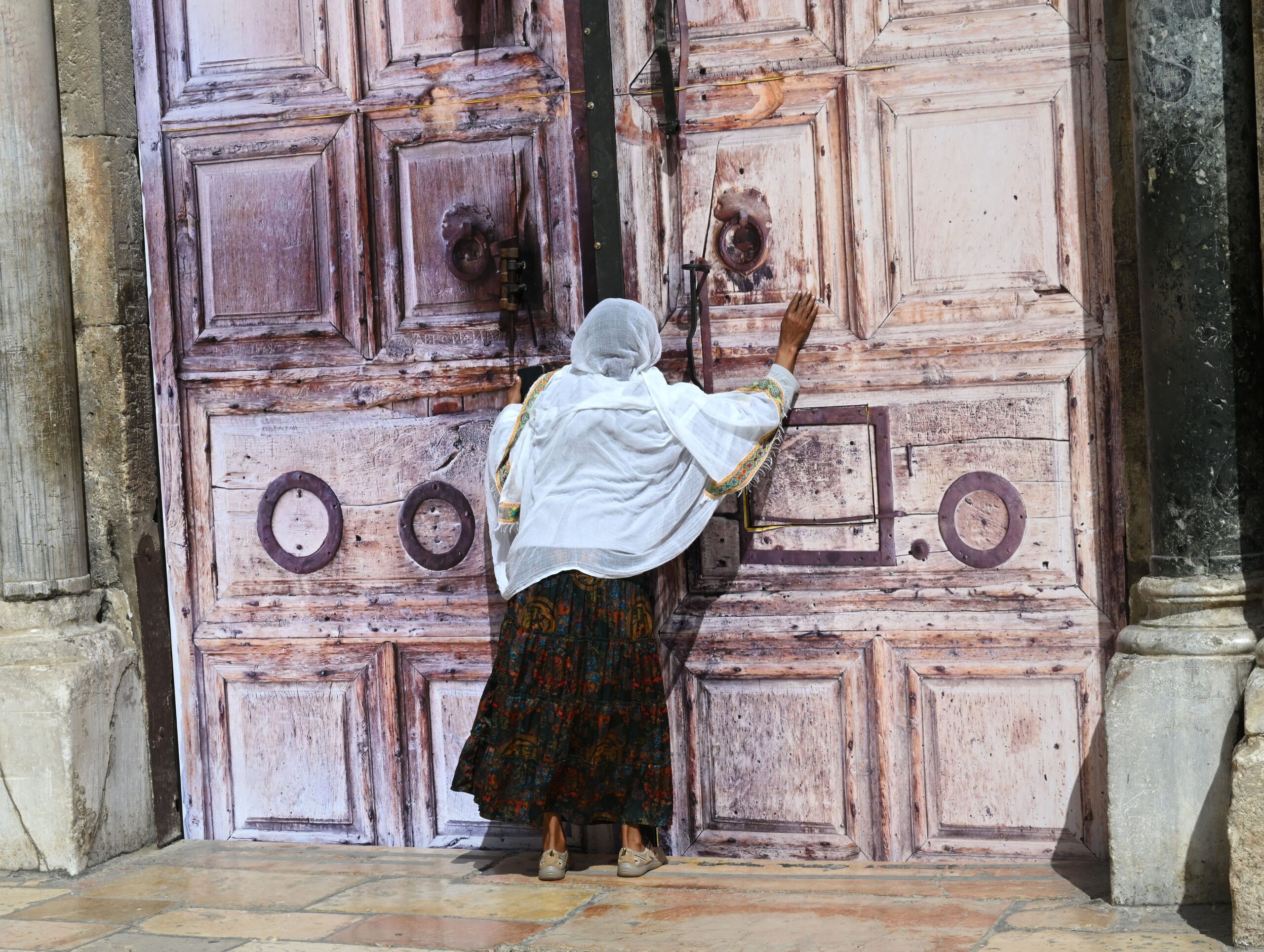



Israeli authorities closed Jerusalem’s Church of the Holy Sepulcher as part of wider closures for security concerns, beginning Feb. 28, when Israel and the United States launched attacks against Iran.
A statement from the head of Israel’s Civil Administration confirmed that “all holy sites in the Old City of Jerusalem, including the Western Wall, the Temple Mount and the Church of the Holy Sepulcher, will remain closed … for security reasons in light of the current tensions in the region.”
Joseph Hazboun, regional director of the office of CNEWA/Pontifical Mission for Palestine in Jerusalem, said the decision was framed as a precaution against potential attacks and to prevent mass gatherings during a period of heightened alert.
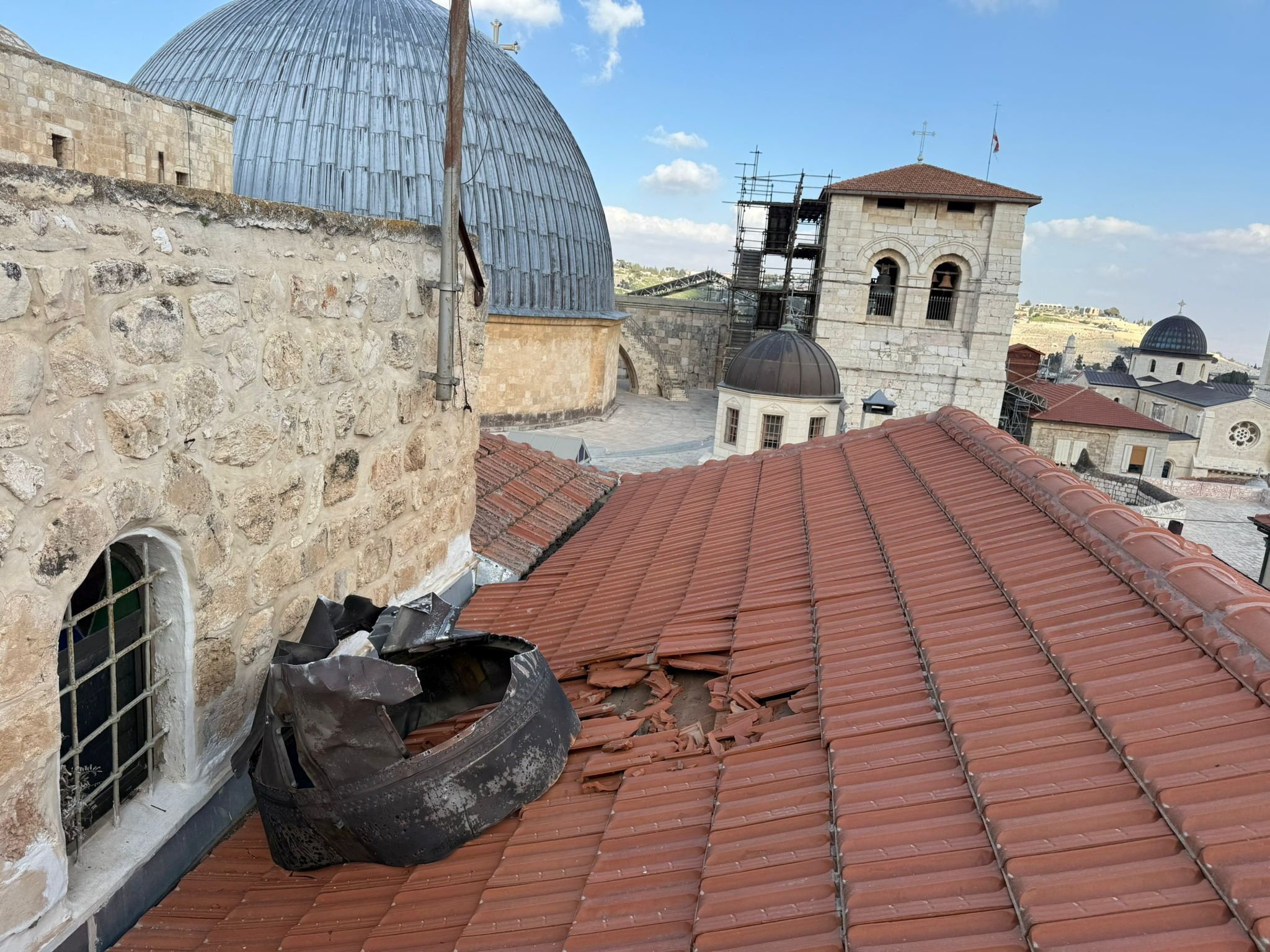
The Israeli Foreign Ministry reported on X on March 12 that a missile struck “a few hundred meters from the Old City, the Western Wall, al-Aqsa Mosque and the Church of the Holy Sepulcher. Protecting lives and worshipper’s safety come first.”
Hazboun said although other churches remained open, he expected the Church of the Holy Sepulcher, which contains the tomb of Jesus, to remain closed “until the end of the war and the cessation of rocket fire from Iran on Israel.”
Holy Week begins March 29, and Hazboun said he expects services for Holy Week and Easter will be celebrated at the Church of the Holy Sepulcher with religious and clergy only, as happened during the COVID-19 pandemic.
The Holy Sepulchre is governed by the Status Quo, the 19th-century agreement that governs Jerusalem’s holy places. The church has services for Catholic, Greek Orthodox, Armenian Apostolic, Coptic, Syriac and Ethiopian Orthodox worshippers.
“The church leaders intend to meet with (a) representative of the police to impress on them the need to allow Easter celebrations, even if at a reduced capacity, similar to the pandemic restrictions,” said Sami el-Yousef, chief executive officer of the Latin Patriarchate of Jerusalem. “We shall see whether that will bear any results.”
Hazboun said that on March 15, “the 27th of Ramadan and Laylat al-Qadr — an especially significant evening for Muslims in Jerusalem and Palestine — the Israelis sealed off the Old City to prevent Muslims from entering and reaching al-Aqsa (Mosque).”
“Thousands ended up observing the night near the gates of the Old City. In addition, even residents of the Old City, including Christians, were not permitted to leave,” he said.
Barb Fraze is a contributing editor to ONE Magazine and a freelance journalist. This story was originally published in ONE Magazine of the CNEWA/Pontifical Mission for Palestine in Jerusalem and distributed through a partnership with OSV News.


