
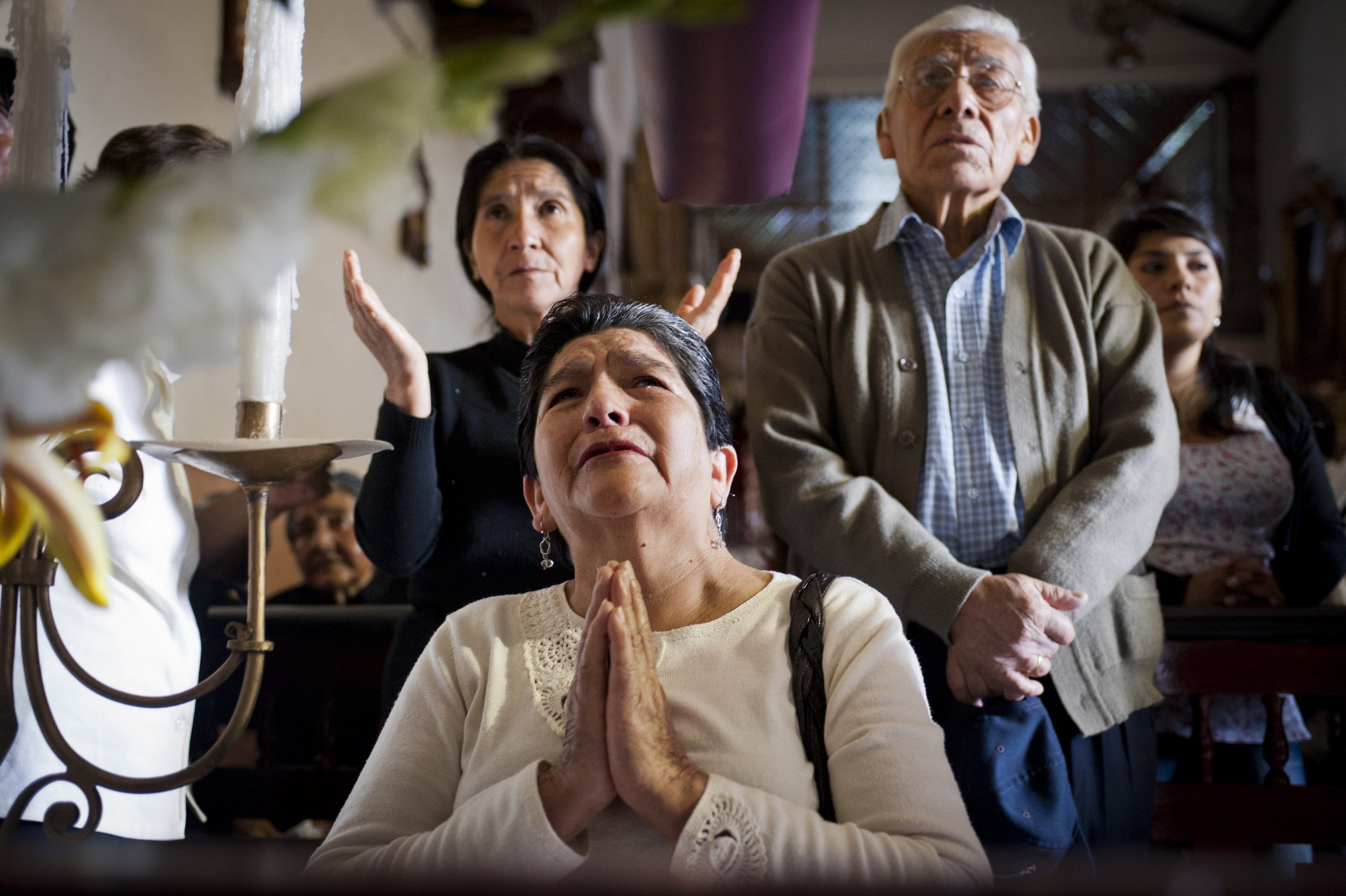

Catholicism has waned in Latin America over the past decade, with more individuals foregoing religious affiliation — although belief in God remains “high across the region,” according to a new report.
The findings were released Jan. 21 by Pew Research Center, based on survey data gathered in spring 2024 from more than 6,200 Latin American adults in Argentina, Brazil, Chile, Colombia, Mexico and Peru, the region’s most populous countries.
Despite the downturn, Catholicism remains Latin America’s largest religion, with Catholics in the study’s six focus nations ranging from 46% to 67% of the respective general populations.
However, Pew noted, “Catholic numbers have dropped by 9 percentage points or more in all six countries over the past decade.”
That decline comes as the number of religiously unaffiliated adults — or “nones,” defined by Pew as agnostic, atheist or having no particular faith identity — has risen by 7 points or more, representing anywhere from 12% to 33% of the population in the six focus nations.
Colombia saw the largest loss of Catholics, down 19 points from 79% in 2013-2014 to 60% in 2024.
Close behind were Chile (46%, down from 64%), Brazil (46% from 61%) and Mexico (67% from 81%).
Argentina’s Catholics have dwindled from 71% to 58%, while Peru, where Catholics fell from 76% to 67% of the population, saw the smallest drop among the six countries.
Since 1900 — when “the vast majority of Latin Americans were Catholic,” said Pew — Catholicism has declined significantly in the region.
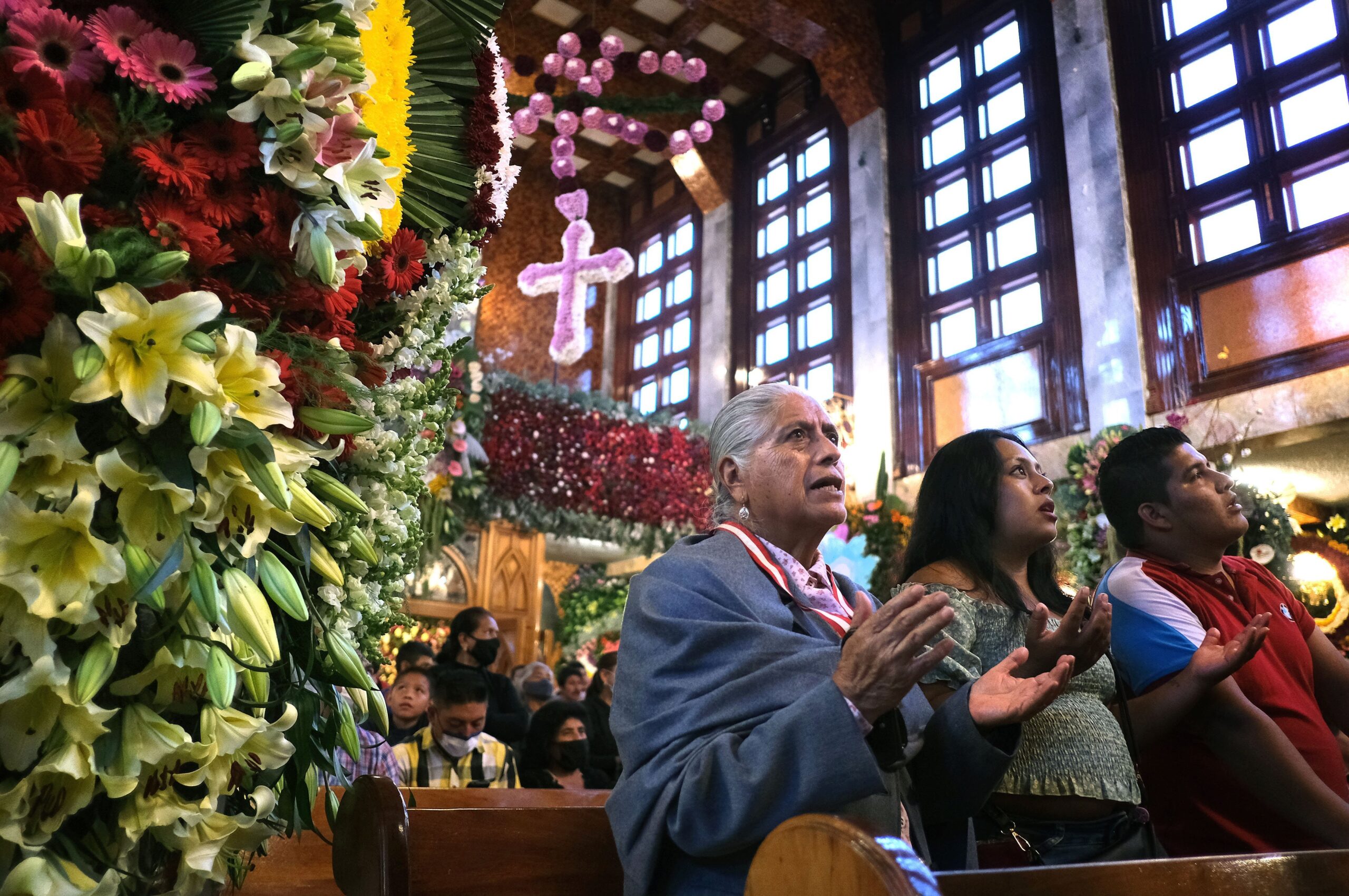
Using data from the World Religion Database (which included adjusted estimates for adults and children) along with its recent data, Pew charted what in some nations was an almost 50% drop over the past century and a quarter.
Once at 95%, Catholicism in both Brazil and Chile has declined to 46%, while Argentina saw a decrease from 97% to 58%. Mexico and Peru, respectively, fell from 91% and 95% to 67%.
Between 1900 and 1970, Catholicism in Colombia rose from 80% to 95%, and has since receded to 60%.
Pew said that “religious switching” — where adults raised in a faith tradition no longer identify with it — is “one reason for the decline of Catholicism and growth of religiously unaffiliated populations in Latin America.”
In the six focus countries, approximately 2 in 10 or more adults have switched out of Catholicism, with many becoming religiously unaffiliated, and smaller shares in some nations “now identifying as Protestant,” said Pew.
Across the region, Protestantism “has remained relatively stable,” said Pew.
Of the six nations surveyed, Brazil has the highest percentage of Protestants, now at 29%, up 3% over the past decade.
Chile (19%), Peru (18%), Argentina (16%) and Colombia (15%) all had significant shares of Protestants as well, with each nation seeing increases of 1 to 2 percentage points since 2013-2014. Just 9% of Mexican respondents identified themselves as Protestant.
The data showed that Pentecostal Protestantism — a charismatic movement that originated in the 20th-century U.S. — “continues to be widespread across the region,” said Pew.
However, “the percentage of Protestants who are Pentecostal has declined over the past decade as other traditions have grown,” the report said.
At the same time, said Pew, “there are now more religiously unaffiliated adults than Protestants in Argentina, Chile, Colombia and Mexico.”
Still, said Pew, “Latin Americans remain quite religious, on average.”
The report said that “belief in God” among Latin Americans is “widespread,” with “around nine-in-ten or more adults surveyed in each country saying they believe in God.”
That belief has held fairly steady over the past decade, and even majorities of religiously unaffiliated adults indicate they share it, Pew said.
Religion “matters deeply to many people in the region,” said Pew, which found that about half or more of those surveyed in Brazil, Colombia, Mexico and Peru regard it as “very important” in their lives.
Prayer in Latin America is “fairly common,” said Pew, noting that “majorities of Brazilian, Colombian and Peruvian adults” report praying “at least once a day.”
In fact, said Pew, “by these measures, Latin Americans are more religious than adults in many other countries” it has surveyed in recent years — particularly in Europe, “where many adults have left Christianity since childhood.”
Large shares of adults in the six nations say they pray at least daily or more often, attend religious services monthly or more, and wear or carry religious items or symbols, said Pew.
Brazil topped the list for prayer (76%) and attendance at religious services (62%), followed by Colombia, where 71% reported praying daily and 56% said that they attended religious services.
Smaller numbers reported praying daily in Peru (58%), Mexico (44%), Chile (41%) and Argentina (39%).
More than half of Mexicans (59%) and Peruvians (53%) attend religious services at least monthly, while only about a quarter to a third do so in Chile (22%) and Argentina (30%).
Pew stressed that “levels of engagement vary widely among Catholics, Protestants and religiously unaffiliated people in Latin America.”
Among the six nations surveyed, Pew found that “Protestants are more likely than Catholics and ‘nones’ to say religion is very important in their lives.”
Protestants in the region are also more likely than their Catholic and religiously unaffiliated counterparts to report attending religious services at least weekly or more, said Pew.
Pew also said that “Catholics and religiously unaffiliated adults in Latin America are generally more likely than Protestants to believe that parts of nature — such as mountains, rivers or trees — can have spirits or spiritual energies.”
Catholics are also more likely than both Protestants and “nones” to say they wear or carry religious items or symbols, the report said.
Pew found that across the six countries surveyed, “younger adults are much less likely than older adults to identify as Catholic,” instead describing themselves as “atheist, agnostic or ‘nothing in particular.'”

Pew also reported “no significant differences by age in the shares of adults who identify as Protestant in each country, or who identify as Pentecostal Protestants,” and “no significant differences in the shares of Latin American men and women who identify as Catholic, Protestant or religiously unaffiliated.”
Along with Catholicism, Protestantism and religious disaffiliation, the region is home to a number of Afro-Caribbean, Afro-Brazilian and Latin American Indigenous religions, Pew noted.
Such religions broadly include a range of beliefs in reincarnation, magic, the influence of ancestral spirits, and spiritual energies in animals, nature and objects.
In its study, Pew included questions to determine the broader embrace of such beliefs, and found “differences between Catholics and Protestants on some of these measures.
“For example, Catholics across the region are more likely than Protestants to consult a fortune teller or horoscope to see the future and to believe that the spirits of ancestors can help or harm the living,” said Pew.


