
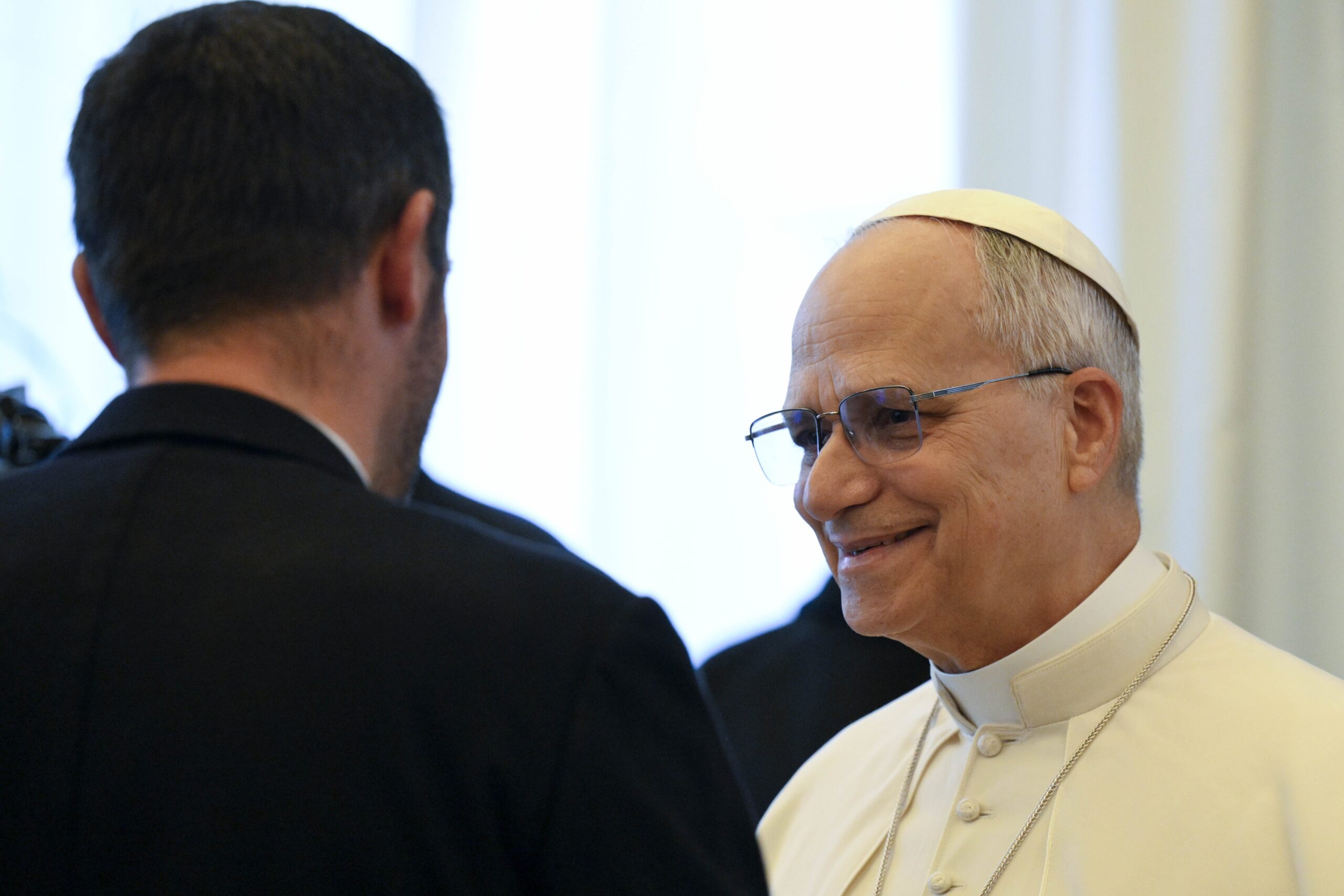


VATICAN CITY — The evening before meeting a group of conservative European politicians, Pope Leo XIV expressed disappointment at what appears to be a weakening alliance between the United States and Europe.
Meeting reporters Dec. 9 outside the papal villa in Castel Gandolfo, where he had met Ukrainian President Volodymyr Zelenskyy earlier in the day, Pope Leo was asked again about his opinion of U.S. President Donald Trump’s proposed plan to end Russia’s war on Ukraine.
Pope Leo responded that he did not want to comment since he had not read the whole plan.


But, as he had told reporters returning to Rome with him from Lebanon Dec. 2, the pope said he was concerned about the initial lack of European input into the plan.
“Unfortunately, some parts of it that I have seen make a huge change in what was for many, many years, a true alliance between Europe and the United States,” he said.
And “remarks that are made about Europe, also in interviews recently, I think, are trying to break apart what I think needs to be a very important alliance today and in the future,” the pope continued. He apparently was talking about remarks in Trump’s National Security Strategy, released Dec. 5, and the president’s recent interview with Politico, both of which described Europe as weak, ineffectual and overrun with immigrants.
The next morning Pope Leo met at the Vatican with dozens of members of the Conservatives and Reformists Group of the European Parliament. The group describes itself as “center-right” and focused on “decentralization, connecting people and business, promoting fair and free trade, and fostering a safe and secure Europe.”
Thanking the parliamentarians for their public service, the pope said that “to hold any high office within society comes with the responsibility to advance the common good. I especially encourage you, therefore, never to lose sight of the forgotten ones, those on the margins, those whom Jesus Christ called ‘the least’ among us.”
Members of the group, he said, have one political agenda while serving in a parliament with people who have other priorities.
“The mark of any civilized society is that differences are debated with courtesy and respect,” he said, because “the ability to disagree, listen attentively and even to enter into dialogue with those whom we may regard as opponents, bears witness to our reverence for the God-given dignity of all men and women.”
“European identity can only be understood and promoted in reference to its Judeo-Christian roots,” the pope told the group, echoing what his predecessors always maintained.
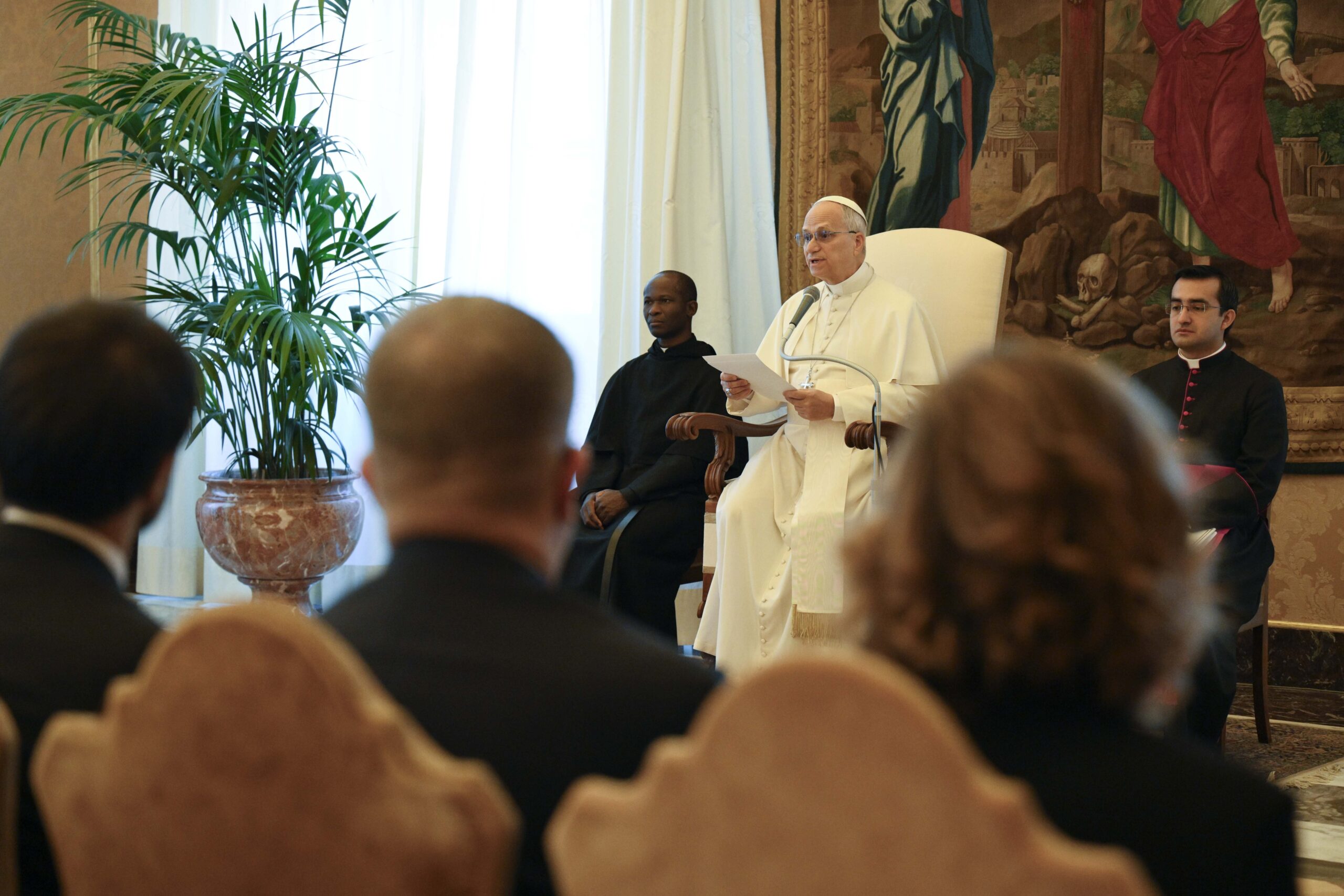
When the Catholic Church and its leaders work to protect the “religious legacy of this continent,” he said, they do so “not simply to safeguard the rights of its Christian communities, nor is it primarily a question of preserving particular social customs or traditions, which in any case vary from place to place, and throughout history.”
“It is above all a recognition of fact,” Pope Leo said.
The Christian contribution is immediately visible in the art, architecture and music, as well as the continent’s centuries-old universities, he said. But even more important are “the rich ethical principles and patterns of thought that are the intellectual patrimony of Christian Europe.”
“These are essential for safeguarding the divinely bestowed rights and inherent worth of every human person, from conception to natural death,” the pope said.
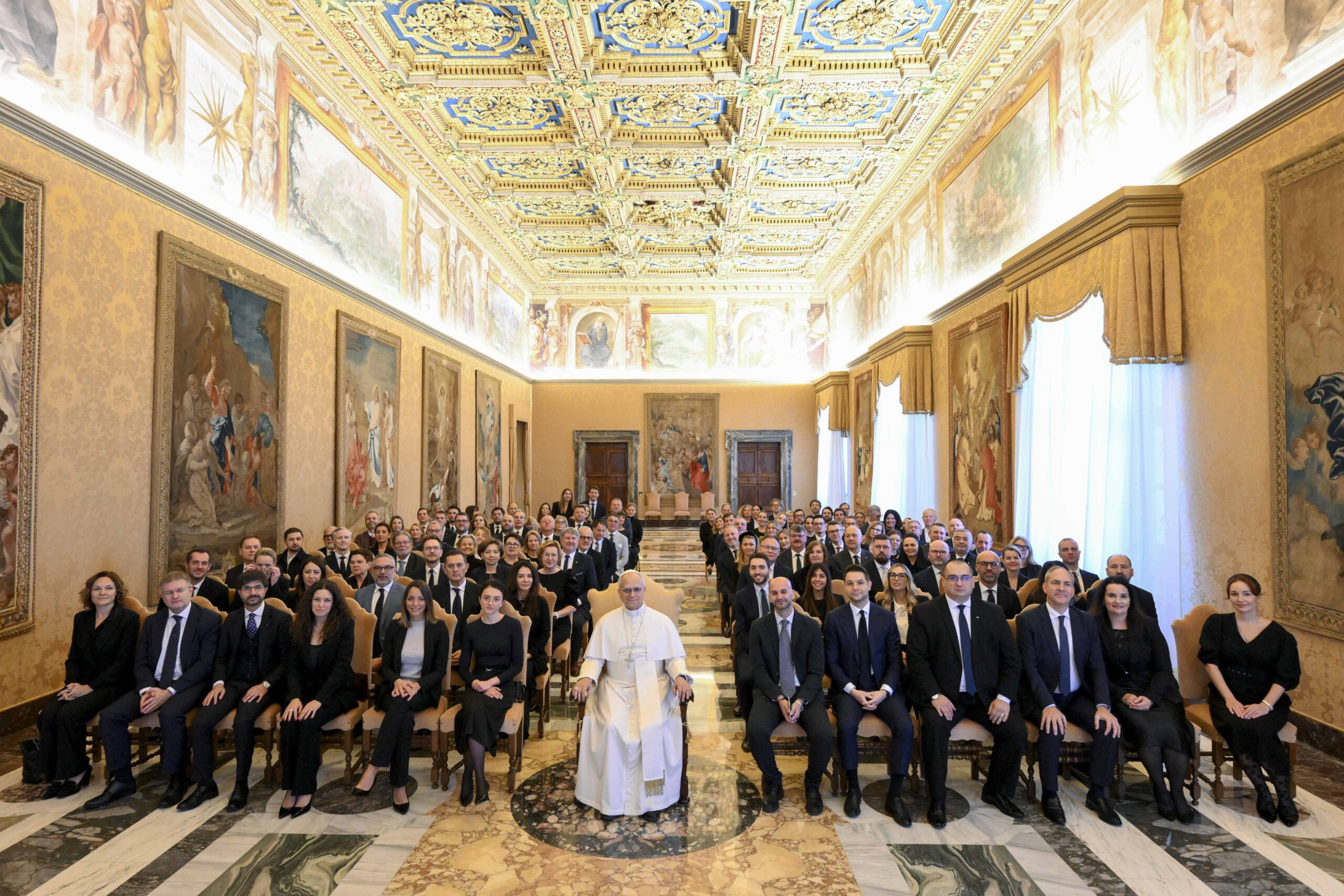
The principles, he said, also should help Europeans respond to “the challenges presented by poverty, social exclusion, economic deprivation, as well as by the ongoing climate crisis, violence and war.”
When the Catholic Church asks to be heard, he said, it “is not about the restoration of a past epoch, but of guaranteeing that key resources for future cooperation and integration are not lost.”