
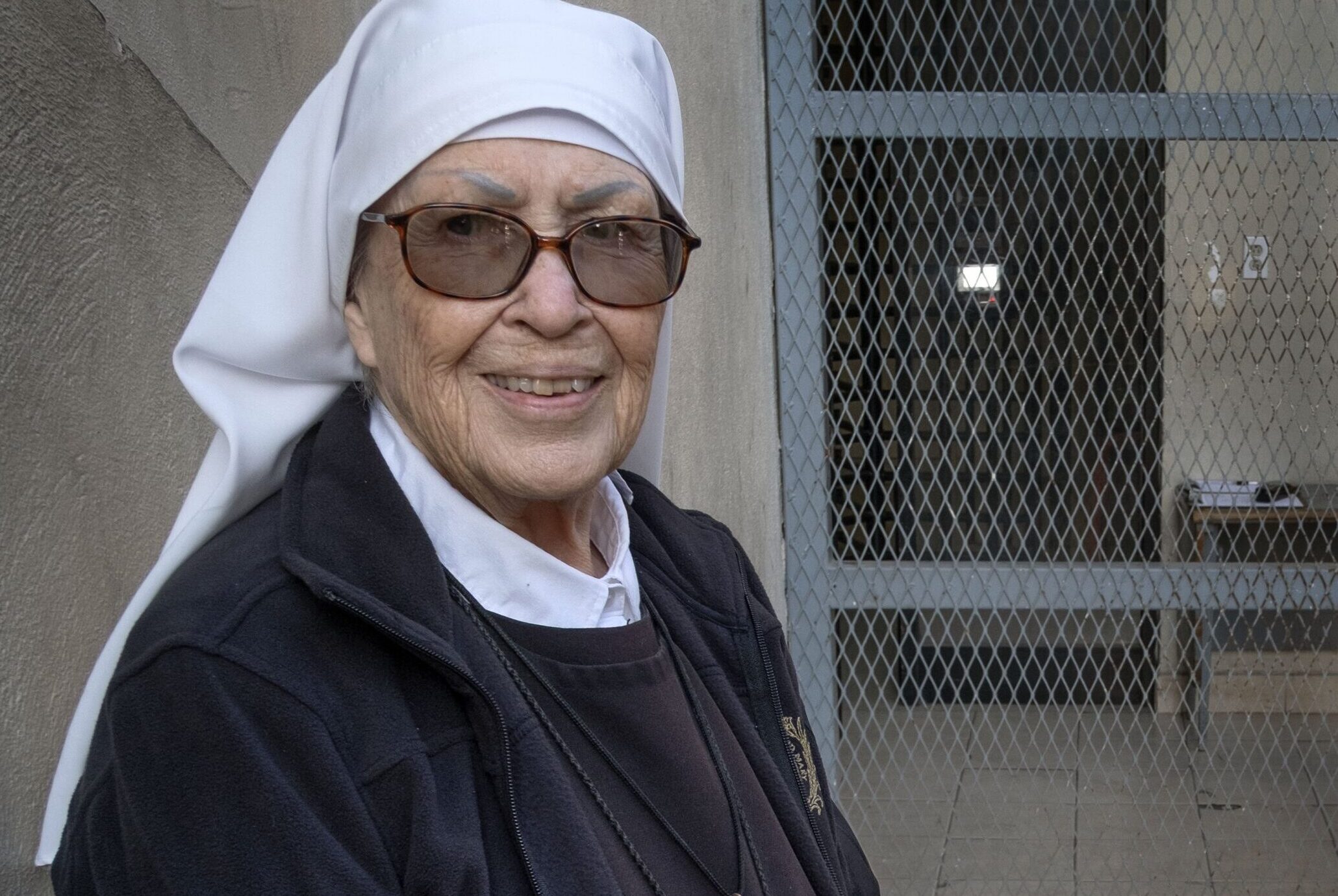

TIJUANA, Mexico — Antonia Brenner was twice divorced and had raised seven children when she gave up her comfortable life in Southern California to live in a small prison cell in the border city of Tijuana.
The onetime Beverly Hills resident became a nun at age 50, and for more than three decades devoted her life to serving not only those behind bars, but also others on the outside who were poor, sick, and vulnerable.
Twelve years after her death at age 86, members of her religious community are launching an effort to canonize Mother Antonia.
“She cared and loved so much,” said Sister Viola Lovato Ramirez, general leader of the Eudist Servants of the 11th Hour, the religious community Mother Antonia founded for older women like herself who feel the call to serve. “She loved the people of Mexico especially, God put that in her heart.”
Named after St. John Eudes, the French saint, the sisters were formally accepted as a private association of the faithful in 2003 by Tijuana’s bishop. The community currently consists of 11 sisters who range in age from 56 to 85, five of them assigned to Tijuana, the rest based in different parts of the United States. Its rules stipulate that the women who join be self-supporting and have health insurance. They renew their vows annually.
Earlier this year, the sisters began collaborating with the Center for Sainthood Studies, a Catholic nonprofit in Menlo Park, California, to initiate a cause for canonization of Mother Antonia. “A big thing with candidates for sainthood is the lasting impact they have,” Travis Degheri, the center’s executive director, told OSV News. “From everyone I’ve talked to that has had any sort of relationship with Mother Antonia, it’s very clear that she had a lasting impact on their lives.”
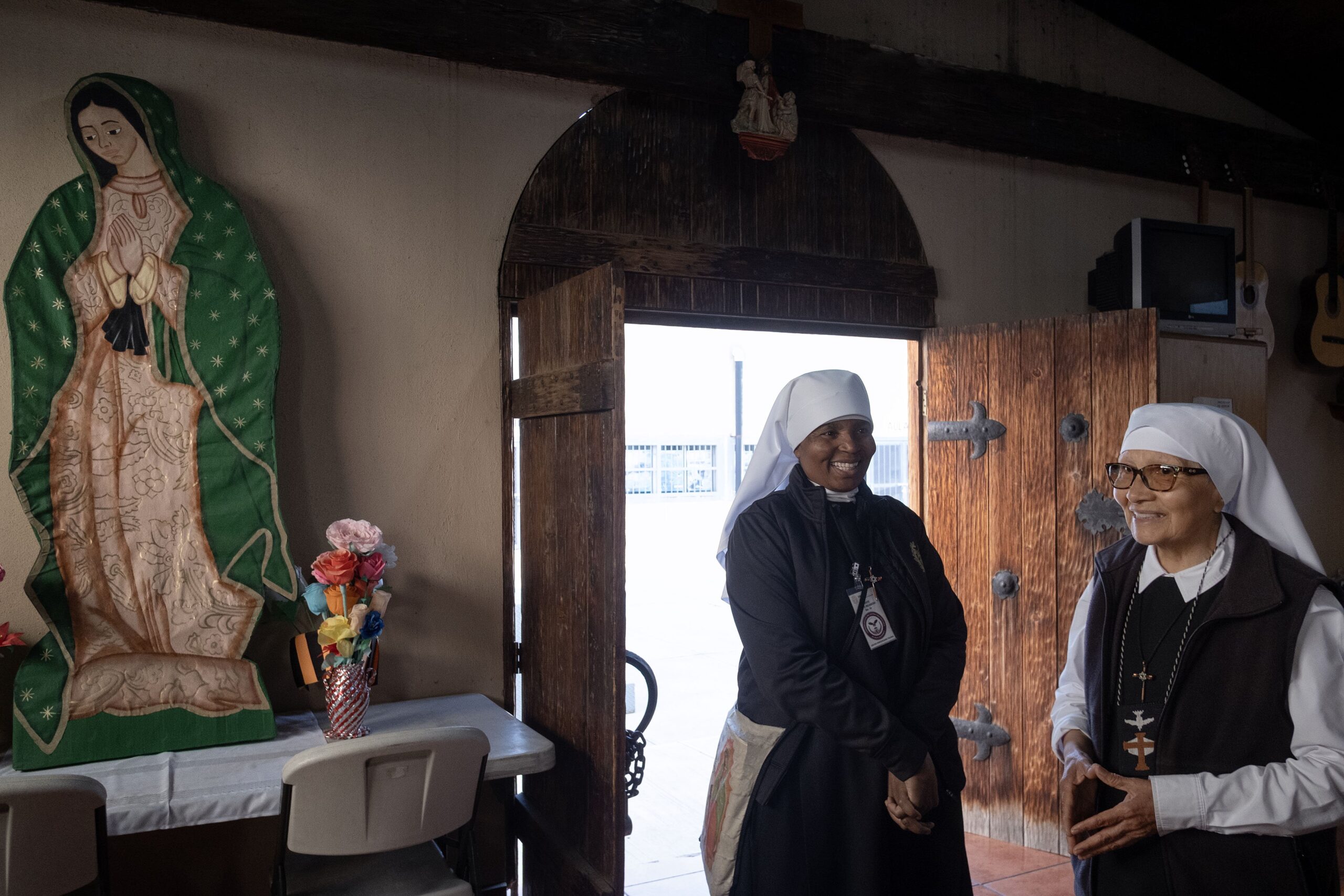
In Tijuana, the mention of la Madre Antonia often evokes smiles. A small woman with piercing blue eyes, and heavily accented Spanish, she befriended inmates at the state-run La Mesa Penitentiary and called them her sons. During a riot in the 1980s, she stepped into the prison courtyard as inmates fired weapons, urging them to stop shooting, said Alberto Licona, a retired Tijuana police commander who witnessed the incident.
“The bullets were flying,” he recalled. “She went and spoke to them for a long time, and they surrendered.”
Mother Antonia fought for the dignity of prisoners of the overcrowded penitentiary, bringing them not just spiritual solace but also physical necessities such as soap, toilet paper, toothpaste and medicines. She raised funds to pay for their dental care, and raised bail for those being held on lesser charges. Her efforts extended to prison guards as well, and outside the penitentiary’s walls as she supported cancer and AIDS patients, as well as women newly released from prison and the family members of slain police officers.
La Mesa was one of Mexico’s most corrupt and overcrowded prisons when Mother Antonia first persuaded prison officials to let her live there in 1977. Today, the rebuilt penitentiary houses 3,500 inmates, including 440 women, in seven buildings built for 2,500. Many inmates continue to have vast needs, especially those without family members to visit and purchase basic toiletry supplies.
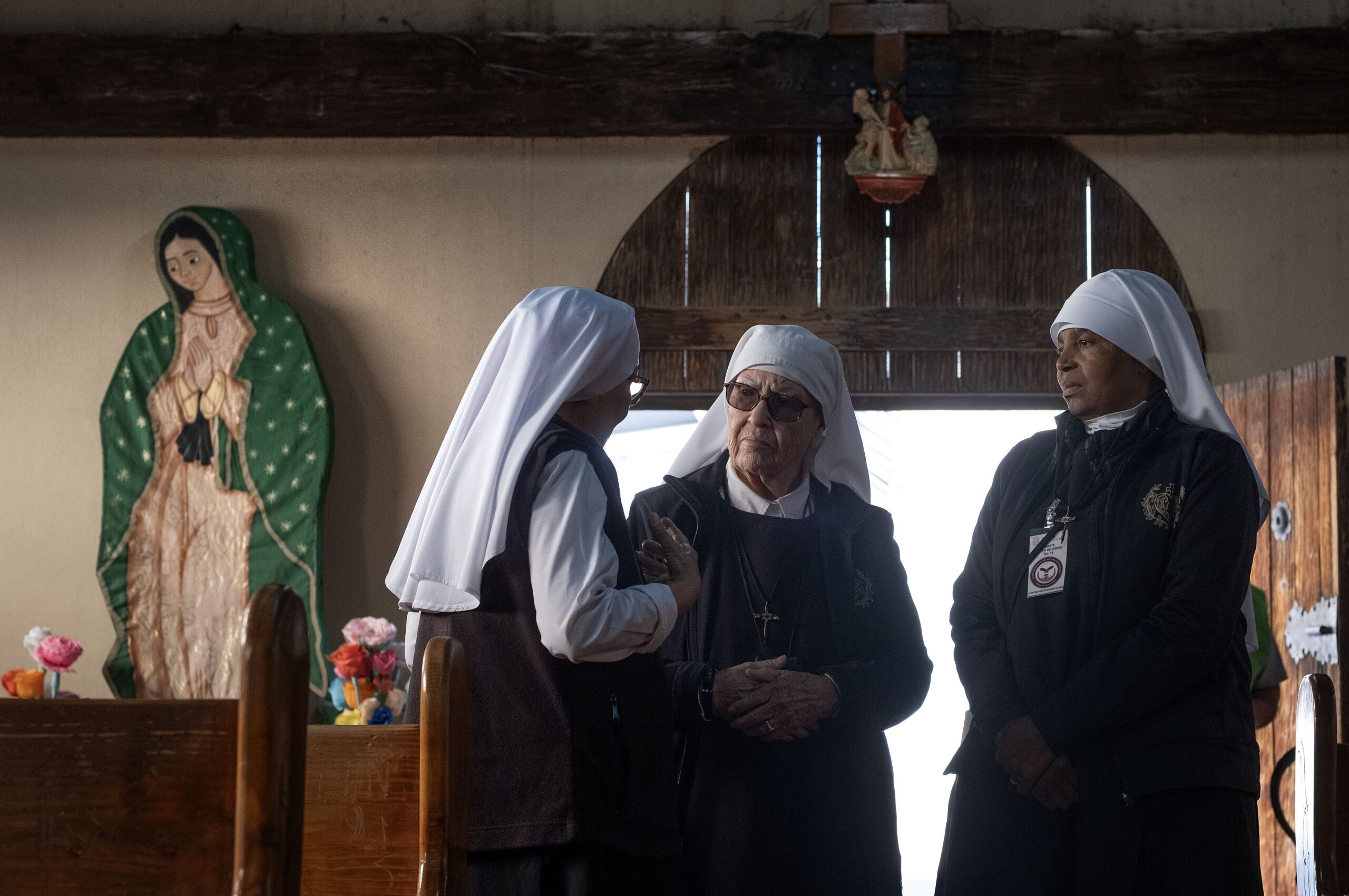
On what would have been Mother Antonia’s 99th birthday, Dec. 1, three Eudist sisters arrived early to carry on her mission wheeling two shopping carts filled with rolls of toilet paper, toothpaste, razors and candy into the cellblocks.
In one building, former law enforcement officers were packed into a row of small cells with narrow bunk beds. At the end of a hallway, some wiped away tears and knelt while Sister Ann Gertrude Djuidje, originally from Cameroon, stood on the other side of the bars, offering prayers and blessings.
“Sometimes, not even our family visits us, and this is our only spiritual support,” said Luis, 45, a former municipal police officer who has been incarcerated for nearly three years, but has yet to be convicted of any crime. The visits and prayers “are like an embrace from God,” he said.
A prison guard known as “El Profe” — the professor — said Madre Antonia taught him the importance of seeing the person and not the criminal. “I always keep it in mind, behind every delinquent is an injured child.”
Mentions of sainthood for Mother Antonia first arose while she was still alive. In October, with help from the Center for Sainthood Studies, her community took the initial step by submitting paperwork to the Archdiocese of Tijuana. But days later, Archbishop Francisco Moreno Barron died, and they are on stand-by until a new archbishop is appointed.
In the meantime, Sister Anne Marie Maxfield, the community’s secretary, is busy gathering information and anecdotes to support their effort.
“She’s an example for other women,” said Sister Anne Marie. “You can live a full life in one way and then start another life,” she said. “This encourages other people to say you know what? If she could do it, I could do it.”


