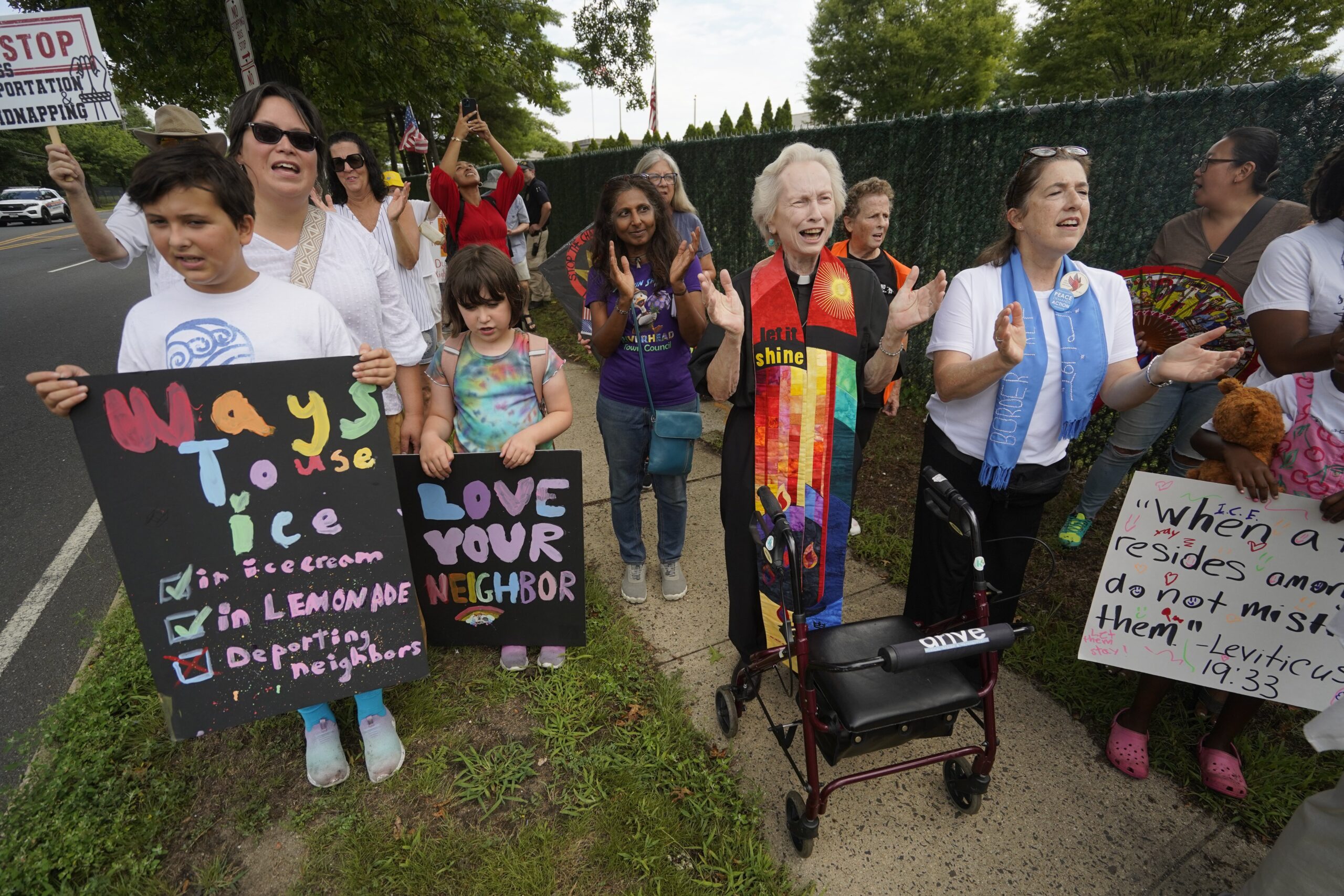




WASHINGTON — In a year that brought both a new U.S. president and a new pope, the issue of immigration emerged as a flashpoint between them and as a key issue for the U.S. church.
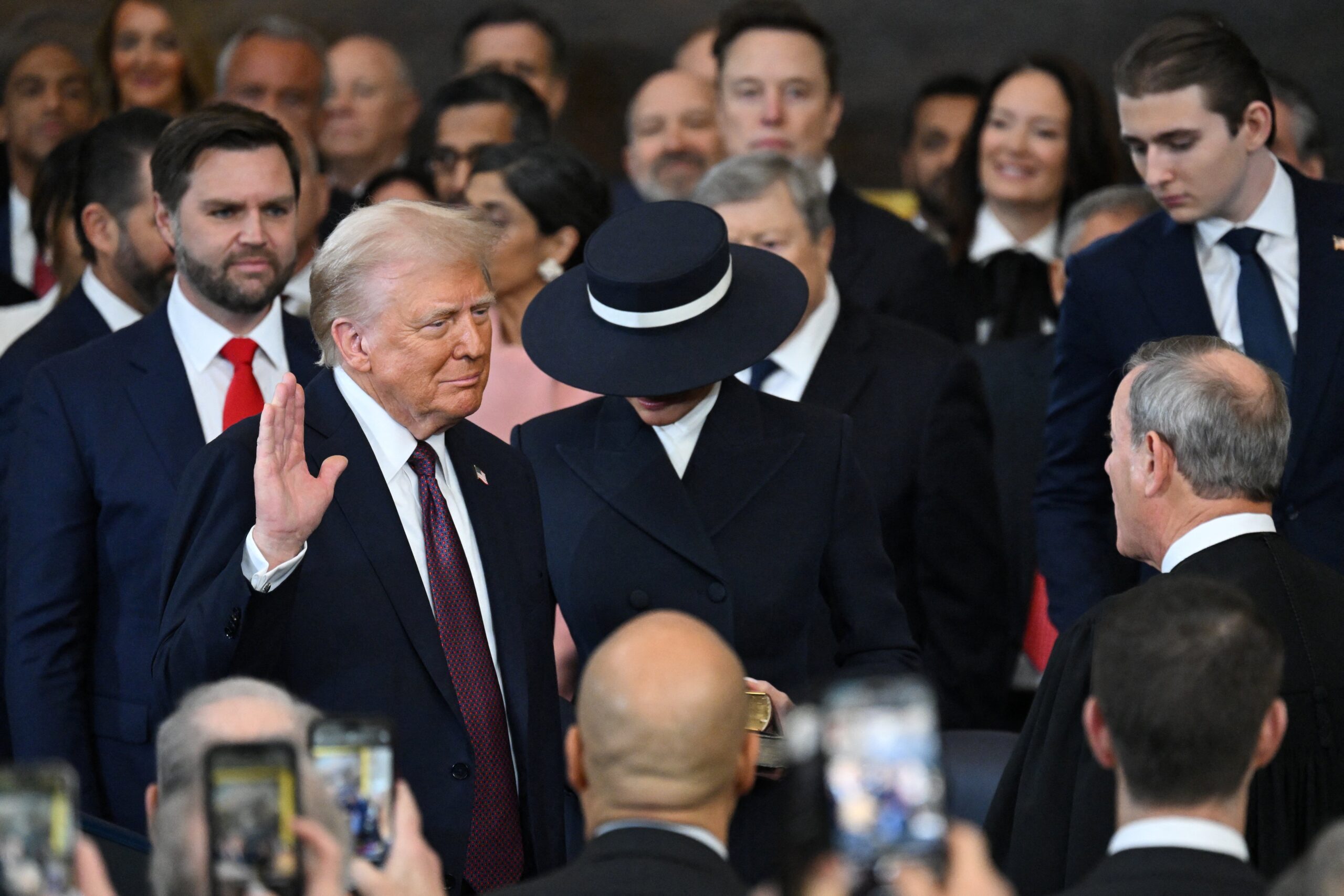
President Donald Trump was sworn in for a second, nonconsecutive term in the White House Jan. 20, becoming the nation’s 47th president four years after he left office as its 45th. In his second inaugural address, Trump said he would begin “the process of returning millions and millions of criminal aliens back to the places from which they came.”
Immigration and Customs Enforcement arrests have increased since then. However, as the Trump administration seeks to meet a goal of 3,000 such arrests per day, many of the individuals impacted have never been charged with a crime, arrest data shows.




On May 8, Pope Leo XIV was elected pontiff following the death of Pope Francis on April 20.
Ever since, Pope Leo has navigated the immigration issue “very effectively, I think,” Kenneth Craycraft, a professor of moral theology at Mount St. Mary’s Seminary and School of Theology in Cincinnati and author of “Citizens Yet Strangers: Living Authentically Catholic in a Divided America,” told OSV News.
“He has condemned the hateful rhetoric and lack of due process for immigrants, while also defending the rights of nations to control their borders. His statements have been careful, circumspect and wise,” Craycraft said.
John White, a professor of politics at The Catholic University of America in Washington, concurred, telling OSV News Pope Leo is “adhering to the Gospel message.”
“I think that he is a very careful man. He’s a very deliberate man,” White said of the pontiff’s approach. “I think one of the things that is so interesting here is that Pope Leo has both South American roots, but also American roots; he speaks perfect English, obviously, and directs that message toward American Catholics, which I think is important.”
In November, the U.S. Conference of Catholic Bishops approved a “special pastoral message on immigration,” voicing “our concern here for immigrants” at their annual fall plenary assembly in Baltimore.
The statement came as a growing number of bishops acknowledged that some of the Trump administration’s immigration policies risk presenting the church with both practical challenges in administering pastoral care and charitable endeavors, as well as religious liberty challenges.
At least one member of the Trump administration, “border czar” Tom Homan, called the U.S. Catholic bishops “wrong” in comments to reporters at the White House Nov. 14. “The Catholic Church is wrong,” he said. “I’m a lifelong Catholic, but I’m saying it not only as a border czar, but I’m also saying this as a Catholic, I think they need to spend time fixing the Catholic Church.”
The bishops’ message marked the first such message by the U.S. bishops in over 12 years, coming after a 2013 response to the federal government’s contraceptive mandate. Pope Leo praised the message, telling reporters, “I would just invite all people in the United States to listen to them.”
White cited dispensations from the obligation to attend Sunday Mass for the faithful if they fear for their well-being in San Bernardino, California, amid immigration enforcement raids as among “one of the biggest stories and through lines of the year” for the U.S. church.
Trump’s return to the White House was marked by a slew of executive orders in addition to his birthright citizenship order, such as one withdrawing from the 2015 Paris Agreement on climate, another to expand the use of the federal death penalty, and another directing the U.S. government to only recognize two sexes, male and female.
On July 4, Trump signed “the One Big Beautiful Bill Act,” a reconciliation bill enacting much of his legislative agenda on taxes and immigration. Catholic leaders alternately praised and criticized various provisions in the legislation, with some arguing its cuts to Medicaid and SNAP would harm the poorest families, while others pointed to a provision stripping Medicaid funding from entities that perform abortion — such as Planned Parenthood — for one year. However, as of the beginning of December, that provision remained blocked by a federal judge.
Craycraft argued, “It’s been a very disappointing and disconcerting first year” of the second Trump administration.
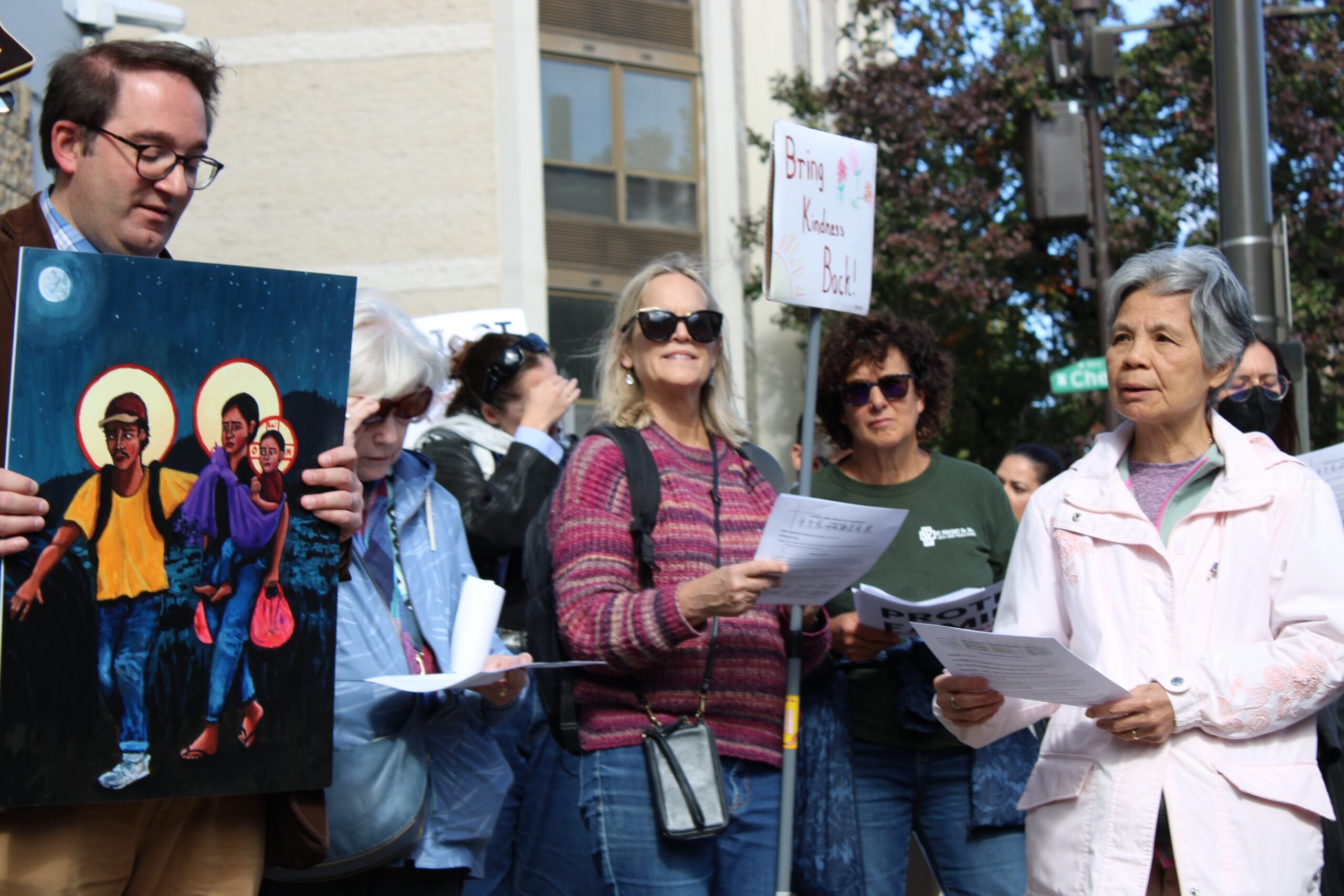
“The president’s erratic behavior, name-calling, and Truth Social rants indicate a person who is neither psychologically nor morally fit for the most important political office in the world,” he said. “Many Catholics were hoping that holding their noses and voting for him would yield some affirmative pro-life policies and measures. But the President endorses IVF, surrogacy and mifepristone, all very much in conflict with Catholic moral theology.”
The Food and Drug Administration’s approval of a new generic form of mifepristone — a pill commonly, but not exclusively, used for early abortion — was met with pushback from pro-life groups who argued that the administration should review the safety of the original drug instead.
The Trump administration also moved to formally dissolve the U.S. Agency for International Development and move a small number of its remaining functions under the purview of the State Department. Cuts to funding for the government’s now-shuttered humanitarian aid agency in countries all over the globe included funding for efforts by Catholic and other faith-based humanitarian groups such as Catholic Relief Services, the overseas charitable arm of the Catholic Church in the U.S.
The issue of political violence was another that colored 2025. Charlie Kirk, a conservative activist and founder of Turning Point USA was killed Sept. 10 during an event at Utah Valley University in Orem. After his death, Kirk received praise from his allies in conservative politics for his willingness to debate and his advocacy for their cause. However, in discussions about his legacy, his critics also pointed to his controversial political rhetoric on subjects including race, persons experiencing same-sex attraction or gender dysphoria, and immigrants.
“The assassination of Charlie Kirk has contributed to the further decline in American political discourse,” Craycraft said, adding, “It’s a very sad episode in American public life.”
The targeted killings of Minnesota House of Representatives Speaker Emerita Melissa Hortman and her husband, Mark Hortman, and the firebombing of the Pennsylvania governor’s mansion, which is being investigated as the attempted murder of Democratic Gov. Josh Shapiro, were among other instances of political violence.
In a message released in October, Archbishop Timothy P. Broglio of the U.S. Archdiocese for the Military Services — who, until the U.S. bishop’s plenary in November, was the president of USCCB — urged every American to “reflect on the value of every human life, see Christ in each person, even those whose politics you oppose.”
After Pope Leo released his first apostolic exhortation, “Dilexi Te” (“I have loved you”), about love and care for the poor on Oct. 9, Archbishop Broglio issued a statement at the time urging the faithful to engage the document “on the challenges we face with contemporary migration,” and said Pope Leo “encourages us to respond with four actions: welcome, protect, promote and integrate. This is a sharp contrast to the culture of fear being imposed upon our sisters and brothers in Christ.”