
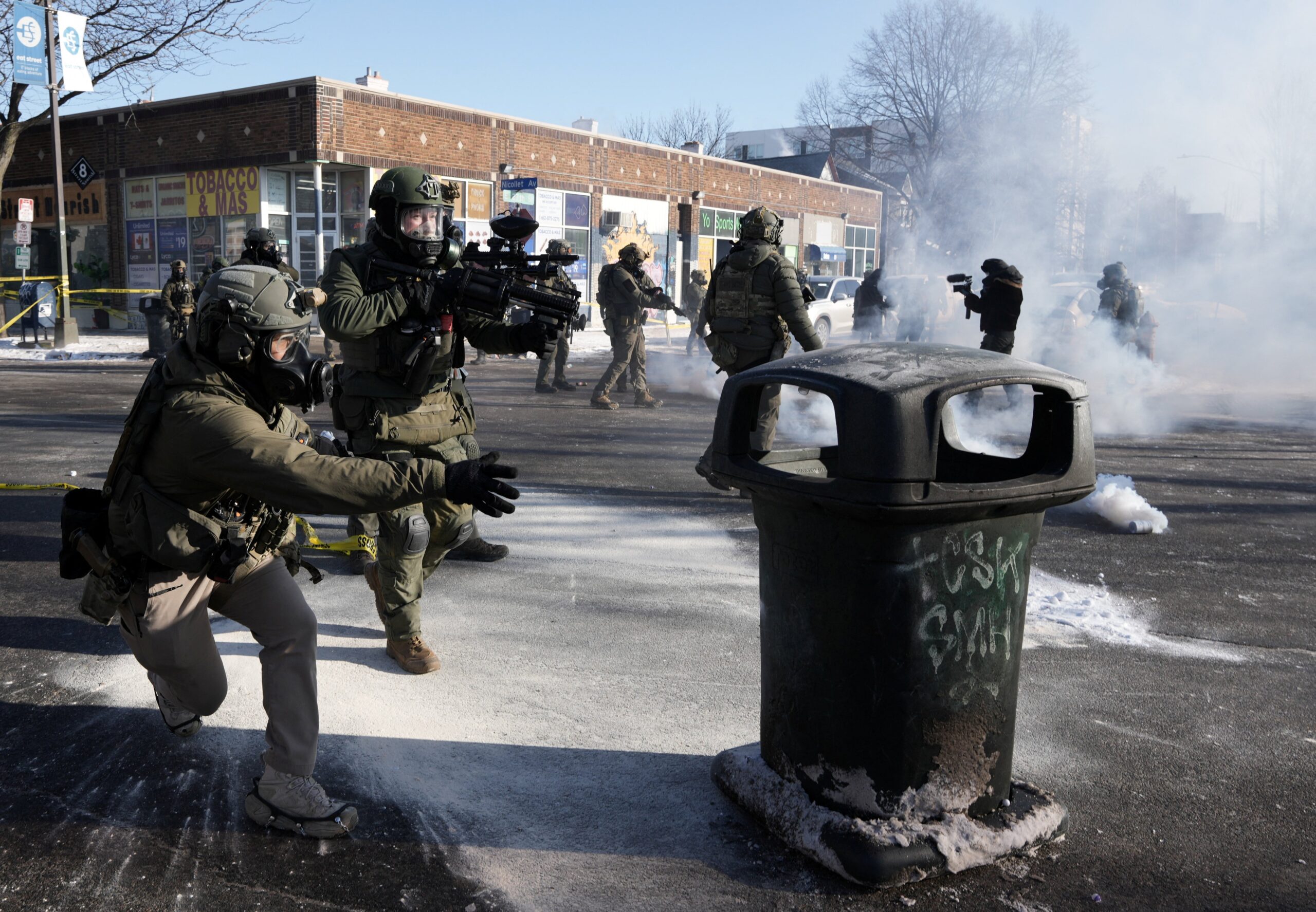

ST. PAUL, Minn. — As U.S. Border Czar Tom Homan announced on Feb. 12 plans for federal agents to leave the Twin Cities metro area, Catholic leaders in the Archdiocese of St. Paul and Minneapolis acknowledged the need for hope as they look to next steps in the local community.
Homan stated “Operation Metro Surge” is expected to draw to a close. It’s been a time of increased immigration enforcement actions the U.S. Department of Homeland Security, or DHS, launched Dec. 1, 2025, that involved U.S. Immigration and Customs Enforcement, or ICE. Agents with U.S. Customs and Border Protection have also been present.
“I have proposed, and President (Donald) Trump has concurred, that this surge operation conclude,” Homan said in a news conference carried by The Associated Press. “A significant drawdown has already been underway this week and will continue to the next week.”
Homan said agents who have been part of “Operation Metro Surge” “will either return to their duty stations or be assigned elsewhere” as immigration enforcement efforts continue nationwide.
Estela Villagrán Manancero, director of the archdiocesan Office of Latino Ministry, said her office has been working to connect those in need with rent and food assistance resources.
She also said she has been meeting regularly with parish leaders and local and state leaders — those various meetings have included conversations on family reunification efforts. There have been ongoing efforts to develop virtual prayer opportunities for community members as well, she told The Catholic Spirit, the archdiocesan news outlet.
Auxiliary Bishop Kevin T. Kenney — pastor of St. Olaf in Minneapolis and archdiocesan vicar for Latino ministry — spoke about the behind-the-scenes work in which many Catholics have been partaking.
“We’re on the ground in a lot of ways that people don’t see,” the bishop said at the Archdiocesan Catholic Center in St. Paul Feb. 12. “And that is what we wanted to do, that was the plan, not to draw attention.”
Bishop Kenney acknowledged “a long road ahead,” including addressing “the emotional trauma that this has caused since Dec. 1.”
“(T)he intensity of what Metro Surge was is ending, but the journey is not,” he said.
Referencing Archbishop Bernard A. Hebda’s letter published Jan. 20 in The Wall Street Journal, Bishop Kenney echoed the encouragement for lawmakers “to go to a greater level now and see that there is some kind of reform to the immigration system, of how people can get their documentation in and be processed in a more rapid way because so many of them have been waiting 20 years, 25 years to get through the process.”
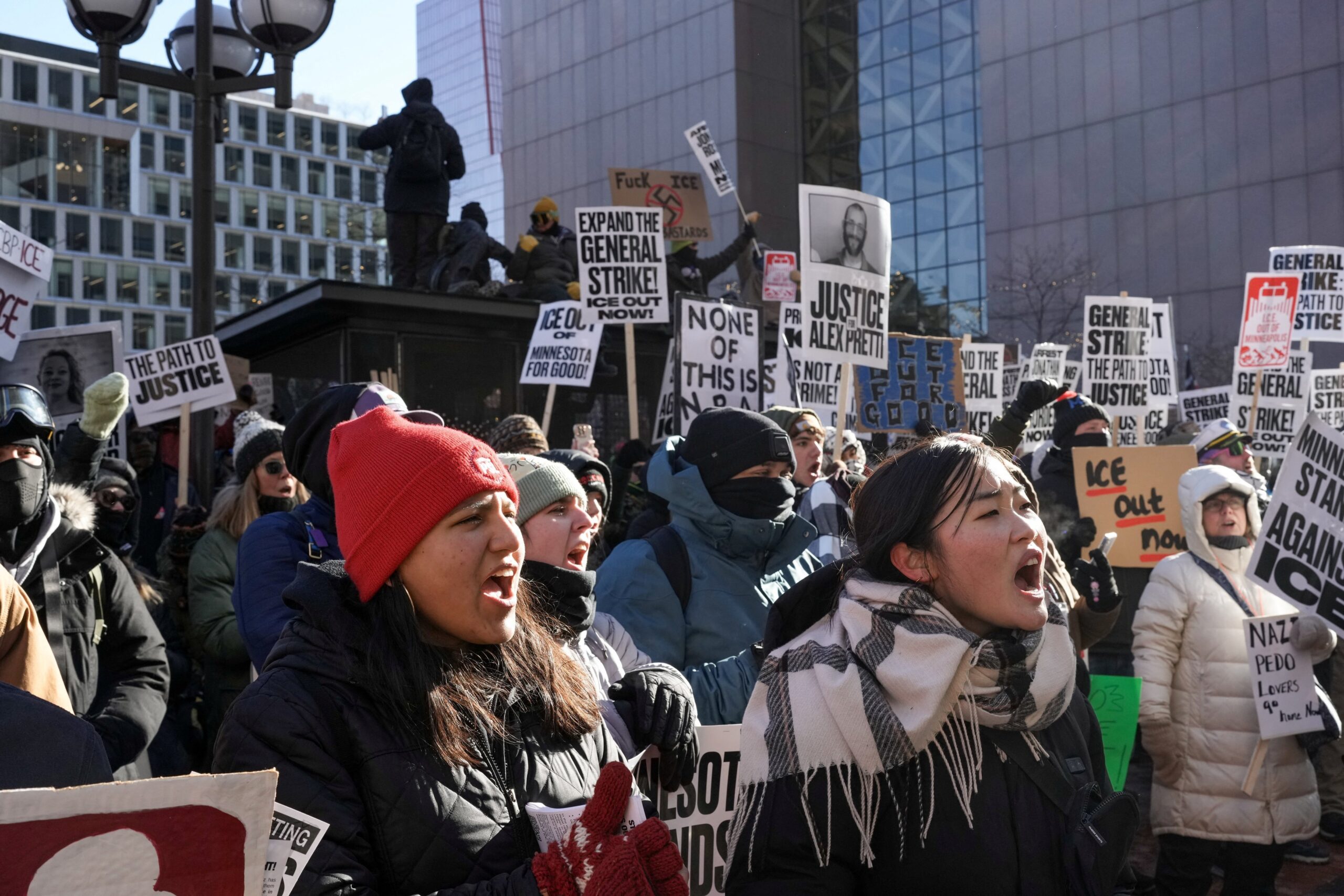
Bishop Kenney said another concern for many locally is: “(W)e want to make sure that what happened here does not happen anywhere else,” adding that “we have to keep on that bandwagon of saying ‘Let’s work for immigration reform.'”
Amid those calls, Bishop Kenney said the faithful and local community members must also ask, “How do we heal through all of this? How do we continue to build the strength of who we are as Minnesotans, as Catholics, as Christians, as a people continuing to walk together?”
In the answers to those questions, “that is where the hope is,” Bishop Kenney said. “(W)e’ve seen many, many, many Minnesotans from all different walks of life step up to help their neighbor, to love their neighbor, to protect their neighbor and that’s the beauty of who we are — hopefully that continues and now neighbors will know each other because they dared to go out and check in with one another over the last two months.”
As federal officials announced on Feb. 12 an “Operation Metro Surge” drawdown, local and state leaders in Minnesota also responded.
Gov. Tim Walz announced a proposal for $10 million in one-time emergency relief “aimed at Minnesota businesses that have been impacted by the operation,” according to his office. Administered through the Minnesota Department of Employment and Economic Development, the funding would be part of the governor’s 2026 legislative session package.
Minneapolis Mayor Jacob Frey echoed that sentiment.
“This operation has been catastrophic for our neighbors and businesses,” Minneapolis Mayor Jacob Frey said in a statement posted to social media. “We will show the same commitment to our immigrant residents and endurance in this reopening, and I’m hopeful the whole country will stand with us as we move forward together.”
Speaking before the U.S. Senate Committee on Homeland Security and Governmental Affairs Feb. 12, Minnesota Attorney General Keith Ellison called for several points to be addressed, including requiring ICE “to provide a full, transparent accounting of everyone stopped, detained, arrested or deported from Minnesota during Operation Metro Surge” and “to document the conditions of its detention facilities and to allow attorneys, health care professionals, clergy, and elected officials full access.”
Ellison also said the FBI must be required “to conduct investigations, in partnership with Minnesota, into the deaths of Renee Good and Alex Pretti, and into every other use of excessive force” and ICE must “stop masking, stop racial profiling, and stop conducting warrantless searches.”


