

In this continuing series on the origins of Catholicism in the 50 states, the story now turns southward. From Maryland, founded as a haven for English Catholics, to the scattered communities of Virginia, the Carolinas and what would become West Virginia, Catholic life developed under very different conditions.
The result is not a single story but a landscape of promise and restriction, where early hopes for religious freedom gave way to long periods of marginal existence before taking firmer root in the 19th century.
Maryland stands at the center of this story as the earliest and most ambitious attempt to establish a Catholic presence in English North America.

The first settlers arrived in the Chesapeake Bay in March 1634 aboard the Ark and the Dove. Although the colony was granted to Cecil Calvert and his Catholic heirs, most of the settlers were Protestant.
Jesuit missionaries accompanied them, intending both to serve the colonists and to evangelize the Native population. Without state support, the Jesuits sustained their mission through plantations, first worked by indentured servants and, by the early 18th century, increasingly by enslaved Africans. By 1765 they held nearly 200 enslaved persons in Maryland and eastern Pennsylvania.
In its early years, the Catholic minority enjoyed a degree of religious freedom unknown in England. The Calverts secured passage of the 1649 Act of Toleration, a landmark in the history of religious liberty. Yet this experiment proved fragile. With the upheavals of the English Civil War and, later, the Glorious Revolution of 1689, Protestant control hardened. By the early 18th century, Catholics were largely confined to private chapels and excluded from public life, their brief window of freedom sharply curtailed.
Only after the end of the French and Indian War in 1763 were some of these restrictions eased, allowing for the construction in Baltimore of the first church for free and open Catholic worship. By that time, Catholics made up roughly 8% of the colony’s population, including some who were enslaved.
Virginia’s Catholic story took shape on a much smaller and more fragile scale. In 1651, Giles Brent, a member of Maryland’s Catholic gentry, broke with the Calverts and settled his family, including his Native American wife, on the Northern Neck of Virginia.
After his death, his cousin George Brent emerged as the leading Catholic in the colony and was even appointed attorney general of Virginia in 1686. During his brief tenure, he sought to establish a settlement for French Huguenots fleeing persecution, with provisions for religious freedom that would include Catholics. This effort proved short-lived. With the Glorious Revolution, Brent lost his office, and Virginia’s small Catholic community retreated into obscurity.
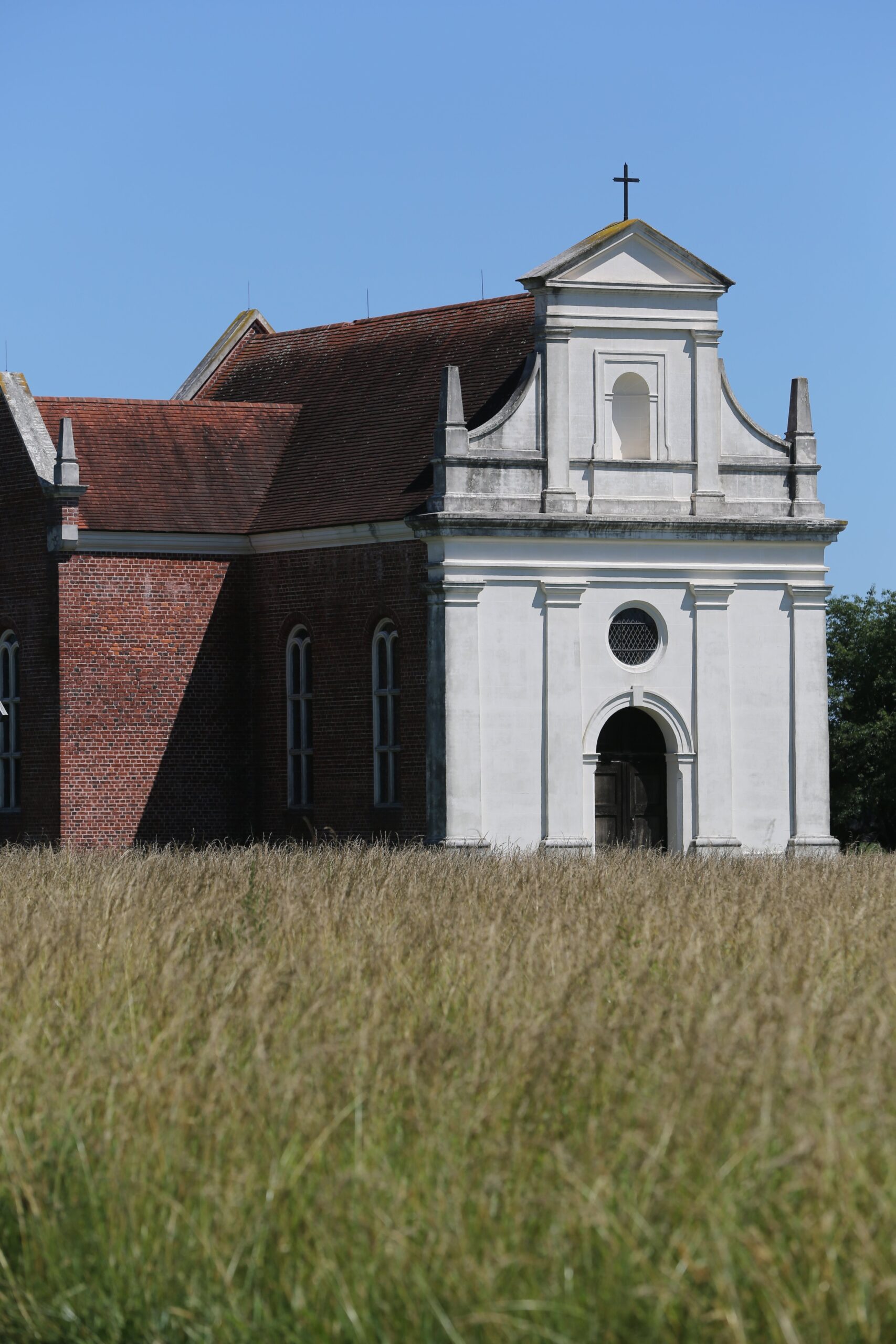
From about 1690 until the American Revolution, Catholic life in the colony remained extremely limited, centered largely on the Brent family, and practiced quietly and without public expression. A more visible Catholic presence emerged only after the American Revolution.
In 1795, the first Catholic parish in Virginia, St. Mary’s in Alexandria, was established. Even President George Washington contributed to its construction, a quiet but telling sign of the changing place of Catholics in the new republic.
The Catholic story in West Virginia begins later and more quietly than in its neighboring states to the east. Before the American Revolution, few if any Catholics lived in the region, then part of the Virginia colony.
The first parish in what would become West Virginia was not established until 1831, and a more visible Catholic presence emerged only gradually. In 1848, the Visitation Sisters arrived in Wheeling and opened a school for girls, marking an important step in the Church’s educational mission.
Recognizing the vast size of his territory, Bishop Richard Whelan of Richmond petitioned Rome for division, and in 1850 the Diocese of Wheeling was created, with Whelan named its first bishop. When West Virginia became a separate state in 1863 during the Civil War, the foundations of Catholic life had only just begun to take shape.
Today, Catholics make up only a small minority, about 3% of the state’s population, yet the Church’s presence remains an enduring witness of vibrant faith and generous service in a region where it was once almost unknown.
In what would become North and South Carolina, Catholic life before the American Revolution was almost nonexistent. The region’s strongly Protestant character left little room for Catholic practice. As a result, there is very little historical record to document even a minimal Catholic presence.
A more organized Catholic presence in the Carolinas emerged only after the American Revolution. St. Mary of the Annunciation in Charleston, established in 1789, was the first Catholic church in the Carolinas and Georgia, an area that today comprises five dioceses.
In 1820, Rome created the Diocese of Charleston, encompassing North Carolina, South Carolina and Georgia, a sign of how sparse and widely dispersed Catholic communities still were across the region.
One of the most important and fascinating figures of this period was the Irish-born John England, appointed the first bishop of Charleston at just 33 years of age. He began his ministry with only three priests to serve a vast and scattered flock. England proved remarkably innovative in governance, establishing a kind of diocesan bicameral structure with a house of clergy and a house of laity, each entrusted with distinct responsibilities.
A gifted communicator, he founded the United States Catholic Miscellany, the first Catholic newspaper in the country, and in 1826 became the first Catholic priest to address the United States Congress.
In Charleston, he also established a school for free Black children, though fierce opposition eventually forced their closure. He also defended the institution of slavery, reflecting the prevailing attitudes of his time.
Catholic life in the early Upper South developed unevenly, with bold promise in Maryland and little visible presence elsewhere. For much of the colonial period, Catholics were few, often unwelcome, and forced to practice quietly, with little institutional support. Only after the American Revolution did a more visible Church begin to emerge, as leaders like Bishop England laid the foundations for lasting growth.