

While the social teaching of the Catholic Church — including that of several popes — has long supported the philosophy of labor unions in the private and public sector, such an imprimatur hasn’t always extended in practice to the church’s own institutions.
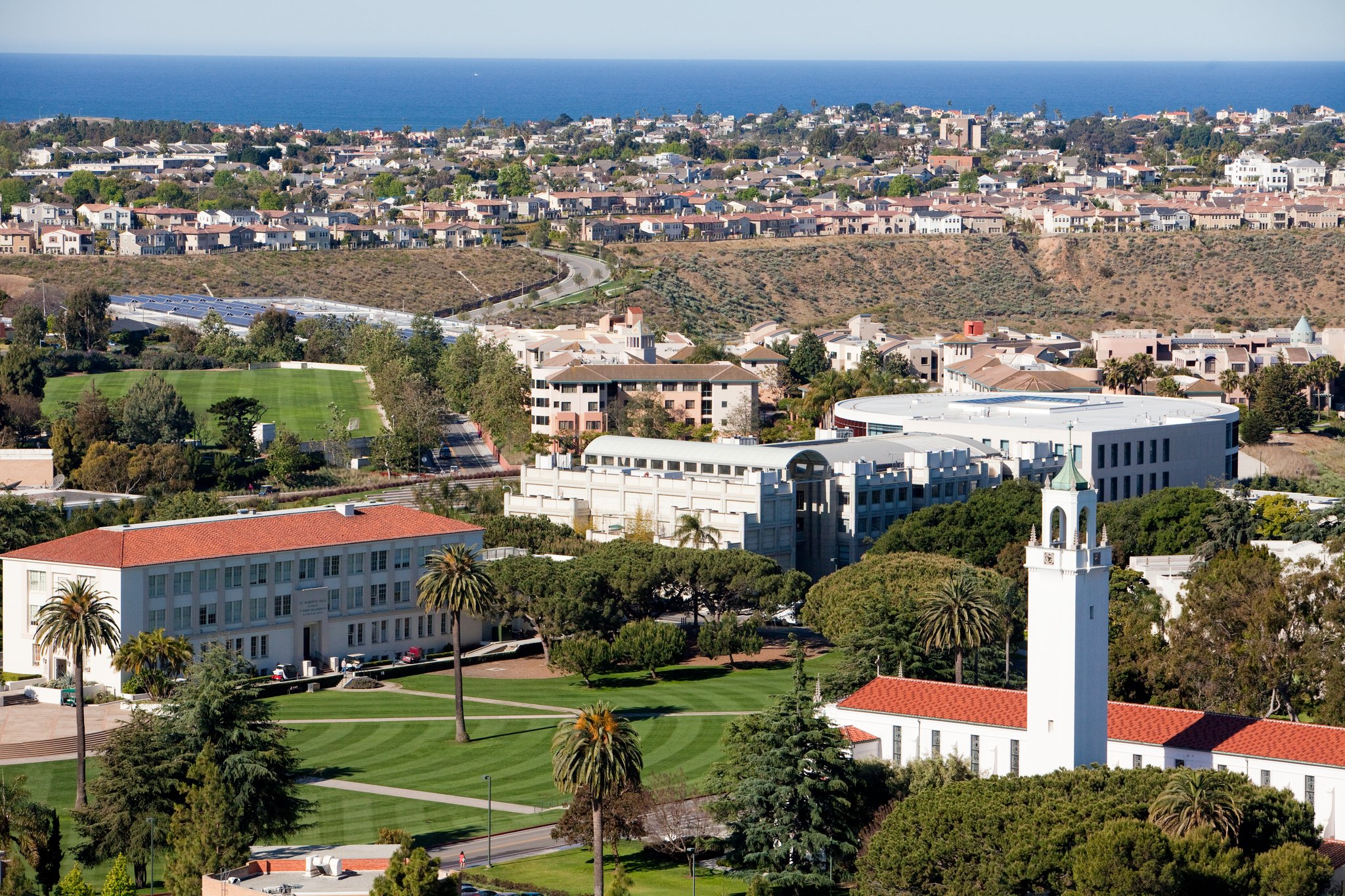
At Jesuit-run Loyola Marymount University in Los Angeles, a group of non-tenure track professors currently accuse its administration of union busting in violation of Catholic social teaching, while the administration charges it has the right to invoke a religious exemption to bargaining with a “third party” labor union in order to protect the school’s “distinctive Catholic mission” and ensure the school can financially continue to serve students for generations to come.
OSV News spoke to representatives of both parties — as well as the Catholic Labor Network — to learn where the situation currently stands.
Arik Greenberg, clinical assistant professor of interreligious dialogue in the Department of Theological Studies, who has taught at LMU since 2003 — has been involved with the movement to unionize non-tenure track LMU professors since 2011. He was one of the founders of the initial unsuccessful union drive in 2013.
“We spent the next 10 years playing by the university administration’s rules,” Greenberg told OSV News. “We did what they asked, to just give them a chance to make things better, to show they can treat us better, and we are, in fact, a family — and that we don’t need a union, a ‘third party.'”
“I’m using a lot of scare quotes here,” he continued, “that we don’t need a ‘third party’ — big bad union speak — they’ll negotiate directly with us. And they’ll try to find what it is we need, and take it under advisement. And really, very little has changed in the last 10 years.”
In June, 2024, LMU union organizers tried again — this time winning their drive to join Service Employees International Union (SEIU) Local 721, with 90% in favor. The bargaining unit includes nearly 400 faculty members who teach in LMU’s Bellarmine College of Liberal Arts, the College of Communication and Fine Arts, and the School of Film and Television.
“They started bargaining with us — actively negotiating with us — in December of 2024,” explained Greenberg.
Until Sept. 12, 2025 — when negotiations stopped.
On that date, LMU invoked a religious exemption from federal statutes governing collective bargaining for private sector employees.
Since then, both sides have been at a stalemate.
“They still are claiming the religious exemption and that it is fully, legally supportable,” Greenberg said. “And they are still refusing to deal with our union or to acknowledge its existence directly.”
On the pages LMU published profiling the dispute, the institution defends its action by stating “invocation of the religious exemption is lawful, grounded in the U.S. Constitution, and consistent with Supreme Court and NLRB precedent. This right cannot be waived and may be exercised at any point.”
“The Board reached this decision to protect LMU’s Catholic mission, its students, and its long-term sustainability,” Griff McNerney, LMU’s senior director of media and public relations, told OSV News in an e-mailed statement. “After months of discernment, trustees concluded that direct partnership with faculty — without SEIU’s involvement — would enable faster, more mission-aligned progress toward shared goals.”
McNerney noted, “From December 2024 to Summer 2025, LMU reviewed 39 proposals and made counterproposals, none of which were accepted by the union.”
In November, LMU published a plan outlining “key actions” to be implemented for the 2026 academic year: more full-time positions; multi-year curricular planning; multi-year term faculty contracts; and year-long part-time faculty contracts.
“Their demands — not just the initial proposals but likely settled amounts — would have required the equivalent of an 18% tuition hike, 300 layoffs, and cuts to core student programs,” McNerney’s reply to OSV News continued. “Such outcomes would erode affordability, diminish academic quality, and jeopardize LMU’s Catholic educational mission. Faced with this, the Board discerned that invoking the religious exemption and engaging faculty directly was the responsible and mission-faithful path forward.”
But Greenberg rejected that conclusion and the basis of LMU’s projections.
“They had a PowerPoint presentation detailing what it would cost if they were to give us everything in our economic proposal … and it was really riddled with errors,” he said.
Greenberg said numbers were inflated by a larger bargaining unit than exists, as well as the use of requested benefits by every member of the unit.
“One of the older members of our bargaining unit joked, ‘I’m going to take fertility treatments now every year, at the age of 75?'” shared Greenberg. “So it was preposterous, the kind of numbers they’d put together — which in their mind, justified the claim it would have signaled an 18% increase in student tuition; triggered hundreds of layoffs; and bankrupted the school.”
Los Angeles is an expensive locale. The U.S. Department of Housing and Urban Development (HUD) considered $84,850 per year for a one-person household as the “low income” threshold, or 80% of the area median income, in 2025.
“In the past, I know of at least one (non-tenure track) faculty member who was on food stamps and sold her blood plasma twice a week,” Greenberg recalled. “That was during our first union efforts back in 2013.”
The Catholic Labor Network identified more than 600 Catholic institutions that bargain with unions representing some or most of their employees.
Among American Catholic institutions, however, there are 181 colleges; 600 hospitals and 1,600 long-term care or other care facilities; 196 particular churches (dioceses, eparchies and ordinariates); and 5,832 secondary schools. Thus — just counting those sectors — less than 10% are unionized, a figure reflective of American labor overall. The U.S. Bureau of Labor Statistics reported the proportion of American wage and salary workers belonging to unions was 9.9% in 2024.
Chuck Hendricks, president of the Catholic Labor Network and director of National Contracts and Internal Support for Unite Here International Union, said he was “amazed” by LMU’s response.
“Particularly from the Jesuits, as their reaction was not so much one of taking a look at it from a Catholic social doctrine point of view, and was much more one from a business perspective. The reaction and the emails we received basically all reference they understood Catholic social teachings,” Hendricks continued, “but that the proposals from the staff were economically untenable.”
Jesuit Father Sean Carroll, provincial of the Jesuits West Province, said in a statement to OSV News that, “While Catholic social teaching has consistently affirmed the rights of workers to organize, the Church also acknowledges the importance of prudence in applying these principles. Loyola Marymount University has determined the best way forward is through direct engagement.”
“Like any institution,” he continued, “LMU must balance many priorities, including its responsibility to remain financially viable so that it can continue to serve students and provide jobs for several thousand employees. I am consoled to know that the LMU Board, which includes among its leadership eleven religious members, together with President Poon, is committed to working with faculty and staff. My hope,” Father Carroll concluded, “is that direct dialogue can lead to a resolution that upholds the dignity of workers while ensuring that LMU’s mission will continue for years to come.”
The right to unionize and seek workplace equity — and to strike, if necessary — is fundamental to Catholic social teaching. Popes since Pope Leo XIII, who recommended a revival of associations for workers to “unite their forces” in “Rerum Novarum,” have strongly expounded on unionized labor topics, in both official and unofficial pronouncements.
In his 1991 encyclical, “Centesimus Annus,” commemorating the 100th anniversary of “Rerum Novarum,” St. John Paul II taught that trade unions and other workers’ organizations “defend workers’ rights and protect their interests as persons, while fulfilling a vital cultural role, so as to enable workers to participate more fully and honorably in the life of their nation and to assist them along the path of development.”
The U.S. Conference of Catholic Bishops‘ 1986 teaching “Economic Justice for All: Pastoral Letter on Catholic Social Teaching and the U.S. Economy” also states: “The church fully supports the right of workers to form unions or other associations to secure their rights to fair wages and working conditions.”
In 2022, Pope Francis succinctly declared “there are no free workers without trade unions.”
In October, Pope Leo XIV met a delegation of Chicago labor leaders, telling them, “This delegation represents thousands of workers, whose skills enhance the common good and help to create a society where all can flourish. It is important work and I commend all you for your contributions in this regard.”
“I was surprised that — instead of engaging in dialogue with members of their community — LMU chose to say, ‘We can’t afford this proposal. So we are going to take away your rights,'” said Hendricks, referring to the religious exemption from collective bargaining. “That’s not Catholic. That’s also not community-minded. That’s not in the spirit of the Jesuits — an order that does so much publicly around supporting the oppressed and the marginalized and those on the periphery.”
But LMU characterizes the situation differently.
“(Catholic social teaching) is not a mandate to bargain at all costs nor with SEIU; it emphasizes how we pursue justice as much as what we pursue,” continued McNerney’s statement. “LMU chooses direct partnership with faculty over ongoing conflict because it better reflects our mission, our Ignatian commitment to cura personalis (personal care) and our responsibility to students, families, and the broader community. Other Catholic universities, including Marquette, Boston College, Duquesne, St. Leo, and others have made similar discernments and invoked their religious exemption.”
Asked if LMU would view the situation differently if they were dealing with an exclusively Catholic labor union, McNerney replied, “LMU does not comment on speculative scenarios. LMU has already made commitments to our faculty that are backed with real action, including improving compensation with immediate raises. LMU deeply values the contributions of our faculty and remains committed to supporting an environment where academic excellence and student success thrive.”
Greenberg, who was frustrated by expenses for the Dec. 9 inauguration of LMU President Thomas Poon — arguing, “They spent millions” on what “seemed like a coronation” — said the faculty do not want to strike, but may.
“I would say the nuclear option is a strike — and we do not want to strike, for a variety of reasons. We care about the student’s well-being, which the administration keeps saying we don’t,” he said. “Why are we working at this school for peanuts, if not for the love of our students? Yet, you have these upper-level administrators making six-figure to seven-figure salaries, claiming they love the students more than we do.”
If a strike is launched, however, it’s unclear whether they will have the same level of labor protections as prior to the second Trump administration.
“We are not certain we will have protection from being fired if we were to engage in an unfair labor practice strike, which previously would have been a protected activity,” Greenberg explained. “The (LMU) administration has indicated through a variety of channels that, if we do go on strike, they will start firing people. So we definitely are afraid.”
Ultimately, Hendricks said, he hopes negotiations can resume.
“There’s no document from the Church that says, ‘You must meet X, Y, and Z proposal to be a just employer,'” Hendricks observed. “The question is: ‘Do you recognize the inherent rights of people to bargain?’ If you do … then you don’t stop talking to find a solution. And that’s what I would say is the most disappointing thing of all.”