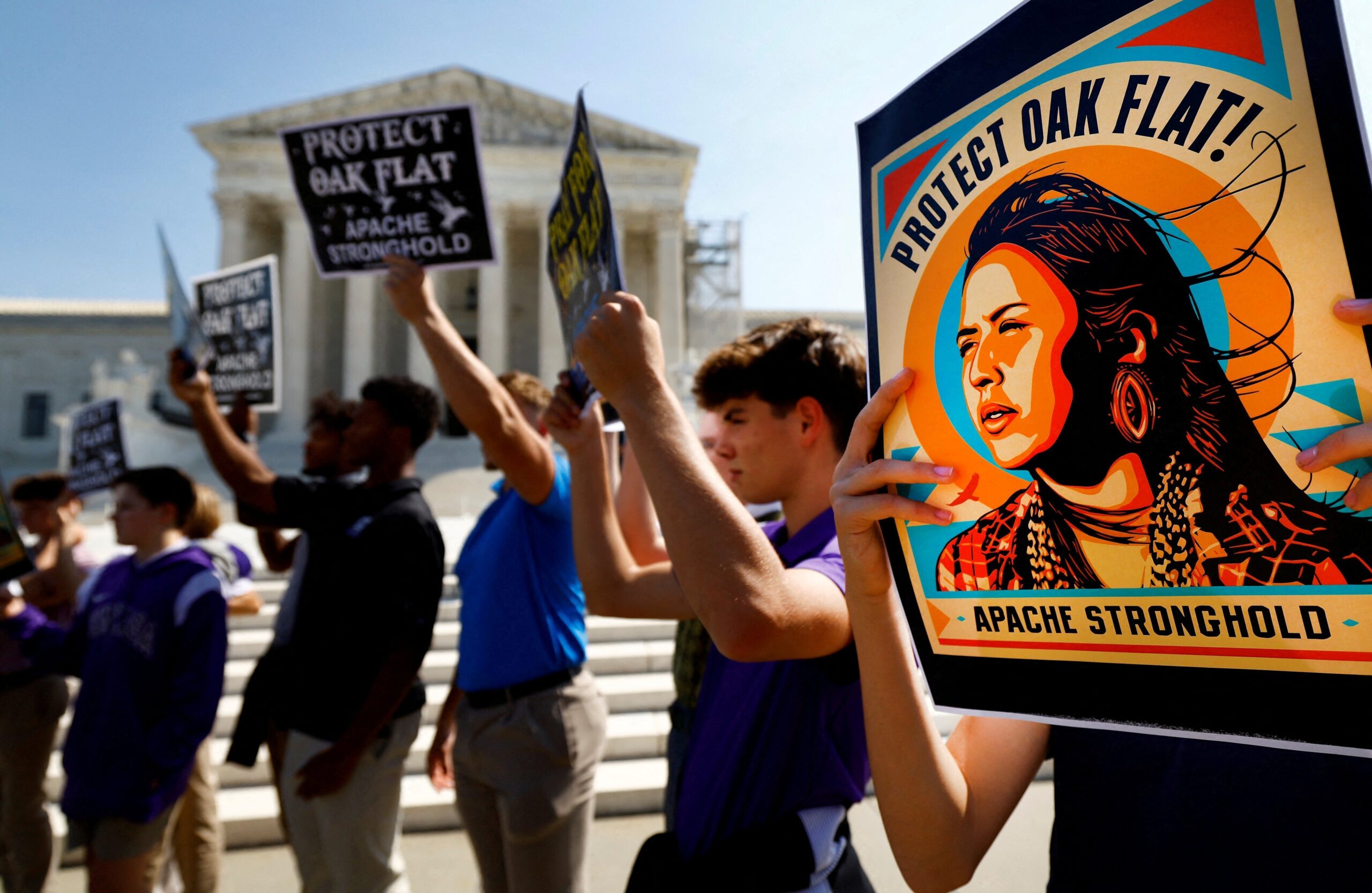



WASHINGTON — The Trump administration said March 23 it has cleared a legal path to proceed with a copper mining project it says will increase U.S. manufacturing. However, the site is at the center of a religious liberty dispute rejected by the U.S. Supreme Court last year that a group of Native peoples continued to appeal.
An Indigenous coalition using the name Apache Stronghold previously asked the high court to protect an Apache sacred site at Oak Flat in Arizona from destruction by copper mining giant Resolution Copper. A broad range of religious organizations — including the U.S. Conference of Catholic Bishops — had argued the high court should hear the coalition’s plea, because the case had serious implications for the scope of the Religious Freedom Restoration Act.
The group has continued to appeal the case, but the 9th U.S. Circuit Court of Appeals earlier in March allowed the transfer of the land to proceed, finding challengers have not established the likelihood of success given the high court’s rejection.
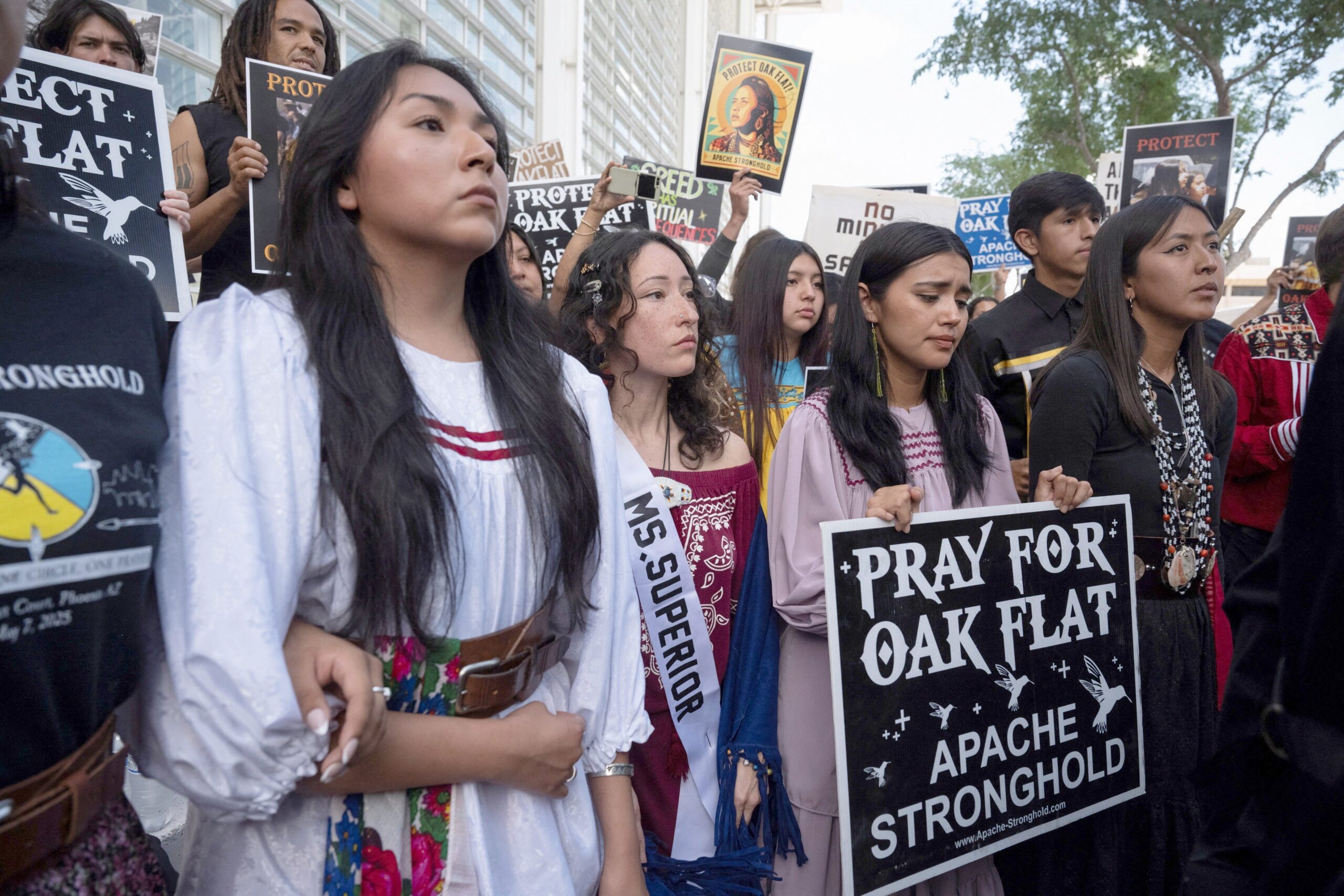
In written comments provided to OSV News, Wendsler Nosie Sr. of Apache Stronghold said, “We will never stop fighting to protect Oak Flat.”
“It is our spiritual lifeblood — the place where generations of Apache have gathered to worship, pray, and connect with our Creator,” Nosie said. “The federal government and Resolution Copper want to wipe Oak Flat off the map and sever our connection with this holy place forever. But we will never give up. We will keep defending what is Holy. We will continue pressing forward in the lower courts and urging America’s leaders to protect Oak Flat before it is too late.”
In a March 23 statement, the Justice Department said the 9th Circuit’s March 13 decision “allows the federal government to proceed with a congressionally mandated land exchange crucial to advancing development of one of the largest known copper deposits in the world.”
“Copper is essential for energy infrastructure, defense systems, and advanced manufacturing,” it stated.
Testimony regarding the threat of the destruction of the Apache sacred site at Oak Flat, known by the Apache as Chi’chil Bildagoteel, was among the topics considered at the inaugural meeting of the Justice Department’s Religious Liberty Commission on June 16.
Oak Flat is considered a sacred site by the region’s Indigenous peoples and is on the National Register of Historic Places. However, after the discovery of copper deposits on the land, in December 2014 Congress authorized the U.S. Forest Service to swap the land for other sites with Resolution Copper and lifted a mining ban on Oak Flat.
In a March 23 press release, Resolution Copper said it “reaffirms that public access to the Oak Flat Campground, as well as to recreational roads and climbing areas on private land in the Oak Flat area, will remain open for the foreseeable future following completion of a federal land exchange this month.”
The mine is expected to open by the mid-2030s, Reuters reported.