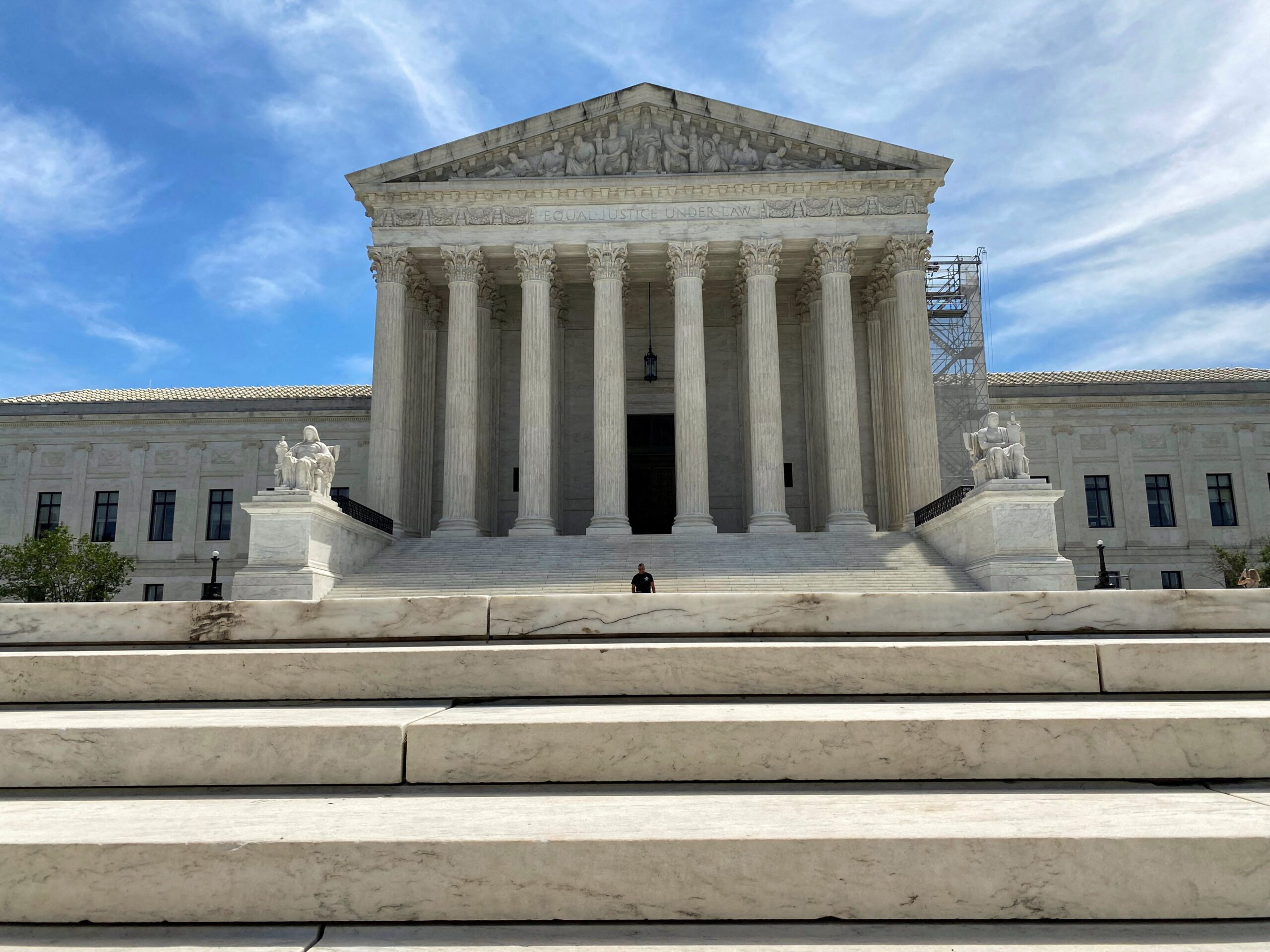




WASHINGTON — The Supreme Court on Dec. 2 heard oral arguments in an appeal from a group of faith-based pregnancy centers in New Jersey challenging an investigation by that state’s attorney general alleging they misled people about their services and seeking information about their donors.
First Choice Women’s Resource Centers operates five centers in the Garden State that provide some medical services, including ultrasounds, to women with unplanned pregnancies.
In 2023, New Jersey Attorney General Matthew Platkin moved to launch a consumer protection probe investigating First Choice, alleging they misrepresented themselves to clients as if their services included referrals for abortion. As part of his probe, he issued a subpoena seeking information including about its donors — but before the expiration date, First Choice asked a federal court to intervene on its behalf, arguing the probe violated its First Amendment rights.



A key question in the case is whether First Choice must first pursue its claims in state court or meet the legal threshold for the federal court.
Erin Hawley, senior counsel at Alliance Defending Freedom — a legal organization representing First Choice — and vice president of ADF’s Center for Life and Regulatory Practice, argued to the justices that “this Court has long safeguarded the right of association by protecting the membership and donor lists of nonprofit organizations like First Choice.”
“Yet the Attorney General of New Jersey issued a sweeping subpoena commanding on pain of contempt that first choice produced donor names, addresses and phone numbers so his office could contact and question them,” Hawley, who also is the wife of Sen. Josh Hawley, R-Mo., added.
Hawley argued that the probe chilled her clients’ First Amendment rights and that “First Choice is simply asking for its day in federal court.”
Sundeep Iyer, who represented New Jersey, denied Hawley’s argument, instead arguing that any disclosure of such information from the subpoena is “wholly contingent on a future state court order requiring production.”
“My friends on the other side, don’t let the actual factual allegations get in the way of telling a story about hostility here, but I think that story is just not borne out by the record evidence that’s been offered here” he said.
But in a notable moment, Justice Elena Kagan asked Iyer whether “an ordinary person, one of the funders for this organization, or for any similar organization, presented with this subpoena and then told, ‘but don’t worry, it has to be stamped by a court,'” is “going to take that as very reassuring?”
In remarks on a press call with reporters the previous day, Aimee Huber, executive director of First Choice, said, “On November 15, 2023, a representative from New Jersey’s Attorney General’s office came to my office, asked for me, and handed me a subpoena. It commanded us to release up to 10 years of documentation on our donor communications, advertising statements about abortion pill reversal, and even our donors’ identities. There were no allegations of wrongdoing. It was simply a fishing expedition.”
Proponents of a process sometimes called abortion pill reversal say administering a dose of progesterone in an attempt to stop the effects of a chemical or medication abortion can halt the effects of mifepristone, the first of two drugs used in the process. But opponents argue that it is an unproven method. A 2019 study of the abortion reversal process was ended early due to safety concerns. New Jersey and New York are among the states that have probed organizations that advertise abortion pill reversal.
A spokesperson for Platkin’s office did not immediately respond to a request from OSV News for comment.
The First Amendment issues at play in the case drew support for First Choice from a broad range of organizations. The American Civil Liberties Union and the ACLU of New Jersey joined an amicus brief written by the Foundation for Individual Rights & Expression, or FIRE, in support of what they argued was First Choice’s right to seek federal relief.
“Even before they’re enforced, law enforcement subpoenas seeking sensitive donor information threaten to scare away supporters essential to any nonprofit’s work,” Brian Hauss, deputy project director of the ACLU’s Speech, Privacy, and Technology Project, said in a Dec. 2 statement. “At a time when government officials throughout the country abuse regulatory powers to punish their ideological opponents, federal courts must remain a venue in which people can vindicate their First Amendment rights.”
Ashley McGuire, senior fellow at The Catholic Association, argued in a Dec. 2 statement that pregnancy resource centers “are an essential part of a pro-life safety net that enables women to thrive as the mothers they want to be.”
“They provide essential medical and material support to mothers and babies valued at more than $450 million annually, going beyond meeting the immediate needs of women in crisis pregnancies,” she said. “PRCs help transform expectant mothers’ lives with housing, parenting classes, and job training, to name a few invaluable resources. Given that the overwhelming majority of women who have abortions say they were pressured or coerced and that 60 percent of post-abortive women say they would have preferred to have their baby if they had support, PRCs offer what women want: a true choice. And yet, they face never-ending legal harassment.”
First Choice states on its website that it works to “equip women and men to make informed pregnancy decisions” about a range of options.
“First Choice Women’s Resource Centers is an abortion clinic alternative that does not perform or refer for termination services,” it states.
The Catholic Church teaches that all human life is sacred from conception to natural death, and as such, opposes direct abortion.