



Once again, bright lights shine in and on the Middle East.
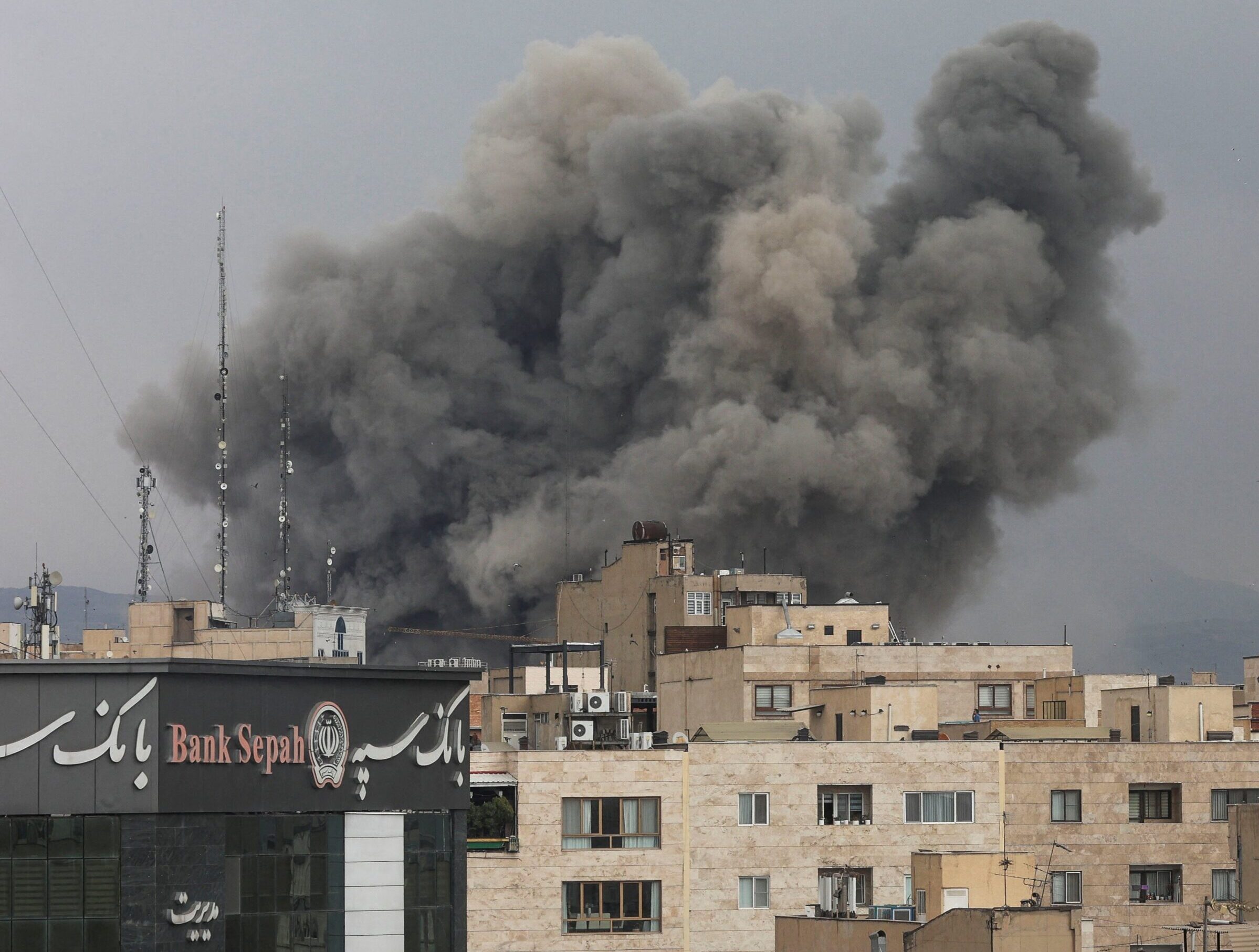
The world saw it the end of last month. News coverage showed the bright emission of rocket fuel igniting ballistic missiles to send them on their way from a U.S. armada. Striking their intended targets, they exploded into blazing fire as they destroyed places of power in Iran.
Those lights of war led people to run through the streets in fear of their lives. Some, however, danced in those same streets at the prospect of regime change.
The gospel tells the news of a different light in the same region.

It was not viewed throughout the world, only by three men on a mountaintop. Yet the story of the Transfiguration (Matthew 17:1-9), proclaimed annually on the Second Sunday of Lent, reveals a more mysterious, more luminous, and potentially more efficacious light for all to see.
That ancient light is supernaturally mysterious. It emanates not from the external force of military arms, but from within someone. It changes the face and form of Jesus. It trans-figures him to shine like the sun.
But that mysterious light destroys nothing. Instead, it discloses to those who saw it the glory that belongs to Jesus by his very nature.
This luminous light enlightens those who saw it. For a moment, the Master lets Peter, James, and John see who he really is. What they behold is no mere or even mighty human, but one who shares the glory of God.
Their insight is confirmed from on high.
Evoking the rabbinic tradition of the shekinah, Matthew tells of a voice coming from the bright cloud that overshadowed the apostles: “This is my beloved Son, in whom I am well pleased.” The latter expression (eudokeō) conveys the benevolent truth that in Jesus God’s good will shines.
The experience of mystery and luminosity fascinates. It also terrifies. One does not typically escape such a direct encounter with God’s tremendous presence. Having seen the light, having heard the voice, the three apostles understandably fall to the ground in fear for their lives.
But they do not die. Their experience of the light of Jesus changes them, as it does those who later heard them tell of their vision.
We recall the Transfiguration because it can be more efficacious than any light shining in this war-torn world – if we also come to see who Jesus is and listen to him.
Lent gives us the opportunity to do that. It’s not so much a time to do something special for God; nothing we can do supplies for what we lack or makes up for what we have done or failed to do.
Rather, Lent is a sacred time each year in which we let the light of God reignite our conversion. That light shines for us whenever we gather in God’s presence in church.
There we hear the divine voice speaking through the Word. There we come to see who Jesus really is – the one alone who has the power to destroy sin and the death that results from it. Then we can exclaim, as Peter did upon seeing Jesus transfigured, “Lord, it is good for us to be here.”
Then we will appreciate the Master’s lone words to his apostles on the mountaintop: “Rise, do not be afraid.” Why? Because we have seen the light and heard the voice. God is present in and to this world through the person of Jesus – and still is. His divine light cannot and will not ever be extinguished.
In days to come the world will see more of the light of war and the hardships that such “epic fury” causes. As Christians, we look upon the light of Christ in faith as the apostles did in person.
From that experience, we also hear Jesus say to us: Get up. Have no fear. It’s time to go. We have work to do.
The transfigured Jesus descends from the mountaintop to continue his mission of redemption. In this season, he calls us to join him on the way of the cross (a worthy devotion during Lent).
Along that journey, the Holy Spirit ignites a light of grace in those who are converted again to a deeper faith in Christ. As it did ages ago for three men on a mountaintop in the Middle East, that light will enable us, in the midst of whatever hardship we face today, to bring the light of the gospel to a world that certainly needs it.
Oblate Father Thomas Dailey holds the John Cardinal Foley Chair of Homiletics and Social Communications at Saint Charles Borromeo Seminary in the Archdiocese of Philadelphia, where he also directs the new Catholic Preaching Institute.