
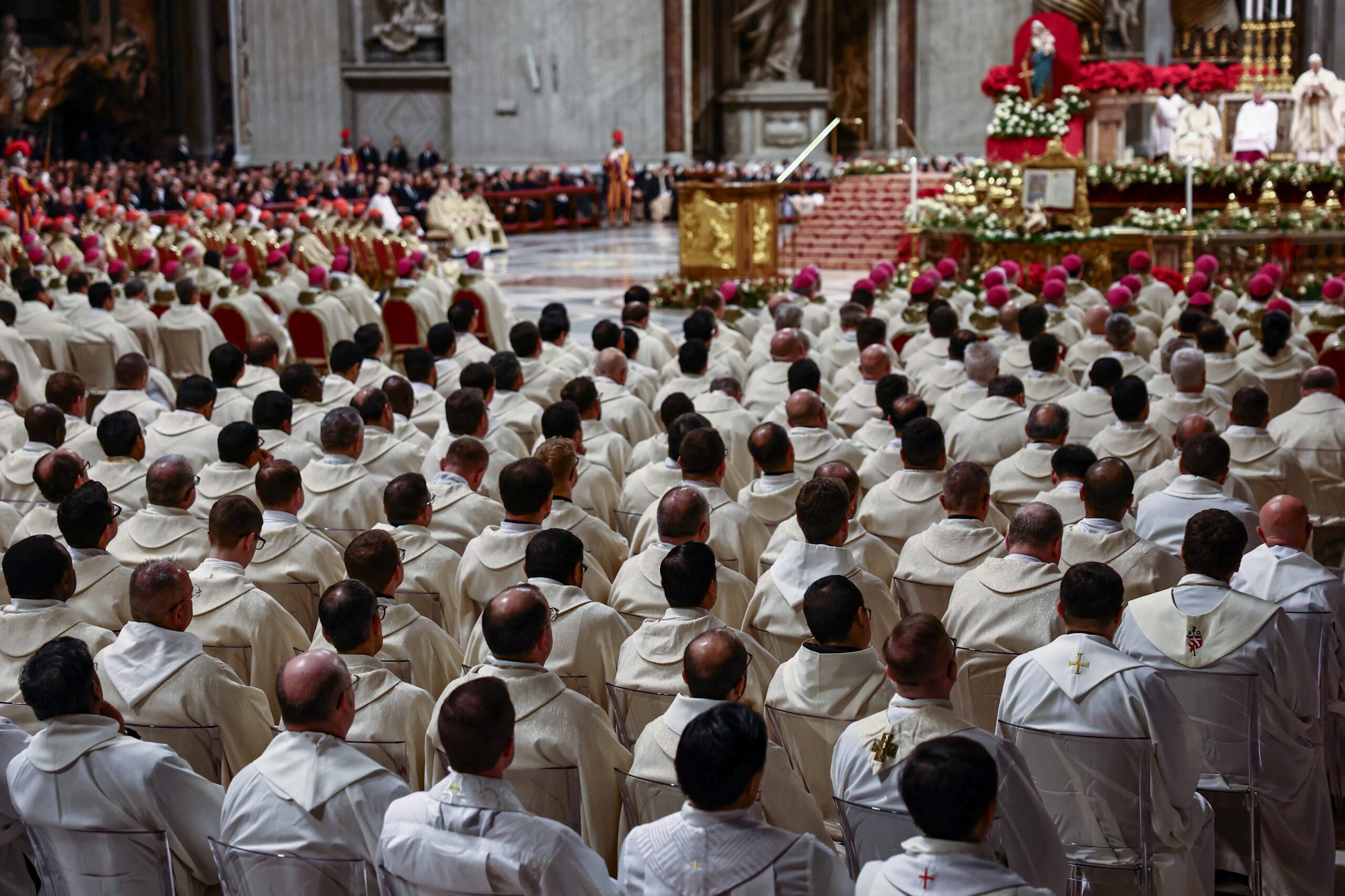

As the new year begins and the Jubilee Year comes to a close, Pope Leo XIV will hit the ground running with an extraordinary consistory taking place in Rome this week.
The Vatican confirmed in a Dec. 20 statement that the pope said the consistory would take place Jan. 7-8 in Rome and that it would “be characterized by moments of communion and fraternity, as well as times dedicated to reflection, sharing, and prayer.”
“These moments will be aimed at fostering a common discernment and offering support and counsel to the Holy Father in the exercise of his high and burdensome responsibility in the governance of the universal church,” the statement read.

While providing no specifics, the Vatican said the consistory is taking place “within the context of the life and mission of the church, and intends to strengthen the communion between the Bishop of Rome and the cardinals, who are called to collaborate in a particular way in solicitude for the good of the universal church.”
According to the Code of Canon Law, the College of Cardinals assists the pope “through collegial action in consistories in which they are gathered by order of the Roman Pontiff who presides.”
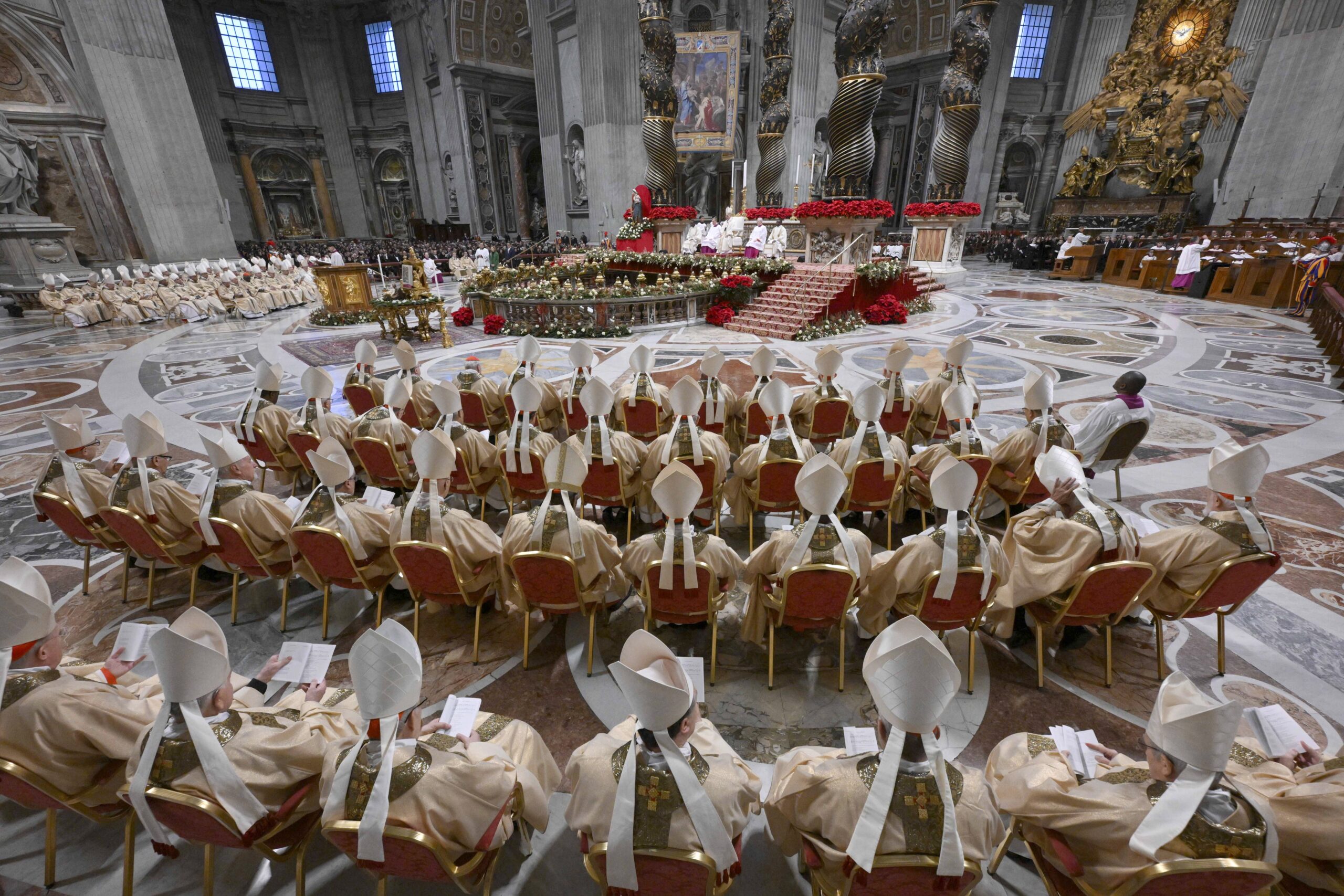
In the Catholic Church, there are two types of consistories: an ordinary consistory and an extraordinary consistory.
An ordinary consistory is largely ceremonial and attended by those cardinals residing in Rome. It is most commonly convoked when new cardinals are created or when candidates for sainthood are approved.
However, the extraordinary consistory requires the participation of all cardinals from around the world and, according to canon law, “is celebrated when particular needs of the church or the treatment of more grave affairs suggest it.”
For context, St. John Paul II convoked six extraordinary consistories throughout his 26-year pontificate, while Pope Benedict XVI chose to hold consultative, all-day meetings with the cardinals on the eve of an ordinary consistory, holding three such meetings during his pontificate.
In his 12-year pontificate, Pope Francis held only one extraordinary consistory on Feb. 20, 2014, that centered largely on family and marriage ahead of the Synod on the Family that same year.
Like Benedict, Pope Francis also held a consultative meeting attached to an ordinary consistory in August 2022 to discuss the implementation of his apostolic constitution on the reform of the Roman Curia, “Praedicate Evangelium” (“Preach the Gospel”).
While all cardinals are expected to attend the consistory starting Jan. 7, one notable absence will be that of Venezuelan Cardinal Baltazar Porras, archbishop emeritus of Caracas, whose passport was confiscated in December and who was barred from traveling abroad.
The incident highlighted tensions between the Catholic Church and the government of President Nicolás Maduro, who, along with his wife, was recently captured by the United States in a nighttime military operation Jan. 3.
It is also unclear whether Belgian Cardinal Dominique Mathieu of Tehran-Isfahan will attend, as anti-government protests continue to escalate in Iran. OSV News reached out to the cardinal but, as of publishing, has not received a response.
Outside of the Vatican’s official statement, not much is known about the actual discussions that will take place at the consistory. Yet the statement’s emphasis on its intention to “strengthen the communion between the Bishop of Rome and the cardinals” echoed sentiments expressed by Pope Leo two days after his election.
Meeting with the College of Cardinals May 10, Pope Leo highlighted the importance of closer collaboration with the cardinals, which he said “many of you had asked for” during the general congregations ahead of the conclave.
“You, dear cardinals, are the closest collaborators of the pope. This has proved a great comfort to me in accepting a yoke clearly far beyond my own limited powers, as it would be for any of us. Your presence reminds me that the Lord, who has entrusted me with this mission, will not leave me alone in bearing its responsibility,” he said.
As of now, there are only speculations and rumors, particularly in the Italian media, on what’s on the agenda. Nevertheless, the Vatican’s statement hints that governance, with an emphasis on the “life and mission” of the church, will be at the heart of the pope’s meeting with the cardinals.
Before Christmas, Pope Leo highlighted this, particularly the importance of “mission and communion” within the church, during his audience with the members of the Roman Curia.
Drawing from his predecessor’s apostolic exhortation, “Evangelii Gaudium” (“The Joy of the Gospel”), the pope said communion within the church “always remains a challenge that calls us to conversion,” especially when “at times, beneath an apparent calm, forces of division may be at play.”
It is safe to say that the extraordinary consistory will be an opportunity for Pope Leo to advance his hope for a missionary and synodal church, in close collaboration with the entire College of Cardinals, a slight departure from his predecessor, who had established a group of nine cardinals to advise him on matters of church governance.


