

DENTON – For Rami Qumsieh, the Holy Land is more than a sacred plot of real estate in the Middle East. Although he now lives in south Florida, it’s been home to him and other Palestinian Catholics since Jesus walked its dusty terrain.
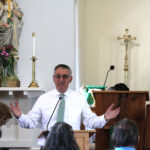
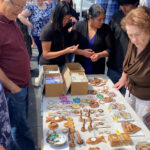
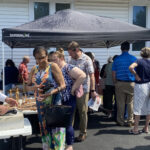
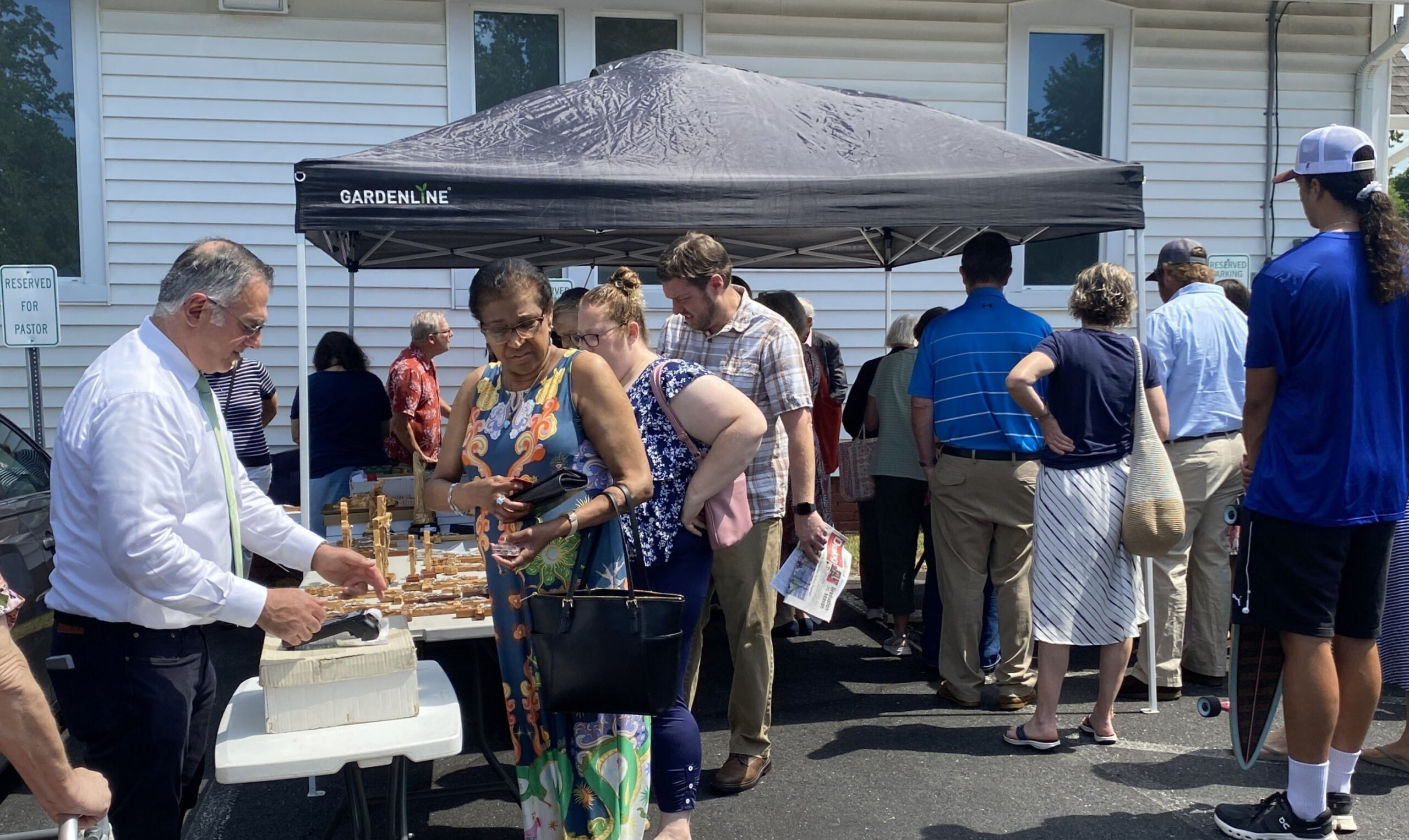
Welcomed by pastor Father Christopher Markellos, Qumsieh, an electrical engineer by trade, visited St. Benedict-St. Elizabeth Parish in Ridgely and Denton, respectively, the weekend of June 13-14 to describe the plight of Christians in the Holy Land and to solicit help by selling olive wood religious items crafted by Palestinian Christian artisans.
A native of Bethlehem, Qumsieh began his brief remarks with, “I’m a Catholic Palestinian – who heard of such a thing?”

Qumsieh described the persecution Palestinian Catholics and Christians suffer, indignities and even abuse by both “extremist Jews and Muslims.”
“Our numbers are down to 0.4% of the entire population. What’s left is four Catholics for every 1,000 people who are Muslims and Jews in places like Nazareth, Bethlehem, and Jerusalem. It’s a shame, no matter how you choose to look at it,” he said.
“On the one hand, we have those radical suicide-bombing Muslim Palestinians, and on the other hand, we have those poor Israelis who are trying to defend for their security and their survival, Qumsieh said. “This is how the story is portrayed to all of us, but it’s far from the complete truth, because there’s no mention of people like me.”
Qumsieh described how Catholic priests walking Jerusalem’s streets are often subjected to abuse, and churches are desecrated, by both extremist Jews and Muslims. “We’re constantly harassed and belittled and pushed around, and it’s becoming more violent” both outside and even inside the homes of Palestinian Catholics and Christians, he said. “That’s why we continue to leave.”
“We continue to pray and support as well as we can,” Father Markellos told parishioners. “We live a very comfortable Christianity in this country. Thank God no one greeted you with a gun … or put your name on a list.”
As a result of the decline in the number of tourists in the volatile area, Christian artisans are finding it difficult to support themselves. That’s why support from Catholics around the world, and especially among American Catholics is needed, he said.
“He’s absolutely right,” Deacon Bill Nickum said. “When’s the last time we thought about the Christians’ plight over in Israel?”
Qumsieh asked parishioners for three things. “Please pray: pray for the survival, for the protection and for the increase in numbers of our Catholic and Christian Palestinian community, and start using that term with your friends, Catholic and Christian Palestinians, make it more known,” he said. “We live at the moment in time where you are the stronger brother and sister in Christ because you’re in America, and … where our Catholic and Christian Palestinian community is at the weakest point ever.”
Secondly, “our community needs resources. We are not a bunch of lazy people looking for a handout,” he said. “The only thing that we have that we can bring from Bethlehem (are) good religious items, the rosaries, nativities, and the crucifixes.”
Finally, he asked American Christians to write to political representatives on behalf of the Palestinian “underdogs.” “Don’t make it complicated, just one simple statement: What are we doing for the Catholic and Christian Palestinian community to ensure their survival?
“This is the one spot on earth where Jesus Christ himself humbled himself and came down and redeemed us,” Qumsieh said. “Still today you can still see with your own two eyes that the tomb is empty because Christ is truly risen, to all the spots in the land where the miracles have been performed.”
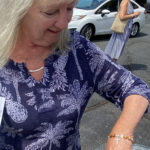
“It’s nice that he brought it to our attention,” parishioner Walter Cegelski said. “I knew there had to be Catholic Palestinians, but I didn’t realize there were so few of them, or even any at all.”
Qumsieh offered “beautiful stuff,” said Deacon Bob Wilson of Denton, who is currently between assignments. “I have stuff five, six years ago from him. I have the Last Supper … and Christ carrying the cross” carved in olive wood.
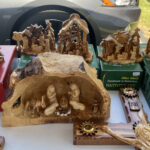
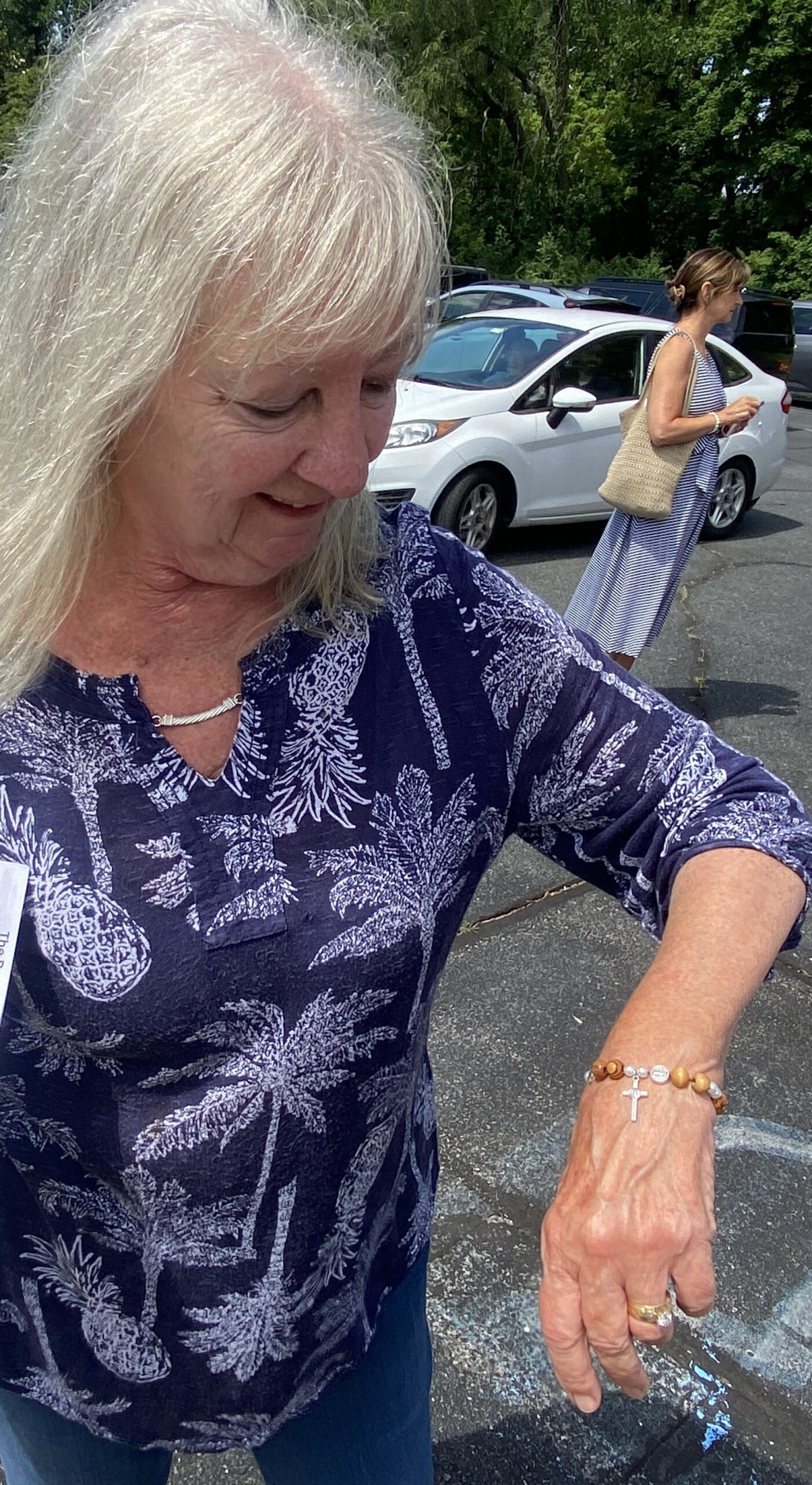
Also among the items for sale were elaborate carvings of the Nativity, the Sacred Heart, candlesticks, plaques, keychains and jewelry. Especially popular were crucifixes containing insets that held frankincense, myrrh, olive leaves and stone shards from Jerusalem.
Qumsieh explained the meaning of each item in the crucifix. “That’s the frankincense, which represents honor to God; the myrrh, the spice that prepares us for death; the olive leaf, which is God’s peace in our life; (and) Jerusalem stone, which represents the foundation of our church,” he said.
To contact Rami Qumsieh, visit holylanddirect.com.