

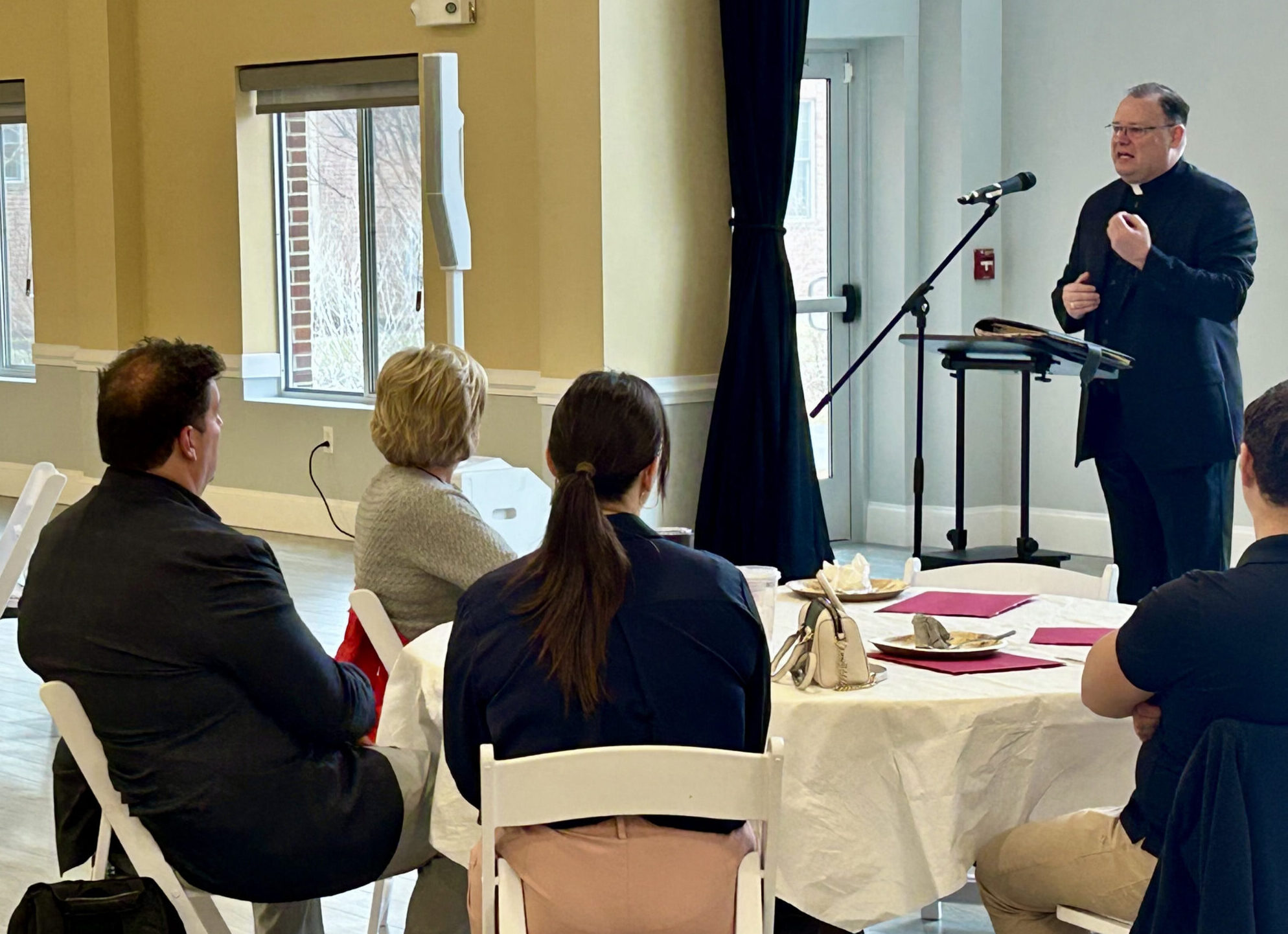

EASTON, Md. — Making difficult business and personnel decisions is not something limited to the private sector, the vicar general of the Diocese of Wilmington told a group gathered for the Catholic Business Network breakfast at Ss. Peter and Paul Parish on March 5.
“Part of being a leader is making decisions for the good of the people,” said Msgr. Steven P. Hurley, the highest-ranking church official in the diocese after Bishop William E. Koenig.
Msgr. Hurley, who is also pastor of St. Thomas the Apostle and administrator of St. Mary Magdalene parishes in Wilmington, delivered remarks to Catholic businesspeople during the program entitled “Catholic social teaching in business decision-making.” He cited Pope Leo XIII and his late 19th century encyclical “rerum novarum” addressing the condition of the working class.
When Pope Leo XIV selected his name after being elected pope last year, Msgr. Hurley said that signaled the type of pontificate our current pope was seeking. Rerun Novarum – translated in English as “of new things” — was critical to Leo XIII in a time of the industrial revolution including workers putting in long hours for insufficient wages, he said.
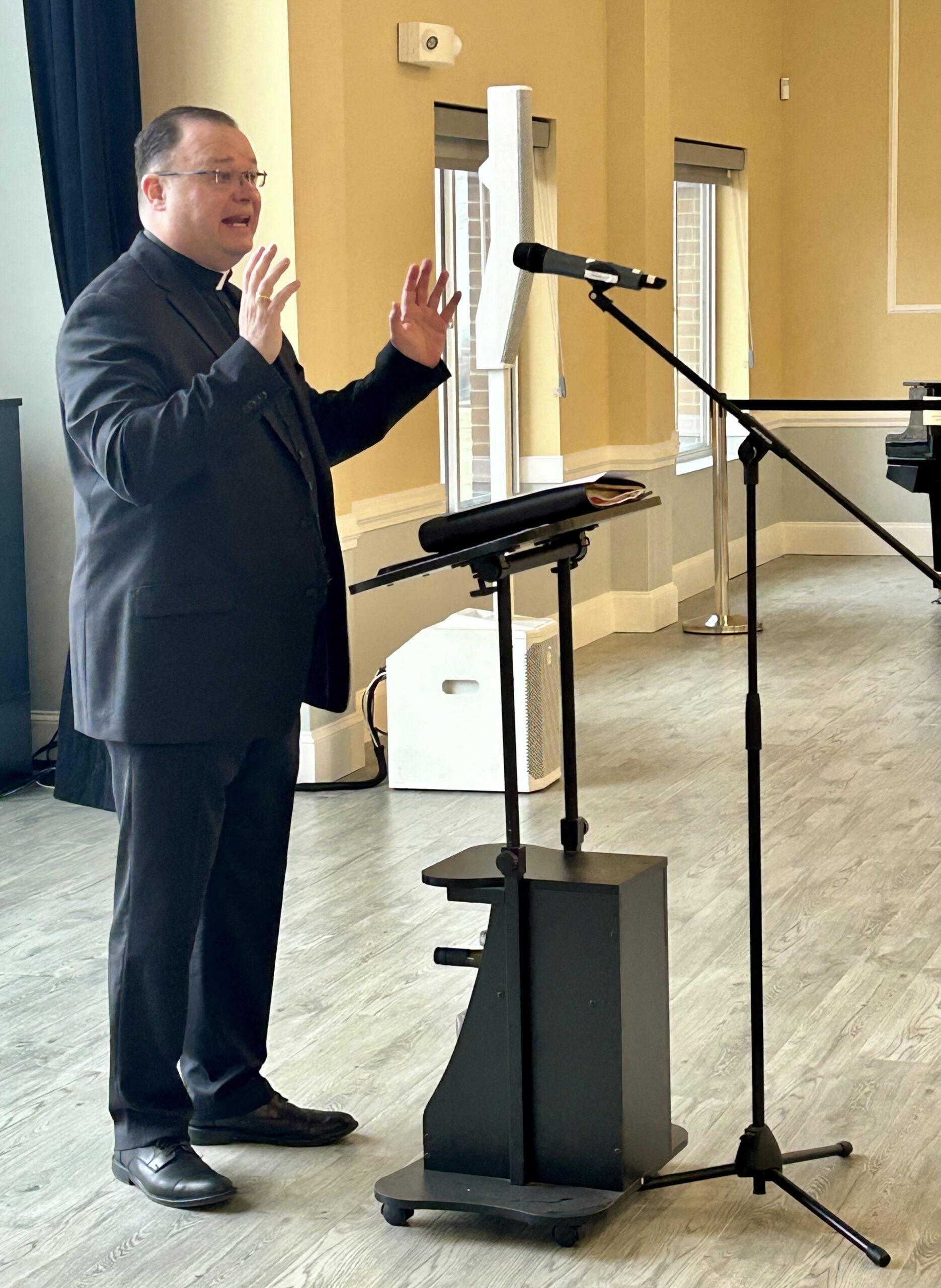
“He rejected anything that devalued workers,” Msgr. Hurley said.
That doesn’t diminish a supervisor’s role of maintaining a productive work environment, he said, which sometimes includes disciplining or terminating people who aren’t doing their job. As someone who works in the church, it is all about good stewardship, Msgr. Hurley said, never forgetting that we’re here to help people grow their faith and enrich their spirituality.
“Catholic social teaching insists leadership is a form of stewardship, not domination. The people are the center of what we do. Our offices exist to serve the parishes.”
“You can hold people accountable, but people have to be treated fairly. Wages are not an act of charity, but an act of justice. We can’t match corporate America, but we can promote good environment. As employers, we respect contracts and promises. It’s just the right thing to do.”
Being a good human is at the heart of being a good worker and employer, he said. And working for the church can be spiritually uplifting less typical of other jobs. Still, Msgr. Hurley said working for the church also means being accountable to the people who support it and doing the same things people do at other places, such as being on time, working a full day and maintaining the standard business practices at your place of employment.
“Employees are not just an item on the balance sheet. These are people. They have families. They have stories. Allow voices to be heard,” Msgr. Hurley said. “We have to listen to our folks, so people feel like they’re being heard. There is going to be conflict. If I have to yell at someone to do their job, and they’re not very good at their job, am I exercising my authority in a way that serves others or serves me?”
“We have to have humility. When we’re wrong, we say we’re wrong. It’s about solidarity. We are responsible for one another. It goes back to Jesus about love. Hiring people that are good and letting them do their jobs.”
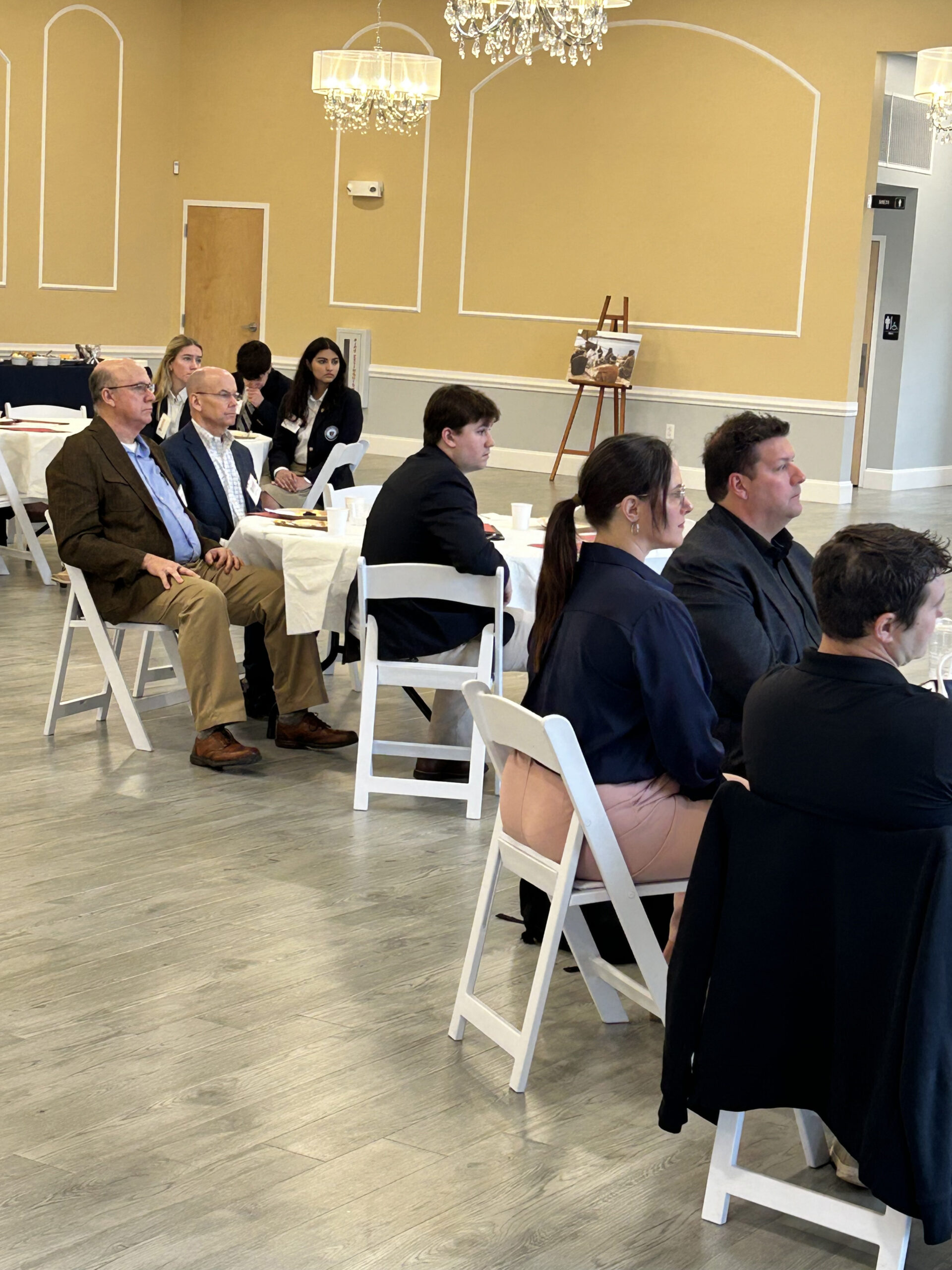
The Catholic Business Network, begun last year by diocesan officials, brings together business leaders who value fellowship, faith and integrity. The network welcomes professionals who seek to incorporate Catholic values into their work, build meaningful relationships and engage in thoughtful dialogue around ethical leadership and service, while building business contacts. Through shared prayer, inspiring speakers and intentional networking, participants are encouraged to live their faith authentically in both business and community life. The network is open to all professionals interested in faith-based leadership, regardless of industry or stage of career.
“Whenever people are involved, it’s an opportunity to be honest and kind,” Msgr. Hurley said.