
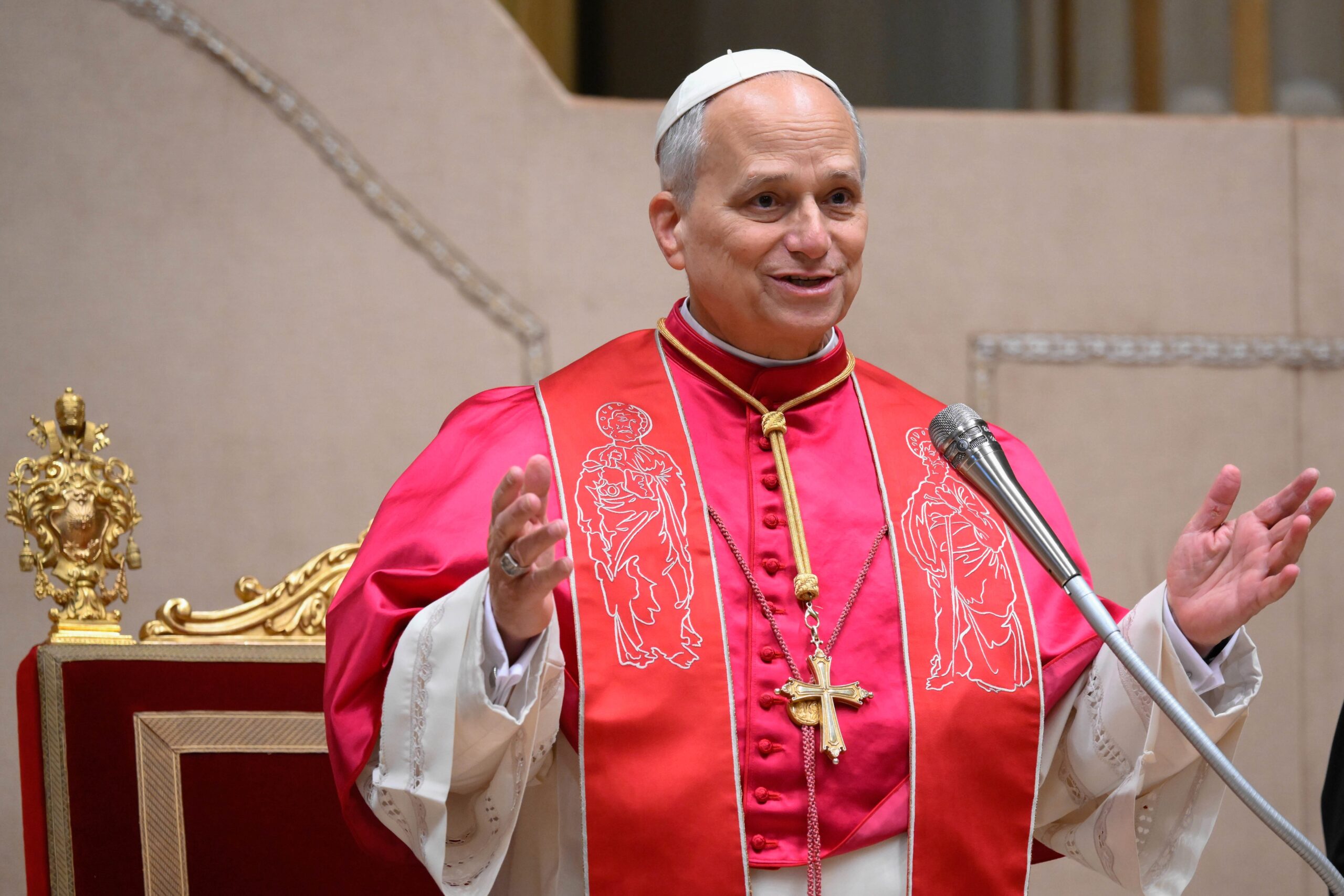




Surrogacy violates the dignity of both unborn children and pregnant women, reducing them to mere commodities and victims of exploitation, said Archbishop Paul R. Gallagher, the Vatican foreign minister.
“One cannot evade reality in its essential core: This practice (surrogacy) translates into the sale of a child,” Archbishop Gallagher said Jan. 13 at an event hosted by the Italian Embassy to the Holy See.
“The central point of surrogacy lies in the commodification of the person, which entails a grave violation of their dignity. It is precisely for this reason that the Catholic Church dedicates particular attention to it,” he said.




Archbishop Gallagher was among the participants in the event titled “A United Front for Human Dignity: Preventing the Commodification of Women and Children in Surrogacy.”
According to the Italian Embassy to the Holy See, the purpose of the event was to “foster international debate on the practice of surrogacy and raise awareness of its ethical, legal, and social implications.”
Among the participants were Eugenia Maria Roccella, the Italian minister for family, birth rate and equal opportunities; Francesco Di Nitto, Italian ambassador to the Holy See; and Georgios Poulides, ambassador of Cyprus to the Holy See and dean of the diplomatic corps.
In his speech, Archbishop Gallagher recalled Pope Leo XIV’s Jan. 9 address to diplomats accredited to the Holy See, in which the pope denounced the practice of surrogacy.
“By transforming gestation into a negotiable service, this violates the dignity both of the child, who is reduced to a ‘product,’ and of the mother, exploiting her body and the generative process, and distorting the original relational calling of the family,” the pope said.
The Vatican foreign minister said that Pope Francis had similarly denounced surrogacy in 2024, calling for a universal ban on the practice, which he had deemed “deplorable.”
Noting the backlash the late pontiff received at the time, Archbishop Gallagher said Pope Francis’ words were “in full continuity with the Church’s teaching on the dignity of the person and the sacredness of life.”
As evidenced by Pope Leo’s opposition to surrogacy, he added, “the Holy See consistently takes a position in defense of the inalienable dignity of every person.”
“Every person possesses a unique value which is incompatible with any treatment that reduces them to an object of transaction, even in the apparently generous form of donation,” the archbishop said.
Surrogacy, he continued, reduces a child to “a product” and some contracts establish “the expected characteristics of the unborn child” and “foreseeing, for example, what happens if they are not healthy or do not correspond to what was ordered, as happens with merchandise.”
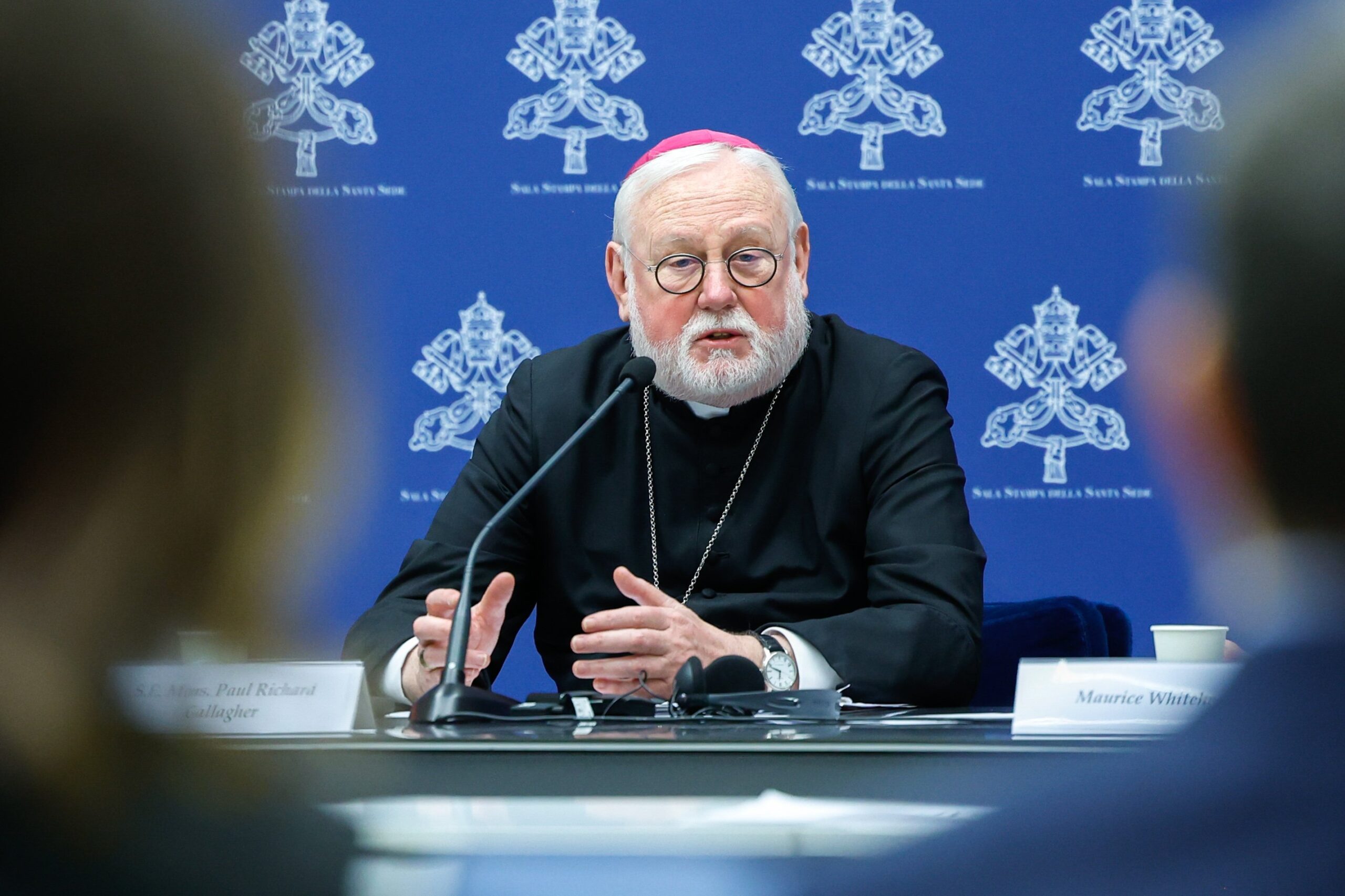
“The child — and it is painful to note this — is objectified, often sold, transferred from one person to another, and in cases of non-altruistic surrogacy, the final payment occurs precisely at the moment of the delivery of the newborn,” he said.
Archbishop Gallagher cited Article 2 of the U.N. Optional Protocol to the Convention on the Rights of the Child on the sale of children, child prostitution and child pornography, which defined the sale of children as “any act or transaction whereby a child is transferred by any person or group of persons to another for remuneration or any other consideration.”
By that definition, he said, the practice of surrogacy “translates into the sale of a child.”
The Vatican foreign minister also noted that surrogacy reduces “the female body to an instrument of reproductive services, imposing a fracture between the woman’s identity and her biological and relational bond with the child she carries in her womb.”
Highlighting the importance of the first bond made by mother and child, Archbishop Gallagher emphasized that pregnancy is not “a mere biological function, replaceable by a mechanical device like an artificial womb.”
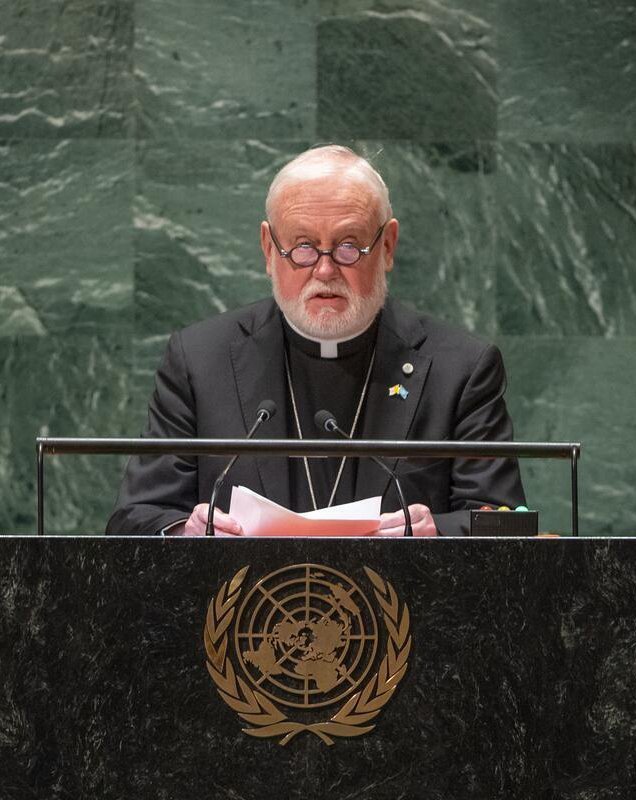
He also noted that feminists have denounced the practice of surrogacy, which “reduces women to a mere incubator,” and said opposition to it was essential, especially when it is presented “often with positive and superficial tones, taking cues from celebrities who have resorted to it.”
Reiterating calls for an international ban on surrogacy, Archbishop Gallagher said the practice could only be countered through “firm political will that is shared by a sufficient number of states that sanction it in their own countries.
“To reach a universal ban, a broad front of consensus at the level of civil society and non-governmental organizations, capable of supporting this objective with determination, is necessary,” he said. “It is therefore important not to limit oneself to involving those who already fully share this vision, but to build pragmatic alliances oriented toward the achievement of a common goal.”