



Diocese Youth Development Board Creates Saint Carlo Acutis Society
A few years ago, I was standing in a small, impoverished community in the Dominican Republic, helping lead a service project with a group of student volunteers. One of the young girls we met was shy and hesitant to speak with us. By the end of the week, she was laughing, teaching us Spanish phrases, and proudly showing us around her neighborhood.
As we prepared to leave, she wrapped her arms around me and asked a simple question:

”¿Recuerdas?”
“Will you remember me?”
Of all the things she could have wanted- food, clothing, education, a fix for her leaky roof- what she wanted most was to be remembered. To know that she mattered. To know that she was part of something bigger than herself.
That moment has stayed with me because it taught me something important about people, and especially about young people. We all want to know that we matter. We all want to know that our lives can make a difference. We all want to belong.
The same lesson is at the heart of Catholic education.
When people think about Catholic schools, they often think about academics, college preparation, faith formation, and classroom learning. Those things are certainly important. But Catholic education is about something much bigger. It helps young people discover who God created them to be and challenges them to use their gifts in service to others. It teaches us that faith is not simply something we learn about. It is something we live.
In the Diocese of Wilmington, I have been fortunate to experience that firsthand.
As the inaugural chair of the Diocese’s Youth Development Board, I have had the opportunity to work alongside students from Catholic high schools across Delaware and Maryland. The Board was created around a simple but powerful idea: young people are not just the future of the Church. We are impactful members of the Church right now.
That idea matters because today’s young people face challenges unlike any generation before us.
My generation experienced what many have called the loneliest childhood on record. During some of our most formative years, we attended school through computer screens. Sporting events were canceled. Retreats disappeared. Proms, graduations, performances, and milestone celebrations were altered or lost altogether. At the very moment we were supposed to be learning how to build friendships and communities, many of us were isolated from them.
Adults often look at teenagers glued to their phones and conclude that we are disconnected from the world around us.
My experience has been exactly the opposite.
Young people are desperate for connection. They are desperate for purpose. They are desperate to belong. The challenge is that many simply don’t know where to find a sense of belonging.
Over the past several years, I have had the opportunity to recruit and lead hundreds of student volunteers through service projects, leadership programs, and mission work. Again and again, I have watched the same transformation occur. Students arrive quiet, uncertain, and hesitant. Then something changes. They are asked to lead a team. Solve a problem. Organize an event. Welcome a new volunteer. Share an idea. Suddenly, they begin to see themselves differently.
Young people do not become engaged because they are handed a task list. They become engaged when they are entrusted with a mission.
Too often, we ask students to clean up after the event instead of helping plan it. We ask them to move chairs instead of helping make decisions. We invite them to participate, but not to lead.
The Diocese chose a different approach.
Rather than talking about youth leadership, diocesan leaders invited students into the conversation and asked us to help create it.
The six members of the Youth Development Board came from different schools, backgrounds, and experiences, but we shared one thing in common: we wanted to make a difference. From our very first meetings, the conversations were energetic, honest, and hopeful. Students did not simply want more events to attend. We wanted opportunities to build relationships across schools, deepen our faith, serve our communities, and create something meaningful that would outlast our own time in high school.
One outcome of those conversations was the creation of the Saint Carlo Acutis Society. Named after the first millennial saint, the Society reflects Carlo’s belief that holiness is not something reserved for adulthood. He used his gifts, talents, and interests to serve others as a teenager. He did not wait until he was older, more experienced, or more qualified. He lived his faith in the present.
Inspired by that example, students worked together to create a new opportunity for young people throughout the Diocese to connect faith, service, leadership, and philanthropy. More importantly, it demonstrated what can happen when students are trusted with real responsibility and given the opportunity to build something of their own.
That lesson has shaped my own journey. The Diocese of Wilmington has provided me with opportunities to grow in faith, serve others, and develop as a leader. Through mentors who challenged me, teachers who encouraged me, and diocesan leaders who trusted students with meaningful responsibilities, I learned that leadership is not about titles or recognition. It is about creating opportunities for others to succeed.
Across our Catholic schools, students are doing exactly that. They are organizing service projects, leading ministries, mentoring younger students, supporting charitable causes, and finding creative ways to live their faith beyond the classroom. They are discovering that leadership begins with service and that even small actions can create lasting change.
The Youth Development Board reminded me of something I have seen repeatedly throughout my service work: when young people are trusted, they contribute. When they are challenged, they grow. When they are empowered, they lead.
If we want young people to put down their phones, we have to give them something worth picking up.
A clipboard.
A responsibility.
A service project.
A leadership role.
A mission.
Young people are not looking for more entertainment. They are looking for meaning.
The Diocese of Wilmington recognizes that truth and continues to invest in young people not as future leaders, but as leaders today.
By giving students a voice, a seat at the table, and the confidence that their ideas matter, the Diocese is helping form a generation that leads with faith, serves with compassion, and understands that every person has God-given dignity and purpose.
That gives me tremendous hope.
The future of the Church is bright not because of what young people might do someday, but because of what they are already doing right now—serving, leading, and living their faith in ways that are transforming communities across our Diocese and beyond.
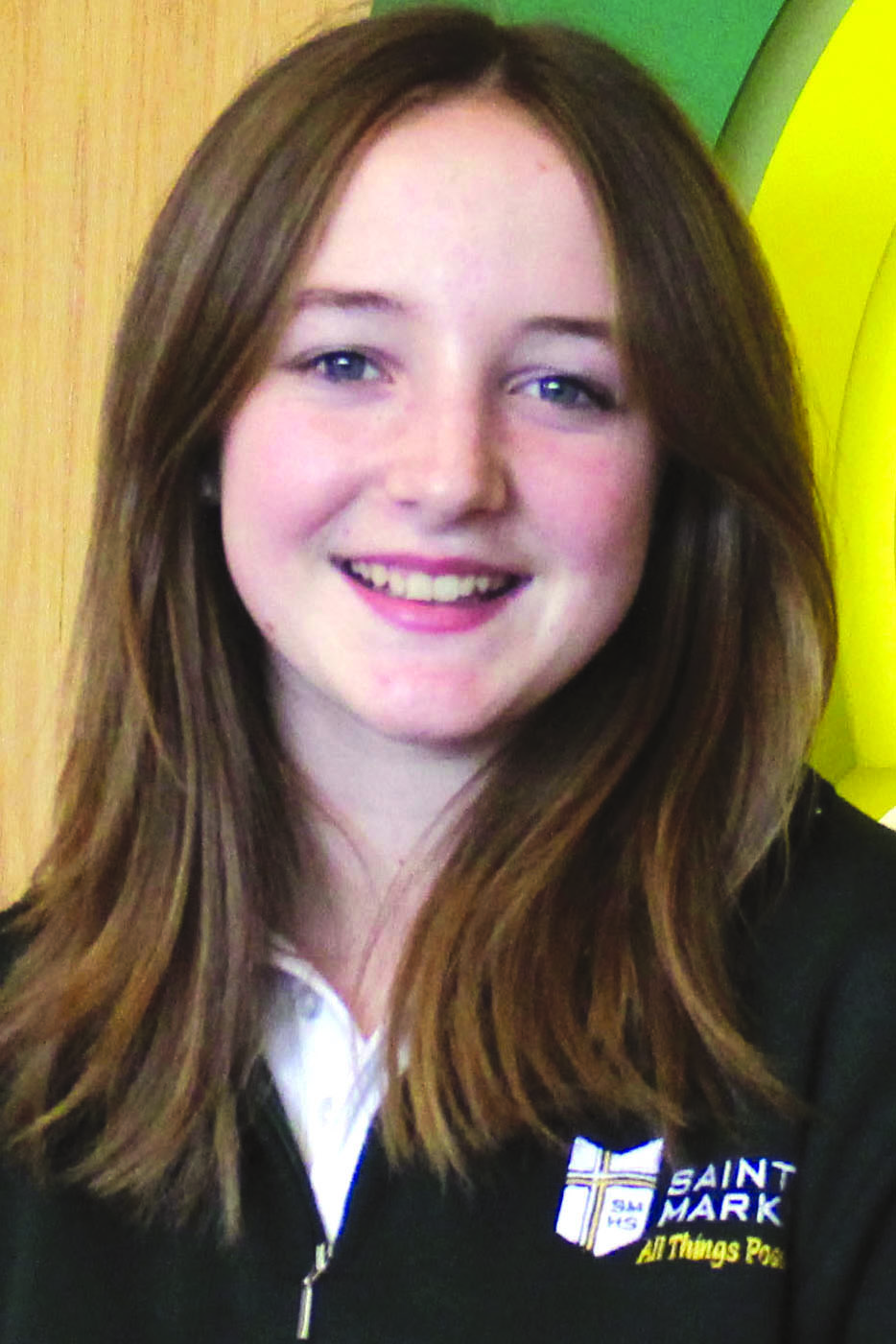
Lauren Tyree is a graduate of Saint Mark’s High School.