
By Bishop Thomas J. Paprocki, OSV News
If you asked, “What does Christianity have to say about the Olympics?”, most people would probably shrug and say, “Not much,” not seeing any real connection between a seemingly secular athletic tournament and religious faith.
In reality, the relationship between the Olympics and religion is rather complex.
It would be good for us to recall the history of the Olympic Games. According to Britannica.com, the original Olympic Games, which began in 776 B.C., were held every four years in Olympia, Greece, as part of a religious festival honoring Zeus, whom the ancient Greeks regarded as the god of the sky and the thunder, the king of all other gods and men, and, consequently, the chief figure in Greek mythology.
History.com tells us that “the Olympic Games, which originated in ancient Greece as many as 3,000 years ago, were revived in the late 19th century and have become the world’s preeminent sporting competition. From the 8th century B.C. to the 4th century A.D., the Games were held every four years in Olympia, located in the western Peloponnese peninsula, in honor of the god Zeus. The first modern Olympics took place in 1896 in Athens.”
Why did the Olympic Games cease competition from the fourth century until nearly the end of the 19th century? Again, History.com explains: “After the Roman Empire conquered Greece in the mid-2nd century B.C., the Games continued, but their standards and quality declined. In one notorious example from A.D. 67, the decadent Emperor Nero entered an Olympic chariot race, only to disgrace himself by declaring himself the winner even after he fell off his chariot during the event. In A.D. 393, Emperor Theodosius I, a Christian, called for a ban on all ‘pagan’ festivals, ending the ancient Olympic tradition after nearly 12 centuries. It would be another 1,500 years before the Games would rise again.”
It is certainly noteworthy that Christian objections to pagan influences of the Olympics shut down the games for 15 centuries, longer than they had previously been in existence.
At a conference on international sport in Paris in November 1892, Baron Pierre de Coubertin of France proposed the idea of reviving the Olympics as an international athletic competition held every four years. Dedicated to the promotion of physical education, the young baron became inspired by the idea of creating a modern Olympic Games after visiting the ancient Olympic site. Two years later, he got the approval he needed to found the International Olympic Committee, which would become the governing body of the modern Olympic Games.
The first modern Olympics were held in Athens, Greece, in 1896. For most of the 20th century, the Summer and Winter Olympics were held in the same year. A 1986 amendment to the Olympic Charter called for the Summer and Winter Games to be held alternately every two years. This change went into effect in 1994, when the Winter Games were held in Lillehammer, Norway. Only two years then elapsed before the next Summer Games, in Atlanta in 1996.
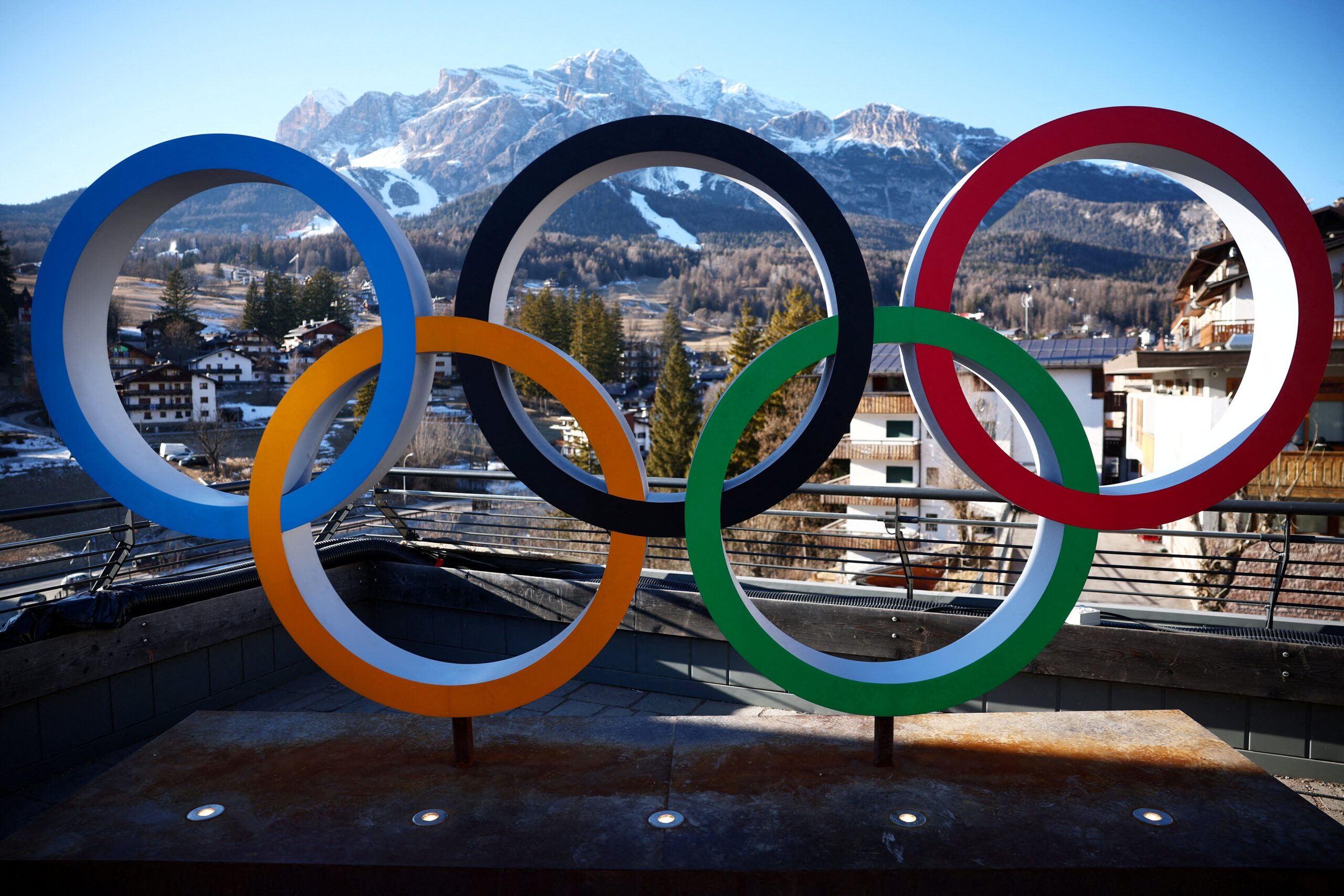
This year, the Winter Olympics will be held in Milan and Cortina d’Ampezzo, Italy, from Feb. 6-22, 2026. The next Summer Olympics will take place in Los Angeles from July 14-30, 2028.
Perhaps it was assumed in the modern era that the Olympics were now compatible with Christianity. But at the 1924 Olympics, Eric Liddell, a British runner who was a devout Christian, dropped out of the 100-meter run — his strongest event — because the final was scheduled for a Sunday. Instead, he trained for the 200 and 400-meter runs. At the Games, he finished third in the 200-meter run and turned in a remarkable performance to win the 400 meters. His story was told in the classic 1981 film “Chariots of Fire.”
More recently, the Olympics clashed with religion at the opening ceremonies for the 2024 Summer Olympics in Paris, France, which included a parody of the Last Supper featuring a dozen drag queens behind a long table in a scene reminiscent of Leonardo da Vinci’s famous painting that depicts that sacred occasion when Jesus instituted the Holy Eucharist.
The Bishops’ Conference of France issued a statement criticizing the “scenes of derision and mockery of Christianity, which we deeply deplore.” They thanked “the members of other religious denominations who have expressed their solidarity,” adding, “we think of all Christians on all continents who have been hurt by the outrage and provocation of certain scenes.”
While we do not have a Christian emperor with the power to ban “pagan” festivals, we can make our own decisions about whether to support scandalous exhibitions that ridicule and disparage our deeply held religious beliefs. Personally, when I heard of the insulting mockery of the Last Supper at the opening ceremonies of the 2024 Olympic Games, I decided not to watch any of the events taking place that summer in Paris.
We can certainly hope and pray that the 2026 Winter Olympics in Italy will respect everyone’s religious beliefs, and I intend to watch them with that hope in mind.
There is actually a very close relationship between religion and sports. I have written two books about sports and faith: “Holy Goals for Body and Soul: Eight Steps to Connect Sports with God and Faith” and “Running for a Higher Purpose: Eight Steps to Spiritual and Physical Fitness.”
Both as a hockey goalie and as a marathon runner, I can attest to the strong link between one’s frame of mind and how that influences what our bodies can do. The Olympic Games are a showcase for exceptional athletes to demonstrate how their commitment to achieving excellence through hard work and effort bears fruit in their respective sports.
In the end, the Olympic Games remind Christians that greatness is never achieved without sacrifice, discipline and perseverance. Athletes deny themselves, train daily and endure suffering for a medal that will one day fade. Christ calls us to a similar commitment for the crown of eternal life.
When we apply the principles of sport — faithful practice, obedience to the rules, resilience after failure, self-control, discipline and trust in a greater goal — to our spiritual lives, then our discipleship is strengthened and our soul is made stronger and better prepared to meet God.
The Olympics can thus inspire us to strive not only for human achievement, but for the lasting victory found in Christ, as St. Paul’s letter to the Corinthians spells out clearly: “Do you not know that the runners in the stadium all run in the race, but only one wins the prize? Run so as to win. Every athlete exercises discipline in every way. They do it to win a perishable crown, but we an imperishable one. Thus I do not run aimlessly; I do not fight as if I were shadowboxing. No, I drive my body and train it, for fear that, after having preached to others, I myself should be disqualified” (1 Cor 9:24–27).
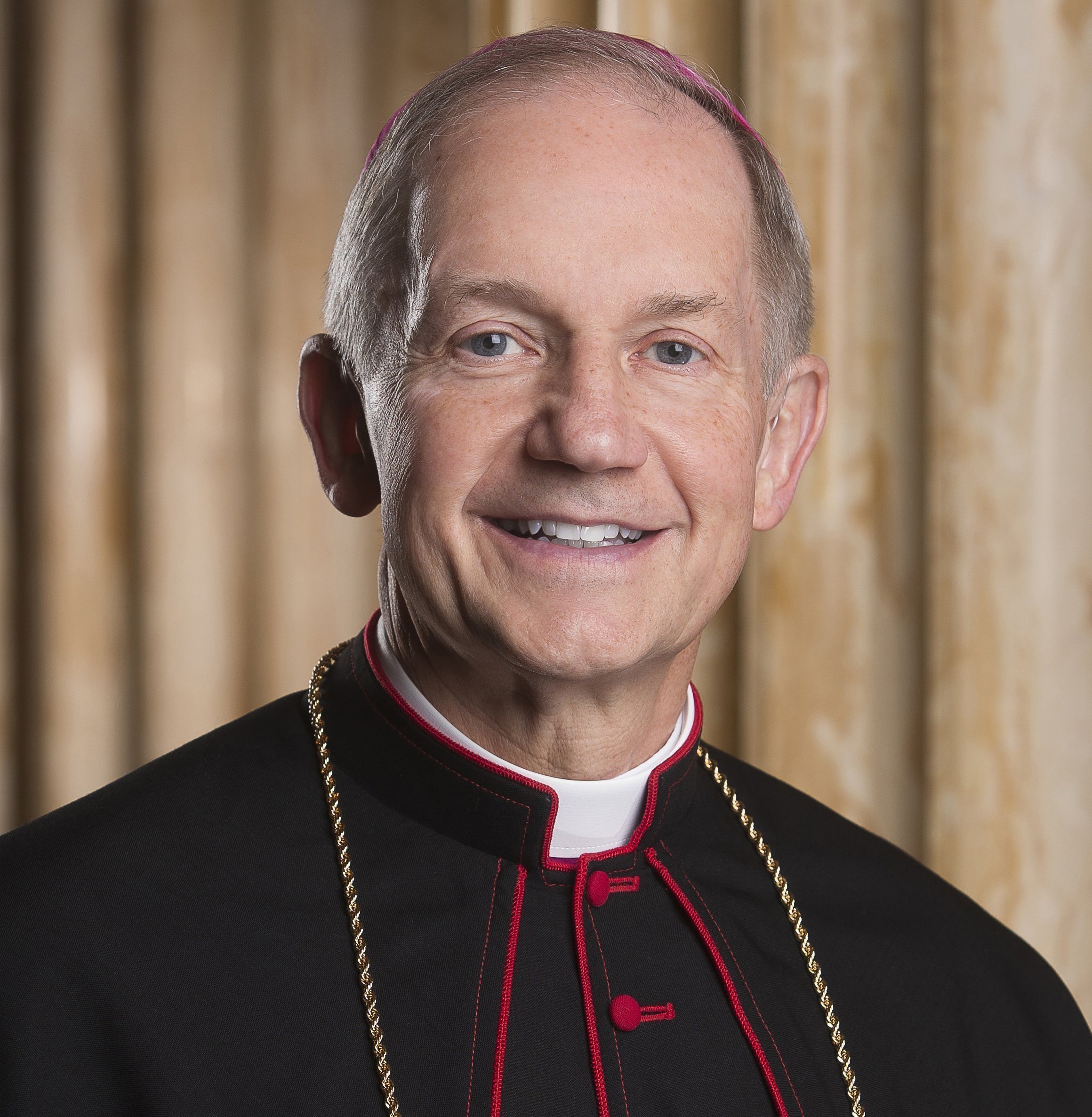
Bishop Thomas J. Paprocki is bishop of Springfield, Illinois.