
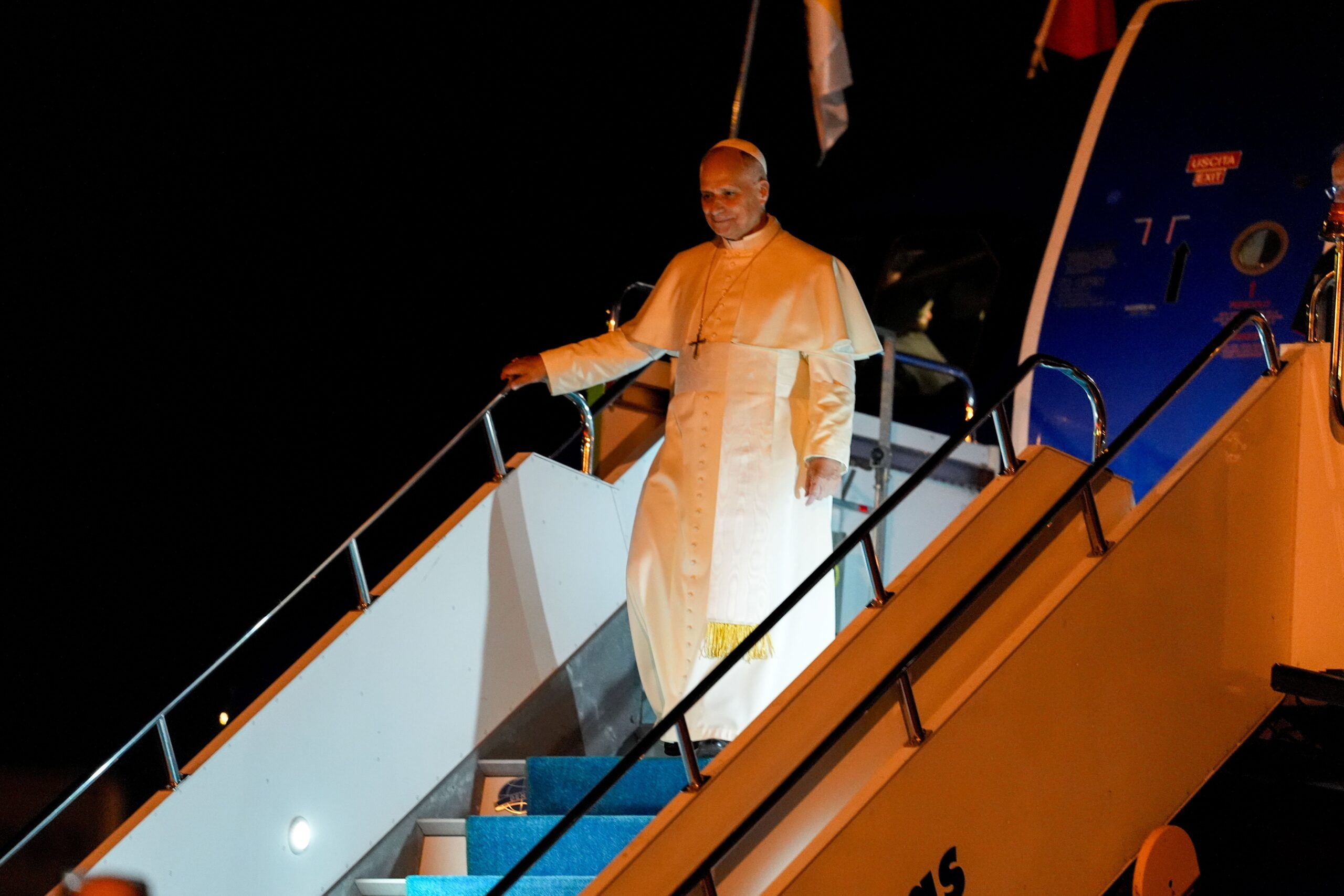



ROME — Pope Leo XIV will begin his first apostolic journey to Africa on April 13, traveling more than 11,000 miles over 11 days across Algeria, Cameroon, Angola and Equatorial Guinea.
The 70-year-old pope will travel on a total of 18 flights, visiting 11 African towns and cities in the four countries April 13–23.
Vatican spokesman Matteo Bruni described the ambitious trip at a press conference April 9 as “one of the longest stretches of time that the pope has been outside the Vatican.”


During the trip, Pope Leo is scheduled to celebrate eight public Masses, several of which are expected to draw large crowds with 600,000 people expected at the papal Mass in Doala, Cameroon, and 200,000 expected in Luanda, Angola, highlighting the Catholic Church’s vibrant presence on the continent.
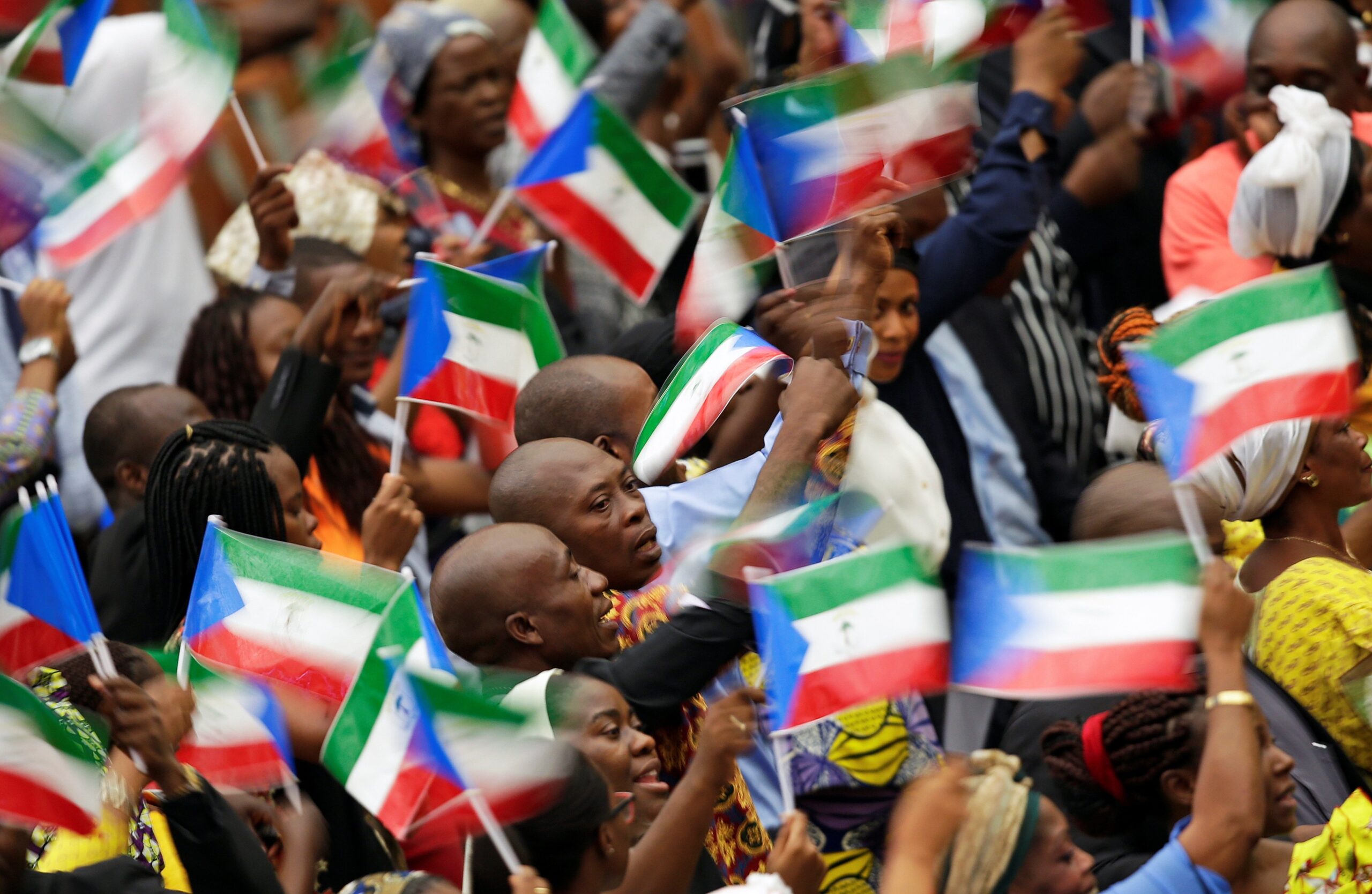
The polyglot American pope will give speeches in French, English, Portuguese and Spanish as he visits the four diverse African nations.
His itinerary also showcases the works of mercy with Pope Leo visiting prisoners and a psychiatric hospital in Equatorial Guinea, the Little Sisters of the Poor in Algeria, a nursing home in Angola and an orphanage in Cameroon.
The Vatican has pointed to peace, care for the poor, interfaith dialogue and the family as central themes of the African journey, which will also bring Pope Leo in the footsteps of St. Augustine.
Algeria: St. Augustine and interfaith dialogue
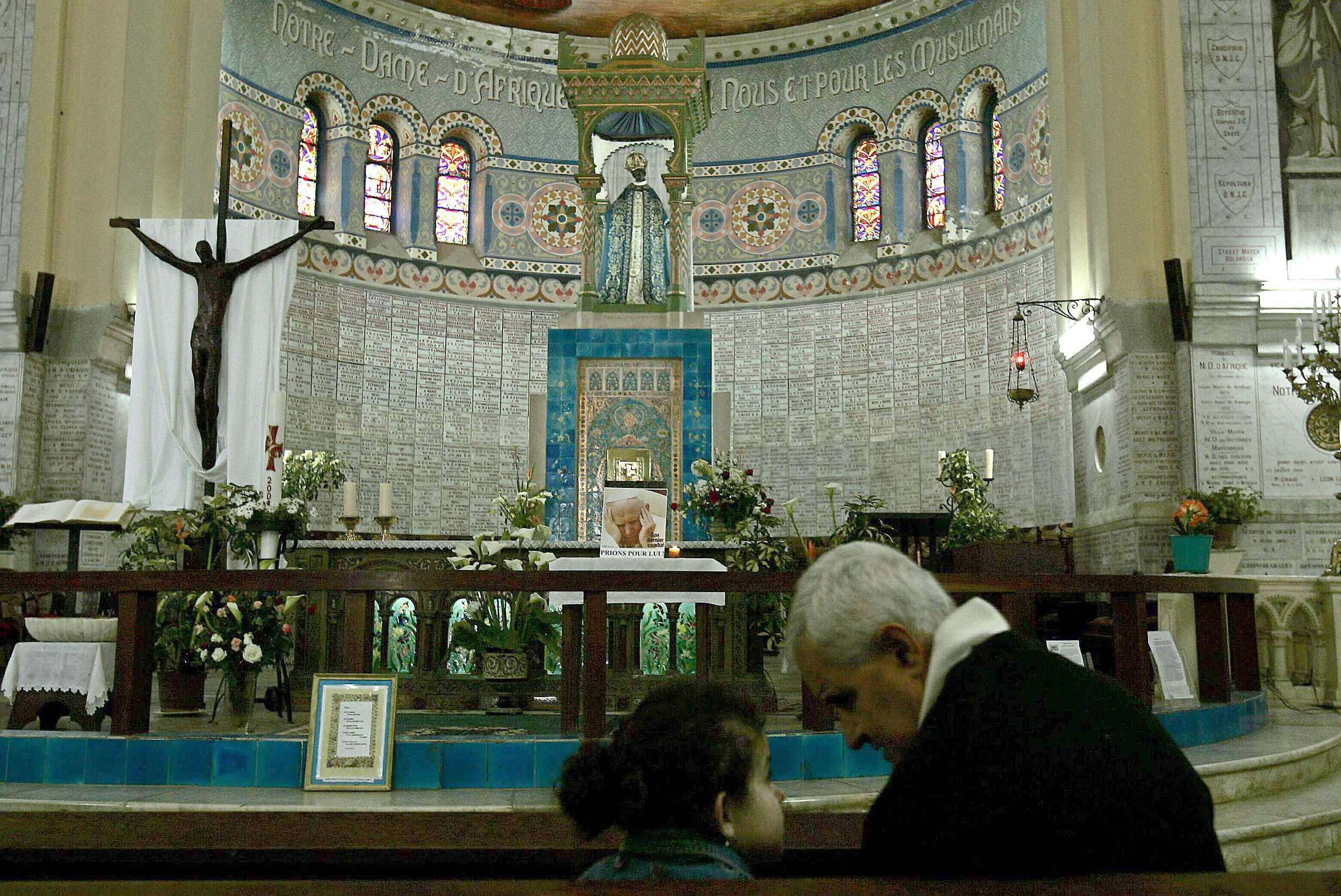
Pope Leo will open the trip by becoming the first pope to make an apostolic visit to Algeria. The country is 99% Sunni Muslim, home to fewer than 9,000 Catholics among more than 45 million people.
In the capital, Algiers, he will meet civil authorities and visit the Great Mosque of Algiers, one of the world’s largest mosques, a gesture aimed at reinforcing Christian-Muslim dialogue.
Bishop Michel Guillaud of Constantine-Hippone told OSV News the Holy Father’s presence will demonstrate that Christianity “is an asset and not a danger” to Algeria.
The pope will then travel to the northeastern city of Annaba, near the ruins of the ancient Roman city of Hippo Regius, where St. Augustine served as bishop and died in A.D. 430.
The visit carries personal resonance for Pope Leo who called himself a “son of Augustine” on the day of his election last May. Before becoming pope, Robert Prevost visited Algeria twice in 2003 and 2014.
“Algerians know that popes are not only concerned with their flock, but also with peace, justice and reconciliation for all,” Bishop Guillaud said.
Cameroon: Prayers for peace in a conflict zone
From Algeria, Pope Leo will travel April 15–18 to Cameroon, where he will make a notably sensitive stop in the northwestern city of Bamenda, epicenter of a separatist conflict that has claimed at least 6,500 lives since 2017.
Cameroon’s Anglophone crisis began when the government cracked down on strikes by English-speaking teachers and lawyers, triggering an armed insurgency that has displaced hundreds of thousands. The pope will pray for peace at St. Joseph’s Cathedral April 16 before celebrating an open-air Mass at Bamenda International Airport.
Christianity is the predominant faith in Cameroon, practiced by more than 60% of the population, with more than 8.3 million Catholics in the country.
Pope Leo will celebrate a stadium Mass on April 17 in Douala, the country’s largest city and economic hub, where 600,000 people are expected to attend.
The trip comes amid a troubled political climate in Cameroon. President Paul Biya, in power for 43 years, was declared the winner of a disputed October election, extending the 93-year-old leader’s rule by another seven years. The main opposition leader, Issa Tchiroma, rejected the results and has since continued to claim that he is the duly elected president.
“The people of Cameroon have gone through a lot, and hearing that the Holy Father is coming to visit us in moments of difficulty is very big news for us,” Archbishop Andrew Fuanya Nkea, president of Cameroon’s bishops’ conference, said.
Angola: More than 20 million Catholics
The pope will spend April 18–21 in Angola, home to more than 20.31 million Catholics, according to the latest Vatican statistics. Three-quarters of Angola’s young population is under age 30.
Despite considerable oil wealth, Angola continues to grapple with deep poverty and inequality as the country has not yet fully healed from decades of civil war.
Pope Leo will visit the Marian pilgrimage shrine of Our Lady of Muxima, hold an outdoor Mass in the northeastern city of Saurimo, and meet with the local Catholic community in the capital, Luanda, where 200,000 people are expected at a papal Mass.
Pope Benedict XVI was the last pope to visit the country in 2009 following St. John Paul II’s 1992 trip to mark the 500th anniversary of its evangelization.
Equatorial Guinea: A Spanish-speaking African country
The trip concludes April 21–23 in Equatorial Guinea, where roughly 75% of the 1.67 million population is Catholic. It will be only the second papal visit to the country; the first was by St. John Paul II in 1982.
The visit coincides with the 170th anniversary of evangelization in the country. Pope Leo will stop at a psychiatric hospital in the capital Malabo, visit a prison in Bata, and pray at a memorial to victims of a 2021 military base explosion that killed more than 100 people. A papal Mass in Mongomo at the Basilica of the Immaculate Conception is expected to draw 100,000 Catholics.
Sister Francine Hien of the Missionary Sisters of Mary Immaculate told OSV News the Christian-majority country was awaiting the pope’s arrival with “enthusiasm, expectations, zeal and joy.”
The pope will return to Rome on April 23 following a roughly six-hour flight covering approximately 2,850 miles.
Courtney Mares is Vatican editor for OSV News. Follow her on X @catholicourtney.