

In his papal bull proclaiming the Jubilee Year, the late Pope Francis emphasized the theme of hope, a much-needed virtue in a time of uncertainty, war, and tribulation.
Yet in “Spes Non Confundit” (“Hope Does Not Disappoint”), the pope unknowingly described what many Catholics would feel in the year to come.
“Everyone knows what it is to hope. In the heart of each person, hope dwells as the desire and expectation of good things to come, despite our not knowing what the future may bring,” he wrote.

In 2024, the pope’s health was already a cause for concern due to a persistent flu at the beginning of the year, as well as limited mobility that required the use of a cane and a wheelchair.
While the intense monthly schedule of Jubilee events was worrisome, there was still the hope that the ailing pontiff would be able to participate.
However, those hopes were dashed once his health took a turn for the worse in February, and on April 21, just one day after delivering what would be his final Easter Sunday “urbi et orbi” blessing, Pope Francis died.
For Archbishop Rino Fisichella, organizer of the Jubilee 2025 events and pro-prefect of the Dicastery for Evangelization, the pope’s death “created a silence that was felt in the streets of Rome and the world, as well as in every Christian community.”
In an interview via email Dec. 3, Archbishop Fisichella told OSV News that it was in those days of mourning that “the motto of the Jubilee took on a different light.”
“The faithful understood that Christian hope is not a sentiment, but a promise. I saw people crossing the Holy Door with tears in their eyes and yet with a new inner strength,” he said.
“One cannot forget that hope strongly recalls eternal life, a promise that was realized in the resurrection of Jesus Christ,” Archbishop Fisichella added. “An everlasting life is the true announcement of the Christian faith and of this Jubilee.”
Interregnum
Despite his ill health, Pope Francis’ death still came as a shock to many and triggered a series of events that occurred only once in the Catholic Church’s history.
The last time the death of a pope and the election of his successor occurred in a Jubilee Year was in 1700 with the death of Pope Innocent XII and the election of Pope Clement XI.
Aside from the uncertainty regarding who would be the next leader of the Catholic Church, Archbishop Fisichella acknowledged that it “was useless to deny” that the interregnum period caused “a certain objective difficulty.”
Alessandro Gisotti, deputy editorial director of Vatican Media, told OSV News Nov. 11 that the Jubilee faced challenges even before the pope’s death.
“Unfortunately, practically from the beginning of this Jubilee, Pope Francis was limited by illness, then hospitalization, and finally his death. He was only able to experience the importance and intensity of this Jubilee to a certain point,” Gisotti said.
“When the pope was at Gemelli Hospital, the Jubilee continued, but without the pope, it was naturally more subdued,” he added.
Nevertheless, Archbishop Fisichella said, “the machine did not stop.”
For both Archbishop Fisichella and Gisotti, the death of Pope Francis and the conclave and election of Pope Leo XIV did not stop the Jubilee but instead redefined it.
“The death of Francis and the election of Leo had, in a way, restarted the Jubilee in terms of attendance,” Gisotti noted.
“The cardinals supported me immediately and wanted the Jubilee to continue with its manifestations. Continuity was guaranteed by the very nature of the Jubilee, which does not belong to a pontiff, but to the church and to the people of God,” Archbishop Fisichella told OSV News.
Despite the demanding schedule, the archbishop added, “Pope Leo XIV accepted the calendar without fear and, from the beginning, chose to maintain the programmed Jubilee commitments.”
“This allowed for stability and offered a true continuity that is evident to all, given the incredible numbers of pilgrims,” he added.
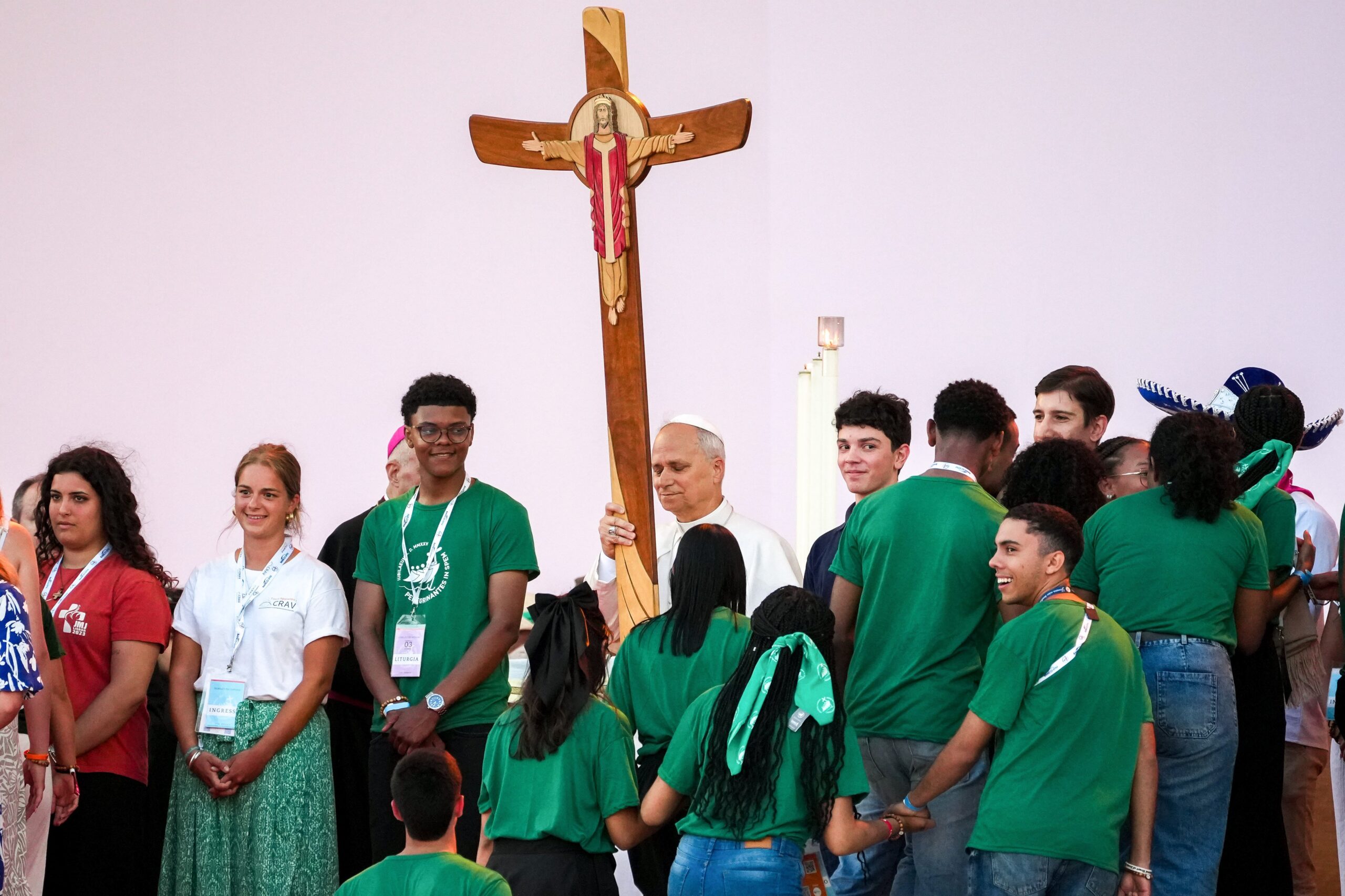
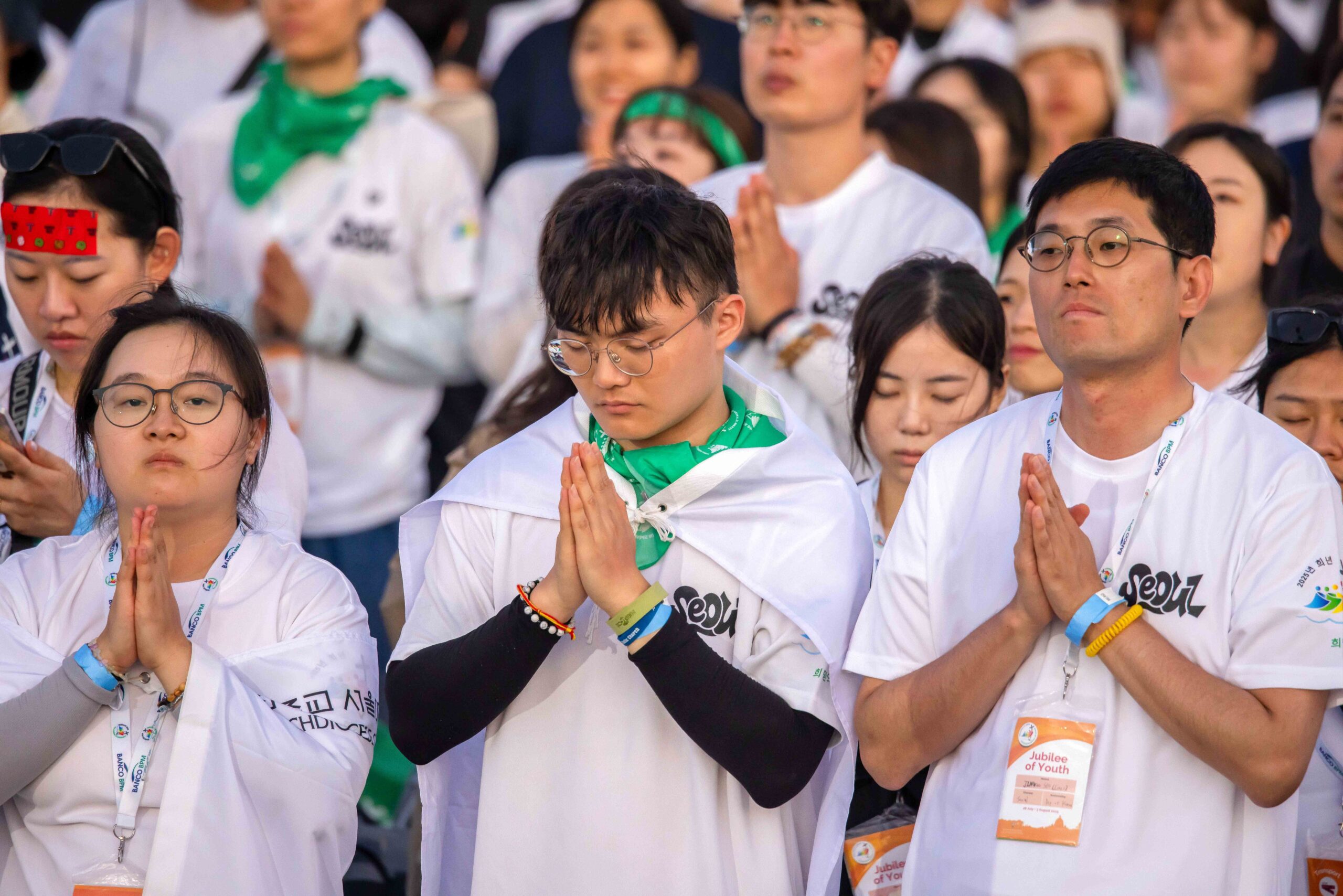
This was most evident at the Jubilee of Youth in Rome, which drew an estimated 1 million young people from around the world.
The Jubilee of Youth
Like many young Catholics, Joey Pfeiffer, a 17-year-old from Miami, was at a crucial point in his life and trying to discover his own sense of faith.
“I’ve always grown up in the Catholic faith,” he told OSV News Dec. 1. “But I’m a very factual guy, and I hadn’t really found any proof that God existed.
For Pfeiffer, attending the Jubilee of Youth, meeting with Catholics his age, and witnessing their joy despite facing similar doubts, helped him build “a foundation in my faith.”
“I saw all these people so filled with spirit and so alive about these different experiences that they’re going through,” he told OSV News. “And I feel like it helped me create a sense of security, knowing that God was there because I saw it in these different people.”
The Jubilee of Youth wasn’t just an occasion to connect with faith that was exclusive to young people. It also offered a chance for those who led those groups to pass on the joy of those days they had received in the past.
“Looking back at the graces received in the Jubilee 2000, we experienced joy, gratitude and mercy. We knew that we wanted to be a part of transmitting it to the next generation,” said Elias Rosado from New Jersey, who, along with his wife, Jessica, led a group of 170 young people from the Neocatechumenal Way to Rome for the event.
Speaking to OSV News Nov. 30, Rosado said the Jubilee helped him and his wife rediscover that “we are not alone on our true pilgrimage, which is our life.”
“We experienced that God provided an answer to our suffering today, and in our marriage. Facing infertility, we experienced joy and consolation in this suffering to see how the Lord can use our suffering and make it glorious; that our suffering has meaning,” Rosado told OSV News.
Both Pfeiffer’s and Rosado’s experiences of the pilgrimage echoed what Archbishop Fisichella witnessed during the many Jubilee year events, where “pilgrims did not limit themselves to venerating the places of faith, but wanted to touch the living flesh of the Gospel.”
The Vatican official noted that the Jubilee Year initiatives linked to the corporal works of mercy “have shown a church that does not fear translating theology into concrete gestures.”
“The signs of hope are precisely these: those that translate our faith into life daily. The signs become innumerable because they are the fruit of the centrality of faith,” he told OSV News.
A door opened, a door closed
In December 2024, Pope Francis opened the Holy Door in St. Peter’s, marking the beginning of the Jubilee. The task of closing that door now falls to his successor, Pope Leo XIV.
Gisotti told OSV News that Pope Leo is continuing “that spirit of hope desired by Pope Francis” and that his experience as a missionary “capable of speaking to everyone” brings “an extraordinary international dimension to his papacy.”
For Archbishop Fisichella, the fact that Pope Francis would not be the one to end the Jubilee of Hope is one of “profound symbolic value.”
“Let this unfinished gesture become an invitation for every believer: The mission of the church never closes,” he said.
The message he believes Pope Leo will give at the closing of the Jubilee Year will entrust the faithful with bringing “hope, peace and communion into their own homes.”
“Crossing the Holy Door means assuming the responsibility to bring hope where it is missing,” he said.
Archbishop Fisichella told OSV News that the Holy Year brought the “dimension of the pilgrimage back to the center” and that among the fruits of the Jubilee that “will accompany the church in the coming decade” is the “rediscovery of personal responsibility in the faith that is strengthened by hope.”
“The ‘Pilgrims of Hope’ return to their dioceses with a stronger sense of belonging and, above all, with the awareness that daily witness is the first place of evangelization,” he said.


