
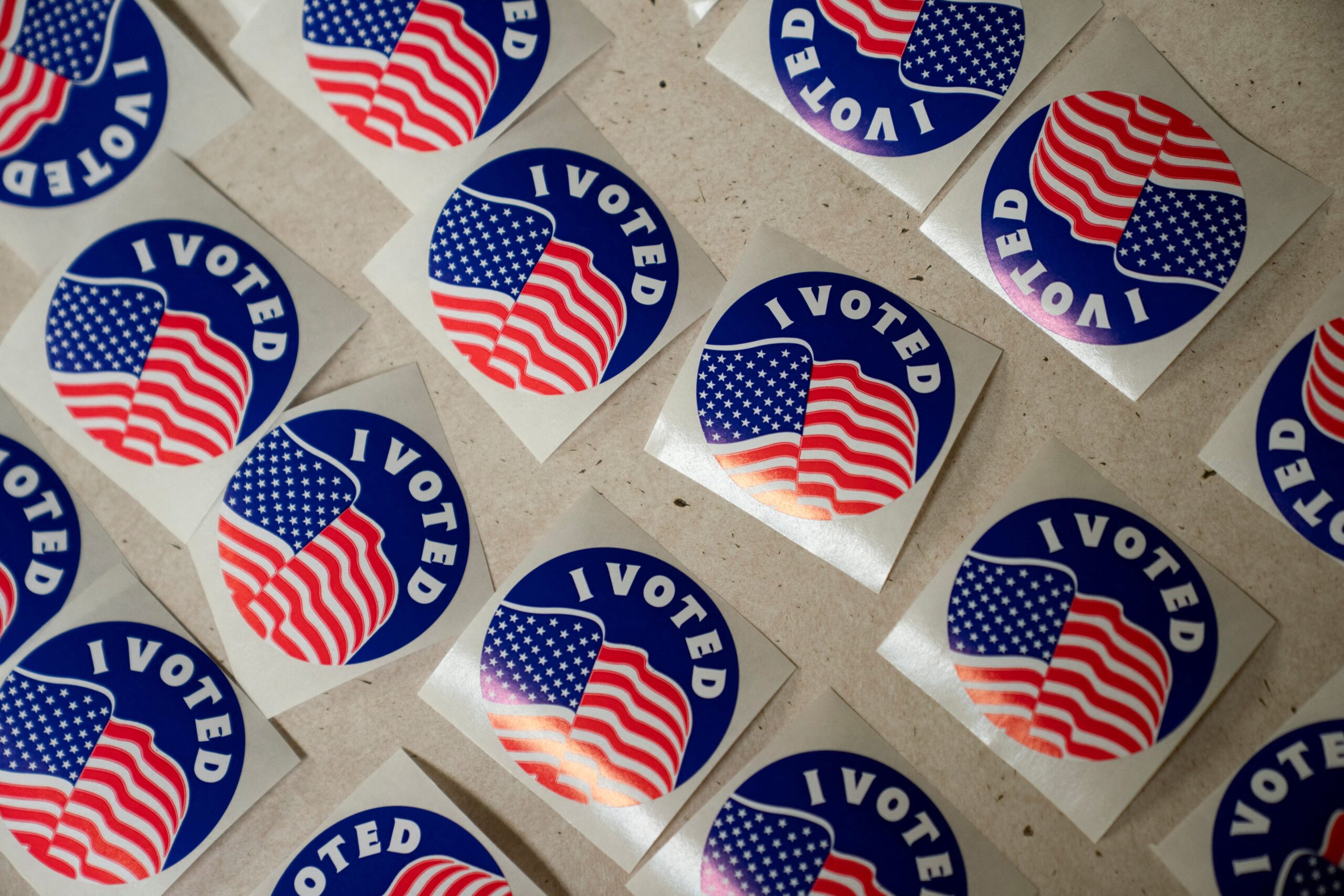

WASHINGTON (OSV News) — Most Americans oppose houses of worship endorsing political candidates, a May 14 report from the Pew Research Center said.
The vast majority of Americans — 79% — said churches and other houses of worship should not support specific candidates in elections, the report from the nonpartisan Pew Research Center said. The report also found 66% said houses of worship should keep out of political matters rather than expressing views on day-to-day social and political questions, while 33% said they should express views on these questions. The Pew report said views on these questions have not changed very much in recent years.
Large majorities of both Republicans and Democrats said houses of worship should not endorse specific candidates, the report said, at 74% and 84%, respectively. Majorities of every major religious group surveyed, including Catholics at 84%, said the same.

The Trump administration has sought to overturn a federal policy that prevents churches and other houses of worship from endorsing political candidates without losing their tax-exempt status.
A federal judge recently dismissed a related lawsuit from the National Religious Broadcasters that took aim at the policy, known as the Johnson Amendment, which prohibits 501(c)(3) organizations from engaging in political campaign activity. These organizations are a type of tax-exempt nonprofit under U.S. tax code, and the typical corporate structure for houses of worship and charities in the U.S.
Supporters of the Johnson Amendment argue it protects houses of worship from damaging relationships with political campaigns, but its critics argue it restricts First Amendment rights.
The U.S. Conference of Catholic Bishops has previously indicated the Catholic Church would maintain its policy of not endorsing or opposing political candidates regardless of possible changes to the Johnson Amendment.
The report also examined Americans’ views on religion’s role in public life, including questions about religion’s influence in society and government and the relationship between church and state.
Most Americans reject the idea that Christianity should be the nation’s official religion, the report found, with just 17% supporting that view. Most Americans said either that the government should promote Christian moral values without making Christianity the official religion at 43%, or that the government should neither establish an official religion nor promote Christian values at 38%.
The percentage of Americans who said the government should maintain separation of church and state is 54%, a number Pew said has remained essentially flat over several years.
However, while still a minority view, Pew also found there has been a decline in the share of Americans who want the government to stop enforcing the separation of church and state, at 13% in 2026, down from 19% in 2021.
The report also found that more Americans reported a negative view of Christian nationalism rather than a positive one; however, a majority reported unfamiliarity with the concept.