


The Federal Scholarship Tax Credit, or “Education Freedom Tax Credit” — a federal tax credit for donations to 501(c)(3) public charities providing scholarships to elementary or secondary school pupils — threw a proverbial lifeline to Catholic schools following its passage into law July 4, 2025.
A nationwide network of U.S. Catholic parochial schools once served about 5.6 million students — during the 1964-65 school year. But over the next 60 years, enrollment in those schools plummeted 70% — to currently fewer than 1.7 million students.
The scholarship tax credit provision — which becomes effective Jan. 1 — could eventually lead to increased contributions to Catholic nonprofits that grant scholarships for K-12 students. The contributions could in turn increase the number of scholarships that can be offered — and thereby hopefully expand access to, and enrollment in, Catholic schools.

But will it work?
“Certainly, we’re hopeful that it will have an impact on enrollment,” Sister Dale McDonald, a member of the Sisters of the Presentation of the Virgin Mary and vice president of public policy for the National Catholic Educational Association, told OSV News.
“The big challenge is, how much money can the SGOs (scholarship granting organizations) raise to be able to have something to give in scholarship aid?” Sister Dale said. “For some populations, it has to be large enough that it would make it possible for them to enter. If the question is $5,000 or $12,000 — and you only get $1,200 — that may not be enough to make a difference,” she explained. “It has to be a substantial scholarship for people of very low income.”
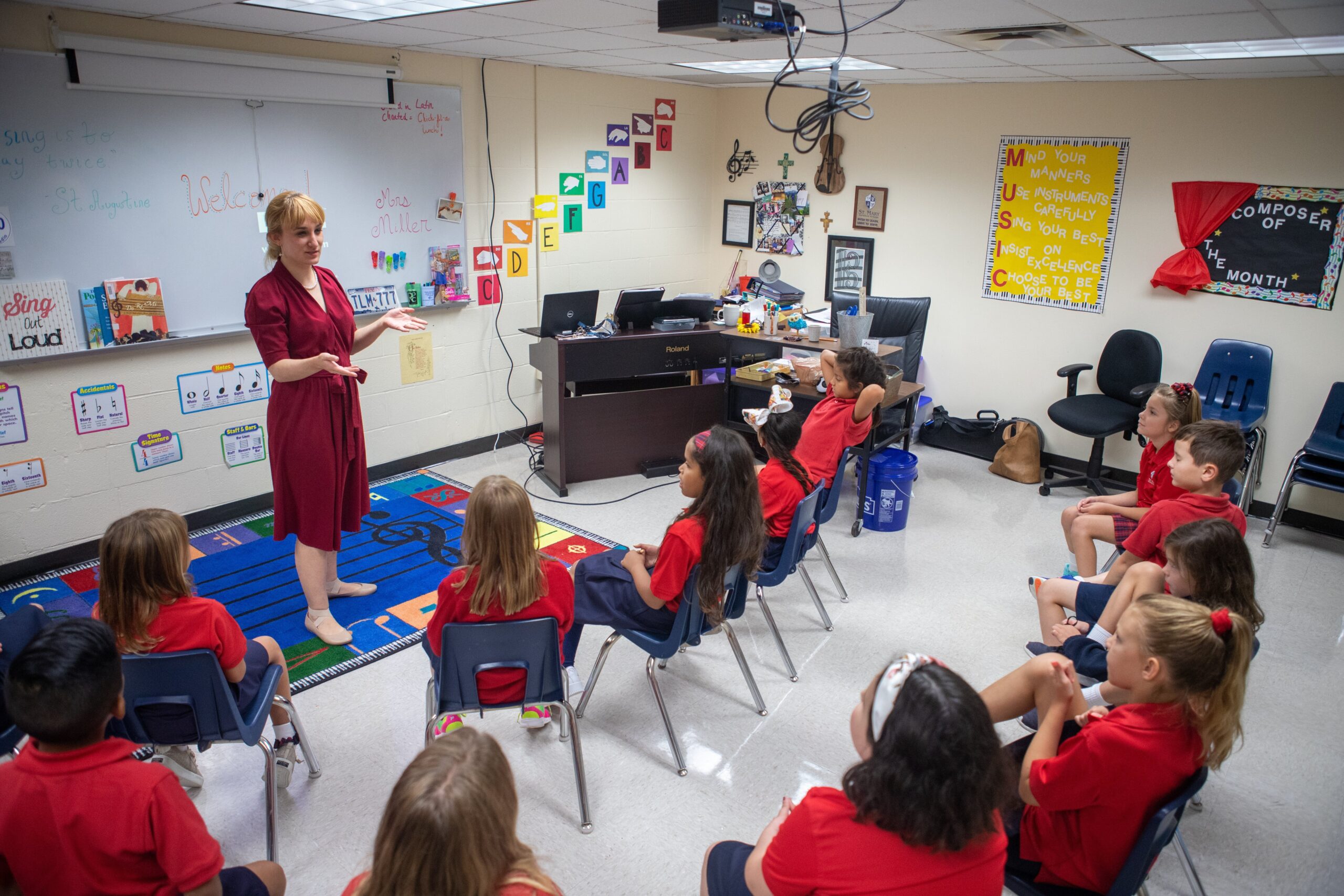
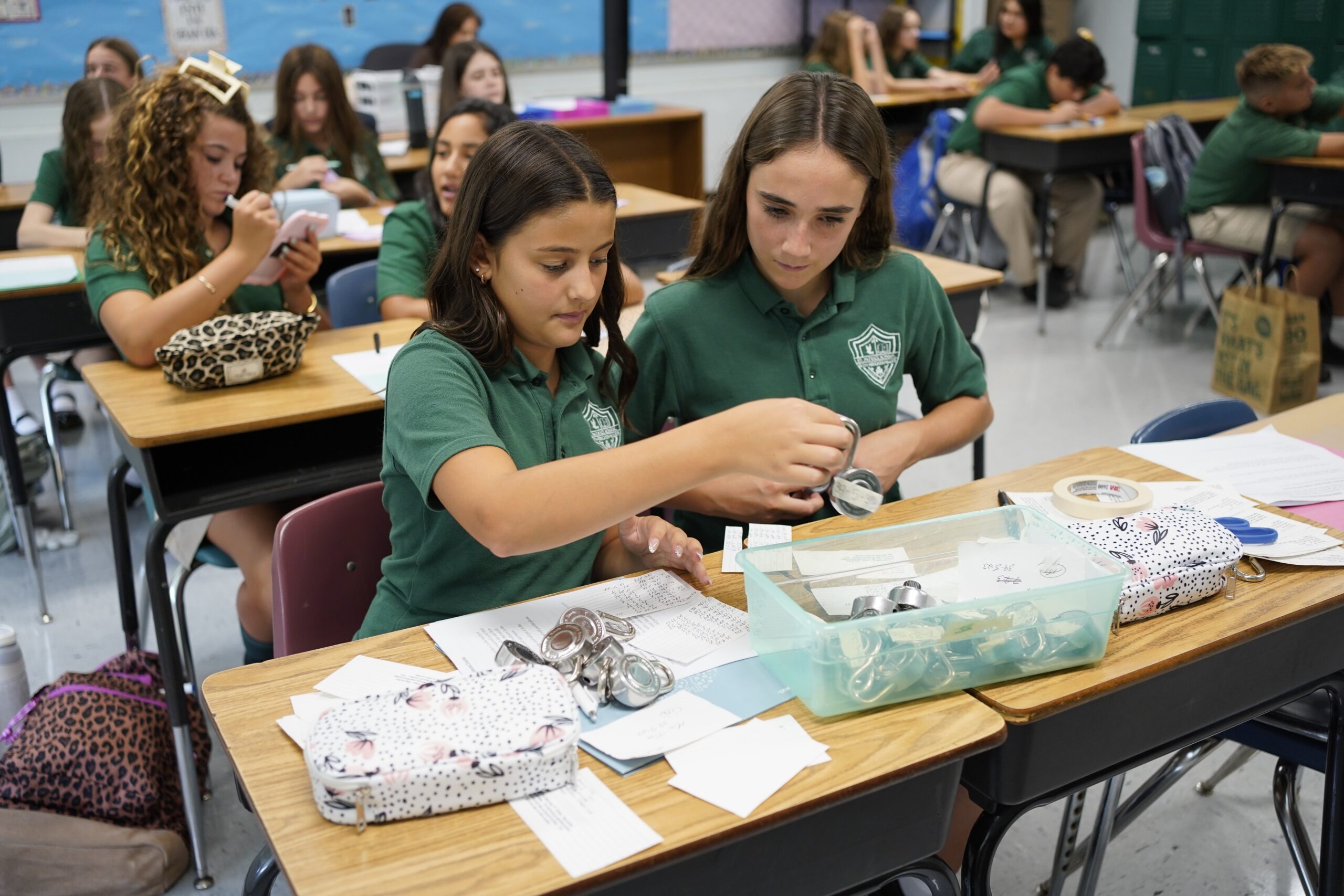
During 2025-2026, the NCEA recorded 6.6% of Catholic school students received Title I services. Title I is a major U.S. federal education program under the Elementary and Secondary Education Act that provides supplemental funding to schools serving high numbers or percentages of children from low-income families. Another 14.2% of Catholic school students are eligible for a free or reduced-cost lunch.
“People of modest income can also apply,” continued Sister Dale, “so they certainly could be helped, and maybe a mother doesn’t have to work another job and a father doesn’t have to work two jobs, if they can get $1,200 or $1,400. It all depends on the amount of money the scholarship organizations raise, and then the way in which they set up their own priorities for how they will administer applications.”
The U.S. Treasury Department estimates approximately 95% of American children live in households that meet the income limit for the scholarship tax credit.
Shawn Peterson cautions that increased Catholic school enrollment won’t happen overnight. The president of Catholic Education Partners, which works nationally to help families access Catholic schooling, Peterson is also chairman and co-founder of Reficio, now known as the American Catholic Education Fund, the largest Catholic SGO in America.
“It’s going to take some time,” Peterson said. “And it’s not on Day 1 — you’re not going to flip a switch and it’s going to be magically all different than it was the day before. But as we’ve seen with state programs — once you get them up and running and people are used to them — you get a lot of giving. The beauty about this is — because it’s a national program — there’s going to be potential for billions of dollars to be raised.”
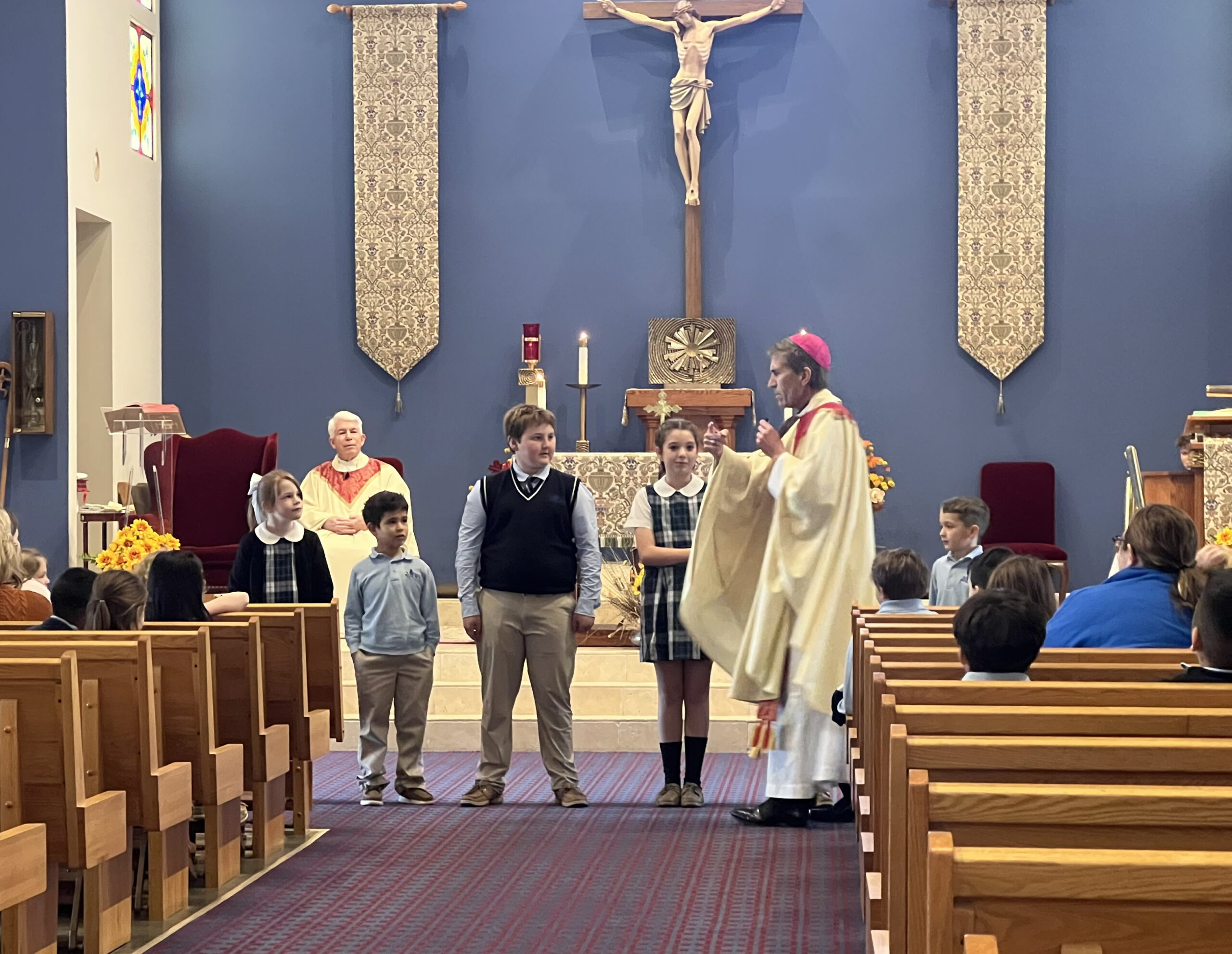
The American Catholic Education Fund is partnering with all the dioceses in Texas, Missouri, South Dakota, South Carolina and Alaska, as well as dioceses in Montana, Oklahoma, Illinois, and the nation’s oldest, the Archdiocese of Baltimore. The Personal Ordinariate of the Chair of St. Peter, one of three Catholic dioceses with Anglican heritage, is also included.
For parents wondering how the scholarship tax credit works, Peterson offered OSV News a brief review.
“It’s for anyone that owes any kind of federal income tax. It is indeed a credit, so it’s dollar for dollar,” he said. “It’s up to $1,700 a year for individuals, and $3,400 for married couples filing jointly.”
A tax credit reduces federal income tax dollar for dollar, unlike a deduction, which reduces taxable income.
“Parents can designate a school where their money can go — any donor can — but you cannot designate a child,” Peterson said. “So grandma and grandpa can’t give $3,400 and say, ‘I want this to go to Bobby or to Julie as a scholarship.'”
“But,” Peterson explained, “how it does translate into that is, you can choose a school or you can choose a diocese if you want. … Down to that granular level, parents could give money — and then they’re giving it toward their school, and their child’s school is going to benefit from those funds. The more funds that come in,” he added, “the more that school is going to have scholarships to give out. You just cannot earmark a child.”
And can donors be certain their contributions will be used for a scholarship?
“It is a scholarship program, so schools do need to use these funds for that,” confirmed Peterson. “A scholarship will go to a child; these funds will find their way to a child.”
Peterson is quite optimistic concerning the possible success of the Federal Scholarship Tax Credit.
“This is going to be transformative for Catholic education across the country,” he predicted. “And there’s some states that have opted in that don’t have state programs. So New York, for example — this is going to be an opportunity for New Yorkers to experience school choice.”
On Oct. 9, New York Gov. Kathy Hochul, who is Catholic, announced New York state would opt into the scholarship tax credit program, a move that could — despite opposition from the powerful public school teachers’ union — benefit more than 2.7 million New York public, parochial and private school students.
“We know there are families who want this for their children but have not always had the financial means to make it possible,” Sister Mary Grace Walsh, an Apostle of the Sacred Heart of Jesus and superintendent of schools in the Archdiocese of New York, told OSV News in an e-mail. “This program may help open that door.”
During the 2025-2026 academic year, the Archdiocese of New York experienced four elementary school closures, one secondary school closure, and two campus consolidations.
“The FSTC may help more families choose a Catholic education, and give our schools greater opportunities to meet the needs of their students,” she said. “We cannot predict exactly what this will mean for individual schools, but I believe it gives us another reason to look ahead with hope.”
Still, Sister Mary Grace — like Peterson and Sister Dale — is encouraged.
“What gives me great hope is the possibility of reaching families who may have always wanted a Catholic education for their students but did not think it was possible because of the cost,” she said. “We have an opportunity to say yes to more students — and to help them grow in faith, discover their potential, and know that they are loved.”
Kimberley Heatherington is an OSV News correspondent. She writes from Virginia.