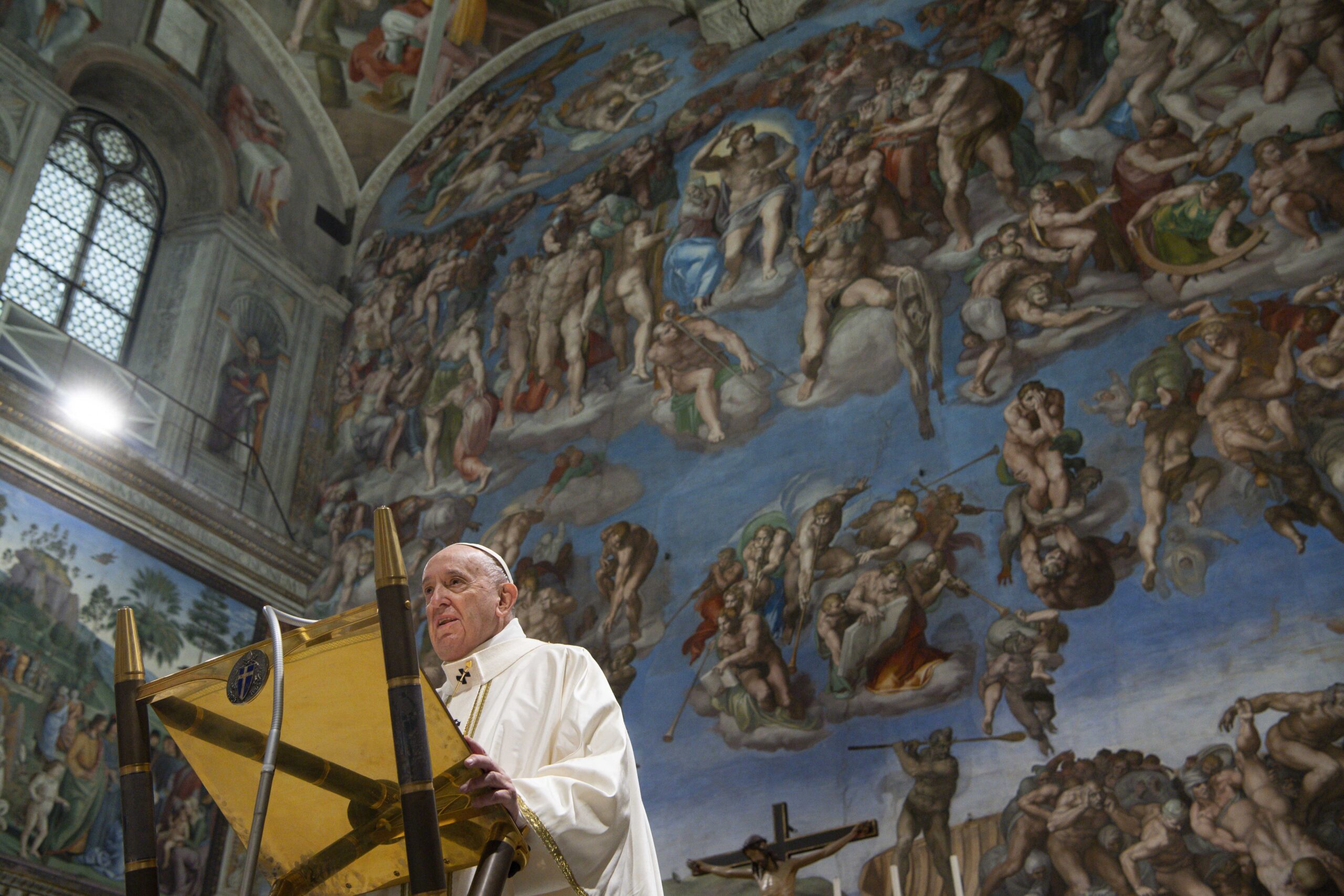




ROME — The Vatican Museums announced that restoration work has begun on Michelangelo’s “The Last Judgement” in the Sistine Chapel, a fresco an art historian describes as “a clarion call to the cardinals of what it means to be Catholic.”
“The cleaning of Michelangelo’s magnificent fresco has begun,” Barbara Jatta, director of the Vatican Museums, announced Feb. 23.
The restoration, the first major cleaning of the fresco since 1994, is being financially supported by the Florida Chapter of the Patrons of the Arts in the Vatican Museums. Jatta expects the work to be completed by Holy Week, and the Sistine Chapel will remain open to visitors throughout the three-month cleaning, though scaffolding will partially obstruct views of the fresco.
Elizabeth Lev, a Catholic art historian who has guided visitors through Rome for more than two decades, reflected on the significance of the work and what its restoration means for one of the world’s most visited artistic treasures.
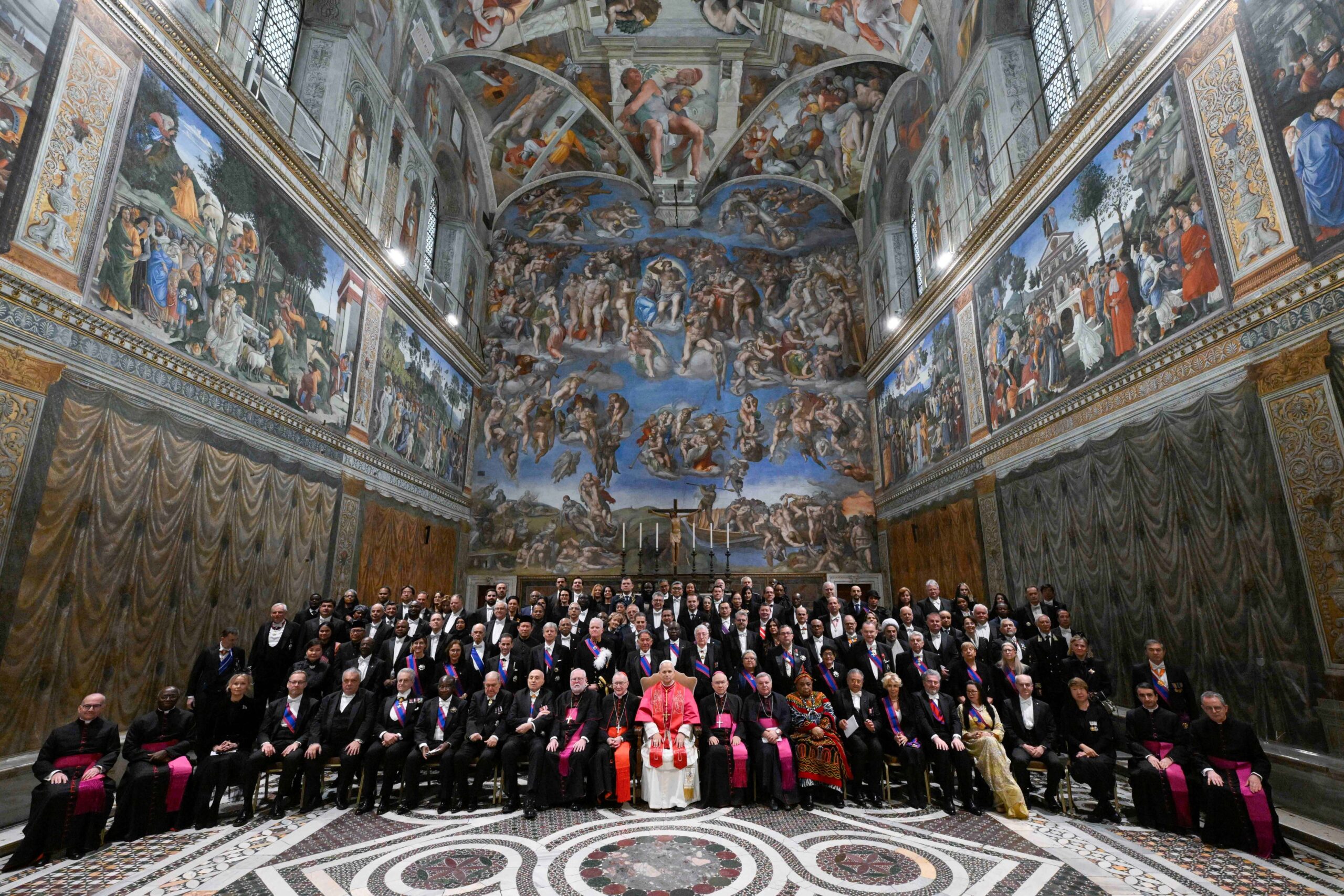
In an interview with OSV News, Lev described the spiritual significance of the vivid imagery in the Renaissance masterpiece, which was painted at a turbulent moment in Church history.
“Painted by Michelangelo at the height of the Protestant Reformation, post Sack of Rome and Henry VIII’s announcement that he was starting his own church, ‘The Last Judgement’ is a clarion call to the cardinals of what it means to be Catholic,” she said, noting that the fresco serves as the backdrop for a conclave to elect the pope.
“It represents the end of the world, the awaking of the dead, the second coming of Christ, and the final pronouncement by God of the fate of every soul, salvation or damnation,” she said.
Michelangelo was 60 when he began the work, which was commissioned in 1533 by Pope Clement VII and ultimately completed in 1541 under Pope Paul III.
The monumental fresco covers the entire altar wall of the Sistine Chapel and depicts the second coming of Christ and the final judgment of souls. At the center stands a powerful figure of Christ, surrounded by saints and martyrs, as the dead rise from their graves below. Angels sound their trumpets while the saved ascend toward heaven and the damned are dragged downward into hell by demons.
Lev noted that Michelangelo showed “the forces of evil seeking the ruin of souls,” but emphasized that the artist “spent most of his energy, not on the damned, but on the glorious bodies of the martyrs.” She also pointed out “the notable lack of women in Michelangelo’s hell.”
“He revealed that every human being is a protagonist in the story of his or her salvation, our actions, our choices, our decision to ‘exercise’ heroic virtue, determine whether we can hope to join Michelangelo’s celestial Olympic podium” with “heaven’s athletes, men and women who suffered for Christ,” she said.
Among the fresco’s most striking details, Lev pointed out, is that “a demon above the altar is looking at you,” but at the same time “the crucifix on the altar shows Christ body-blocking him from you.”
“The angels descend, spiraling above the crucifix reminding us of what Christ did for us and asking, with their books of the deeds, what have we done,” she added.
In a gesture to Pope Paul III, who published the papal bull “Subliminus Deus” prohibiting the enslavement of indigenous peoples, Michelangelo depicted in “The Last Judgement” a Black man and a white man being “pulled up by the same rosary beads, an image of universal salvation.”
Tens of millions of visitors have walked through the chapel since its last cleaning in 1994, and their presence has taken a toll. Jatta said the cleaning will remove a light patina of microparticle buildup invisible to the naked eye, with the goal of restoring Michelangelo’s colors to their original brilliance.
Lev explained the state of the deterioration. “There is a whitish build up on the surface, which is obscuring the definition of Michelangelo’s figures,” she said, adding that vibrations from years of foot traffic may have loosened pigment, particularly the lapis lazuli background, which was applied to dry plaster and is especially vulnerable.
“The Vatican restorers, I am proud to say, are the finest in the world,” Lev added. “Mostly I am struck by their humility. They are keenly aware of their immense responsibility towards this masterpiece.”
Courtney Mares is Vatican editor for OSV News. Follow her on X @catholicourtney.