

ROME — Cardinal Camillo Ruini, the influential Italian churchman who shaped Catholic life in Italy for nearly two decades as both vicar of Rome and president of the Italian bishops’ conference, died June 16 in Rome. He was 95.
Cardinal Ruini’s death was confirmed by the Diocese of Rome in a statement that said he left a “profound mark” on the Eternal City during his leadership as vicar of Rome from 1991 to 2008, working closely with St. John Paul II and Pope Benedict XIV.
Pope Leo XIV will personally preside over his funeral Mass June 18 at 4:30 p.m. local time in St. Peter’s Basilica.

In a message to the Diocese of Rome June 17, the pope honored Cardinal Ruini as “an esteemed man of the church, who generously lived his ministry” and “strengthened by deep faith, sharp intelligence, and a forward-looking vision … served the Gospel and the Church with discretion and self-sacrifice.”
Cardinal Matteo Zuppi, the current president of the Italian bishops’ conference, remembered Cardinal Ruini as a man who carried out his ministry “with intelligence, pastoral passion, and a profound sense of churchmanship,” and who maintained that “faith is never detached from history.”
A regular presence on Italian television during his years as the head of the Italian bishops’ conference from 1991 to 2007, Cardinal Ruini is remembered as an outspoken voice in social debates in the public square in Italy.
“The Christian message, he always maintained, must engage with the real questions of humanity, society, and culture,” Cardinal Zuppi said. “Through this commitment, he helped the Church in Italy to reflect, discern, speak, and move forward in its own time, while preserving a living bond with the Successor of Peter and with the universal Church.”
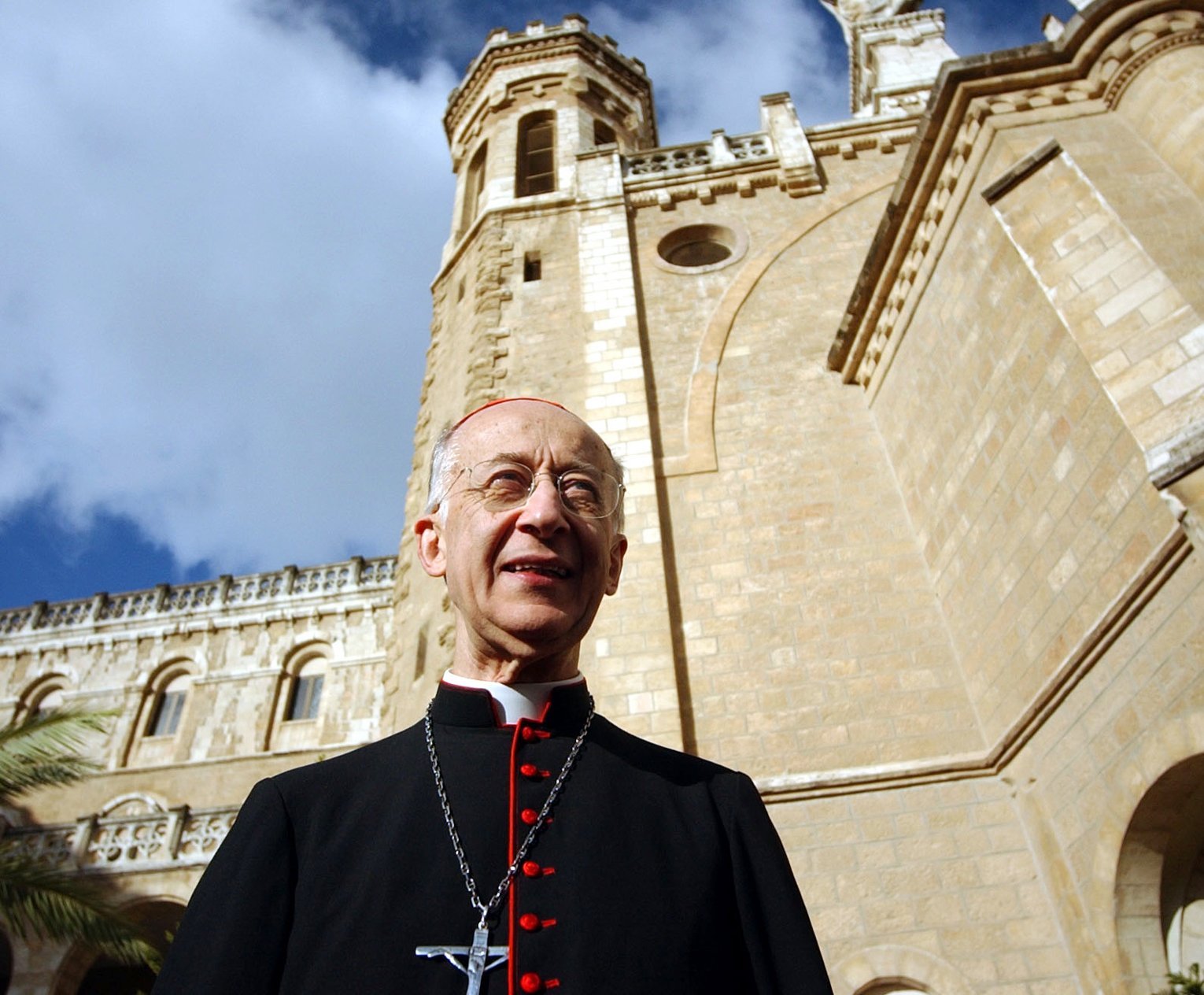
Born on Feb. 19, 1931, in Sassuolo, near Modena, in the Emilia-Romagna region of northern Italy, Camillo Ruini came of age during World War II. In one of his last interviews before his death, he recalled the bombings that struck his hometown, the deaths of friends and time spent as an evacuee at his father’s country home, where soldiers came asking for food and clothes after Italy’s surrender.
He discerned a priestly vocation at the end of high school, with encouragement from his spiritual director. “Devoting myself to God seemed like something exciting to me,” Cardinal Ruini recalled in a lengthy interview with the Italian newspaper Corriere della Sera marking his 95th birthday in February.
Ruini studied philosophy and theology at the Pontifical Gregorian University in Rome and was ordained a priest on Dec. 8, 1954. He spent the following decades as a seminary professor and theologian in the Emilia-Romagna region, teaching philosophy and later dogmatic theology at several interdiocesean institutes.
Pope John Paul II named him an auxiliary bishop of Reggio Emilia and Guastalla in 1983 and elevated him to the College of Cardinals on June 28, 1991, the same year he was appointed vicar of Rome and president of the Italian Episcopal Conference, known as the CEI. He chose as his episcopal motto, “Veritas liberabit nos,” which means “the truth will set us free.”
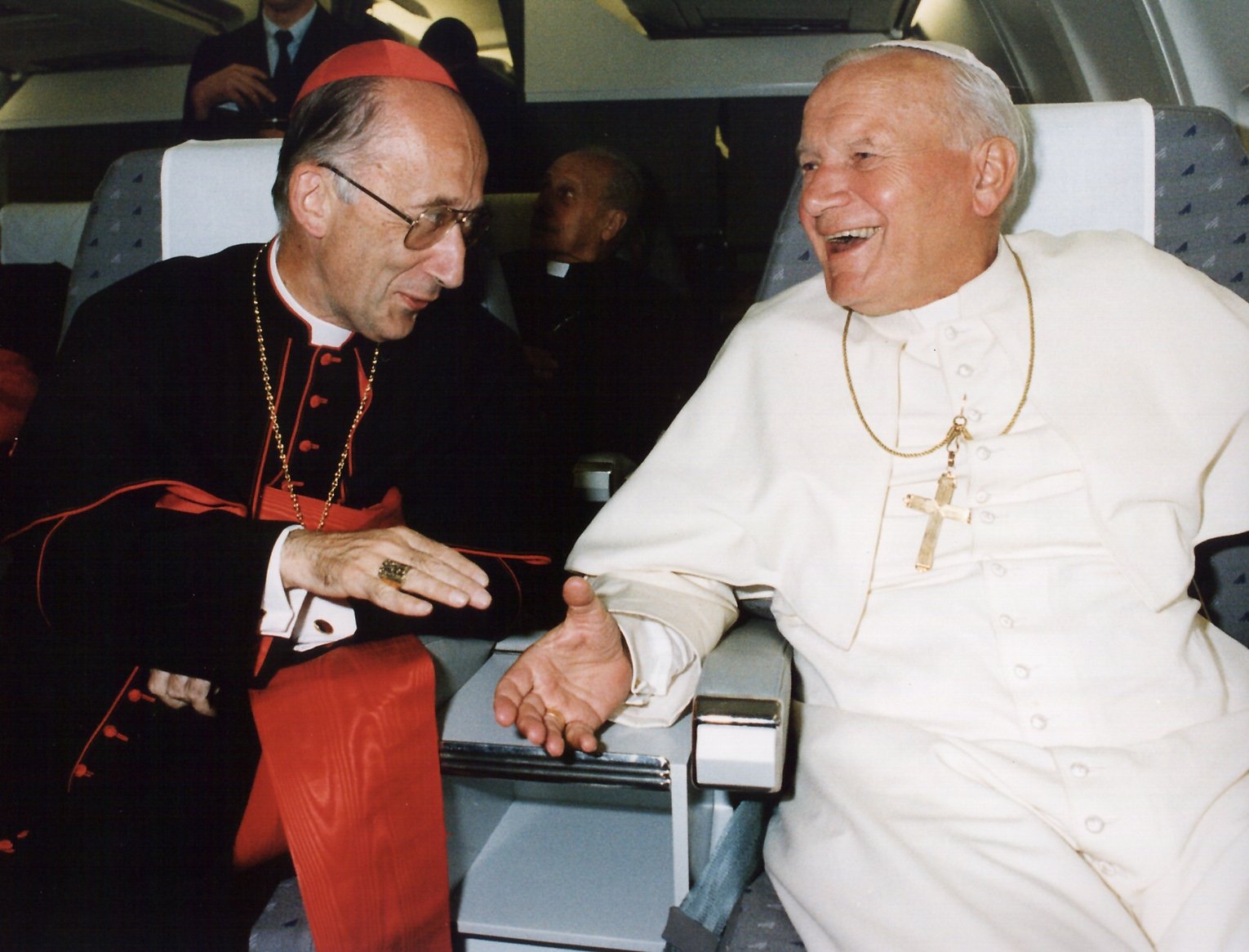
His close relationship with Pope John Paul II was central to his influence. The two first met in the autumn of 1984, when Cardinal Ruini, then an auxiliary bishop, was invited to dinner by the Polish pope to discuss preparations for the Ecclesial Convention of Loreto. Cardinal Ruini recalled that he had spoken with “total frankness” about his concerns regarding the bishops’ conference, something the pope had appreciated. From then on, Cardinal Ruini said, John Paul II called on him frequently and trusted his judgment.
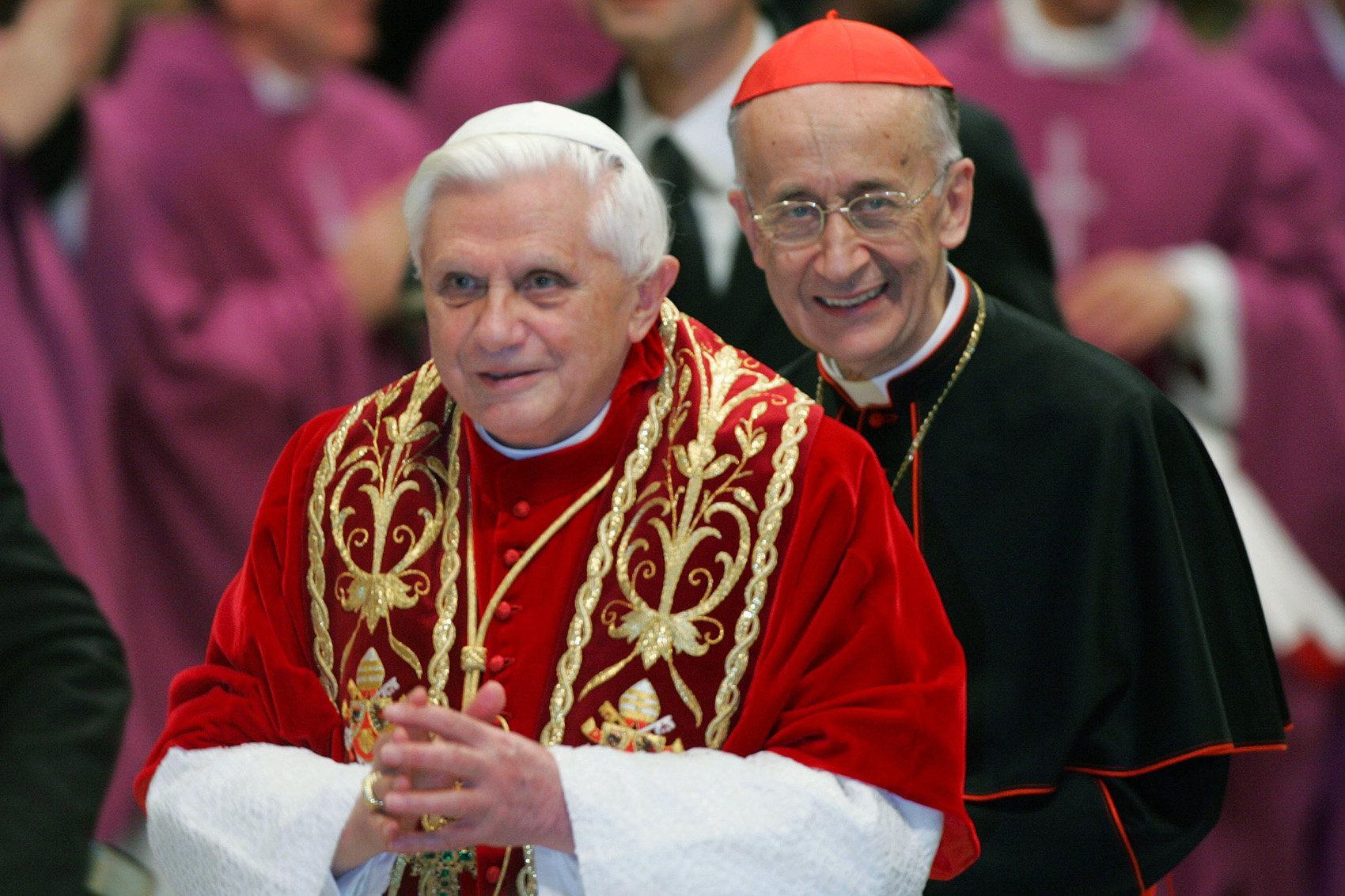
“I recall with gratitude his faithful collaboration with Pope John Paul II, to whom he was close during decisive moments in the life of the Church and society, always inspired by the desire to bear witness to the Gospel in the hearts of people and in the world,” Cardinal Stanislaw Dziwis, Pope John Paul II’s longtime personal secretary, said June 17 in a statement marking the cardinal’s death.
Cardinal Ruini was considered among the papabili in the 2005 conclave that elected Joseph Ratzinger as Benedict XVI. In a recent interview, the cardinal recalled the moment in which the cardinals swore their oath in the Sistine Chapel beneath Michelangelo’s image of The Last Judgment. “Saying those challenging words under the gaze of Michelangelo’s judging Christ gave a jolt that I still remember now,” he said.
He expressed surprise at Benedict XVI’s decision to resign in 2013, calling it “a bad decision,” while acknowledging that the pope knew his own condition better than anyone else. Of Pope Francis, Cardinal Ruini said he showed “great courage,” but took “too little account of tradition.” He expressed warm admiration for Pope Leo XIV, whom he met shortly after Leo’s election.
“Pope Leo XIV performed a sort of ‘ecclesiological miracle’ by immediately restoring peace and serenity to the Church upon his election,” Cardinal Ruini told Il Foglio in November 2025.
Throughout his ministry, Cardinal Ruini was a strong voice against secularism in Italian society. He said that he was enthusiastic about the Second Vatican Council, but drew a firm line between the council itself and what he considered the doctrinal confusion that followed in its wake. “We must not confuse Council and post-Council,” he said.
In 2010, he was named the president of the Vatican commission tasked with investigating Medjugorje, which submitted its findings in 2014. Cardinal Ruini also served as chairman of the scientific committee of the Ratzinger Foundation from 2010 to 2015 at the behest of Benedict XVI himself.
Italian media noted that Cardinal Ruini’s health had been declining in recent years, requiring daily assistance at home following hospitalization for heart problems in July 2024.
In his 95th birthday interview, Cardinal Ruini was asked how he imagined heaven. “For those who are saved, the afterlife is the vision of God, immediate union with Him,” he said. “As well as union with our departed brothers and sisters. The Gospels use very beautiful imagery in this regard — for example, that of a feast. A solemn banquet, where we eat together and are happy together, while retaining our individuality.”