


Lay groups in Germany involved in the local Church’s controversial Synodal Way say they will continue demanding the right to preach at Mass, defying a recent rejection by the Vatican of the proposal.
In a press release published June 23, the Dicastery for Divine Worship and the Discipline of the Sacraments announced that it had denied a request by the German bishops’ conference to allow “in exceptional circumstances, a duly commissioned lay member of the faithful to preach in place of the homily during the celebration of the Eucharist.”
Cardinal Arthur Roche, prefect of the dicastery, had informed the bishops’ conference of the decision in a June 17 letter.


“While expressing appreciation for the pastoral concerns that inspired the request, the Dicastery reaffirms that the current discipline cannot be dispensed from by means of an indult, since the reservation of the homily to a priest or deacon is not a merely disciplinary norm but derives from the very nature of the liturgy,” the dicastery said.
According to the German Catholic news agency KNA, Irme Stetter-Karp, the chairwoman of the Central Committee of German Catholics, known by the German acronym ZdK, said the lay association was not involved in the initial request, and vowed to continue to press the issue with the country’s bishops.
“We therefore expect the German bishops to reaffirm their substantive position on this matter to Rome, strengthen their arguments, and under no circumstances interpret Cardinal Roche’s letter as discouraging,” she said.
The Catholic Women’s Association of Germany, or KFD, released a statement criticizing the Vatican’s decision, calling it proof that the Catholic Church adheres “to structures that exclude women from key tasks and services.”
“The real question is why those in charge in Rome continue to ignore the charisms and vocations of both women and men,” said Ruth Fehlker, the association’s spiritual director.
Both the ZdK and the KFD are heavily involved in the Synodal Way, a three-year reform process led by the German bishops’ conference. The process has made a number of proposals, including blessings for same-sex couples and the ordination of women, that have raised concerns, particularly from the Vatican.
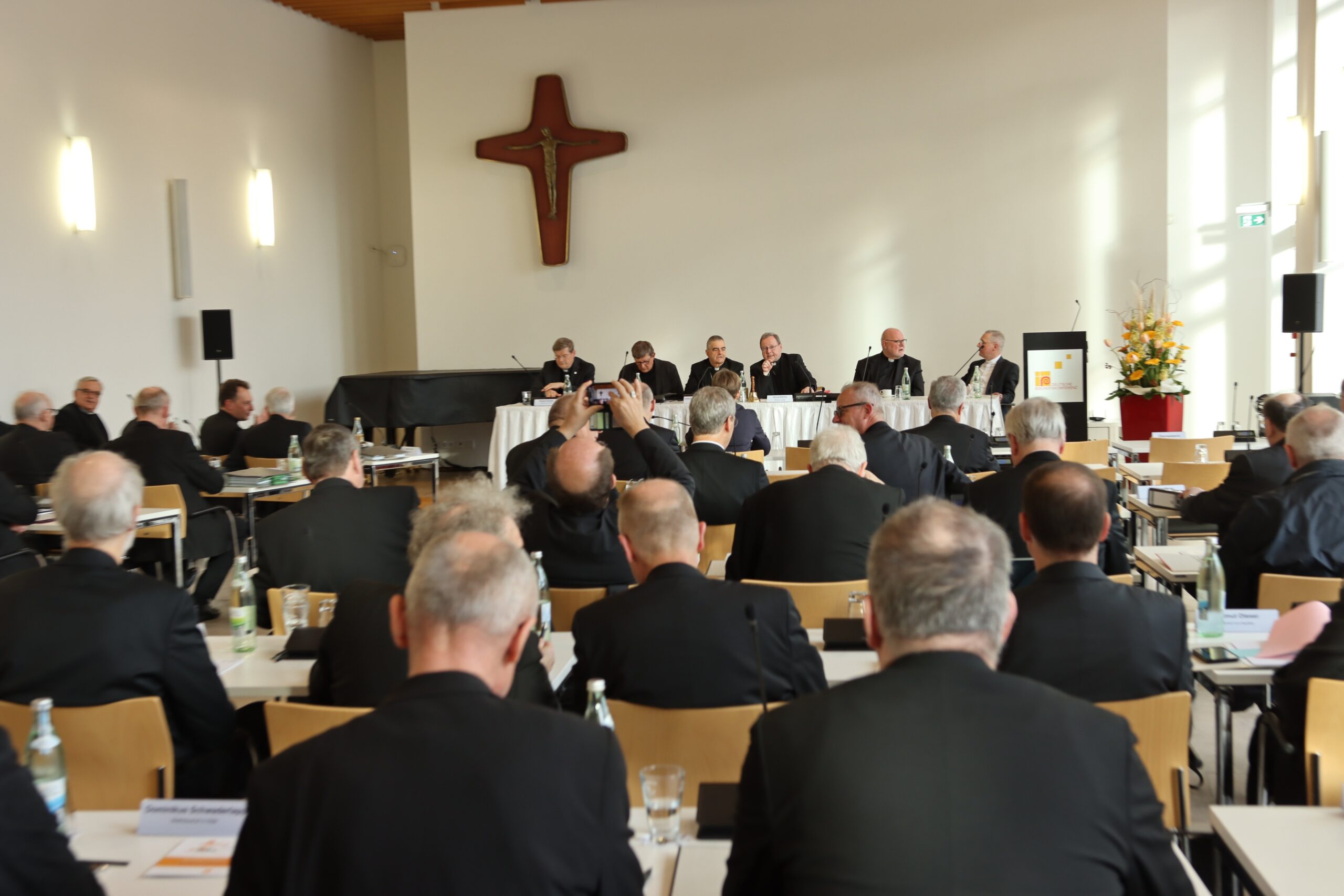
A request to allow qualified laypeople to deliver the homily during Sunday and feast day Masses, based on pastoral needs, was also proposed by the Synodal Way and approved by the German bishops during their spring assembly in February.
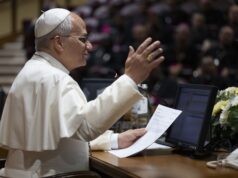
Among those most concerned by the direction of the Synodal Way was the late Pope Francis, who had criticized the path the German bishops were taking and warned that it was guided by ideological principles rather than the Holy Spirit.
“When ideology gets involved in church processes, the Holy Spirit goes home, because ideology overcomes the Holy Spirit,” he said in a 2023 interview with The Associated Press.
The German bishops’ conference issued its own statement acknowledging that its request was rejected “because a non-ordained person is not permitted to deliver a homily within the Eucharistic celebration.”
Citing the Code of Canon Law, the bishops noted that “the current order already provides for forms of proclamation entrusted to lay believers outside of the homily and the Eucharistic celebration.”
Nevertheless, the code explicitly states that the homily “is part of the liturgy itself and is reserved to a priest or deacon.”
The German bishops’ conference also published its correspondence with the Vatican on the issue, including the March 30 letter requesting the indult and Cardinal Roche’s letter.
Among the reasons for requesting the indult, the German bishops said the shortage of priests and increasing situations in which the presiding priest was unable to deliver the homily due to old age, physical frailty, language barriers or other obstacles.
It also argued that a 1988 regulation allowing laypeople to preach at the start of the service rather than after the Gospel was impractical.
In his response, Cardinal Roche said that while he appreciated the bishops’ pastoral concern, both the Code of Canon Law and the Vatican’s 2004 instruction, “Redemptionis Sacramentum” (“The Sacrament of Redemption”), explicitly “excludes the possibility of lay faithful giving the homily during the celebration of the Mass, even under another designation.”
The norm, he added, was not “disciplinary in character” but rather reflected the reality “linked to the theological and liturgical nature of the homily.”
As an intrinsic act of the Liturgy of the Word, it is inseparably linked to the proclamation of the Gospel and to the presiding over the celebration, and represents a specific exercise of the ‘munus docendi’ (‘duty to teach’),” he wrote, referring to the first of three duties of ordained priests.
Regarding the bishops’ concerns regarding the difficulty of priests unable to deliver the homily, Cardinal Roche said those situations were temporary and did not constitute “such an emergency or a genuine pastoral necessity that would justify a departure from a norm so closely linked to the nature of the liturgical act.”
“Situations in which the celebrant is prevented, for example, due to a temporary physical impairment, constitute only occasional and time-limited circumstances that cannot be regarded as justification for a permanent pastoral necessity,” he wrote.